EV Accessories and Mounting


DYNESS
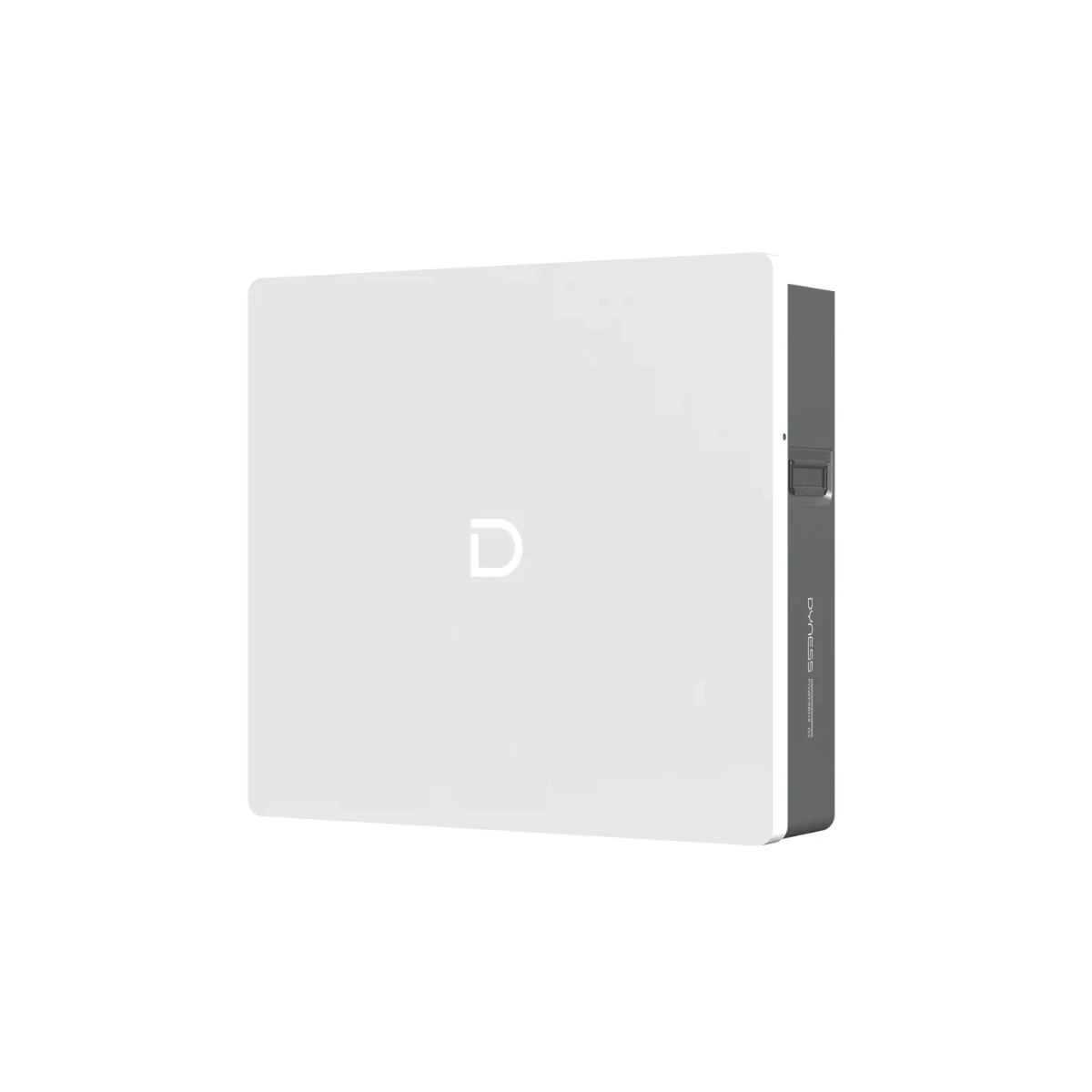

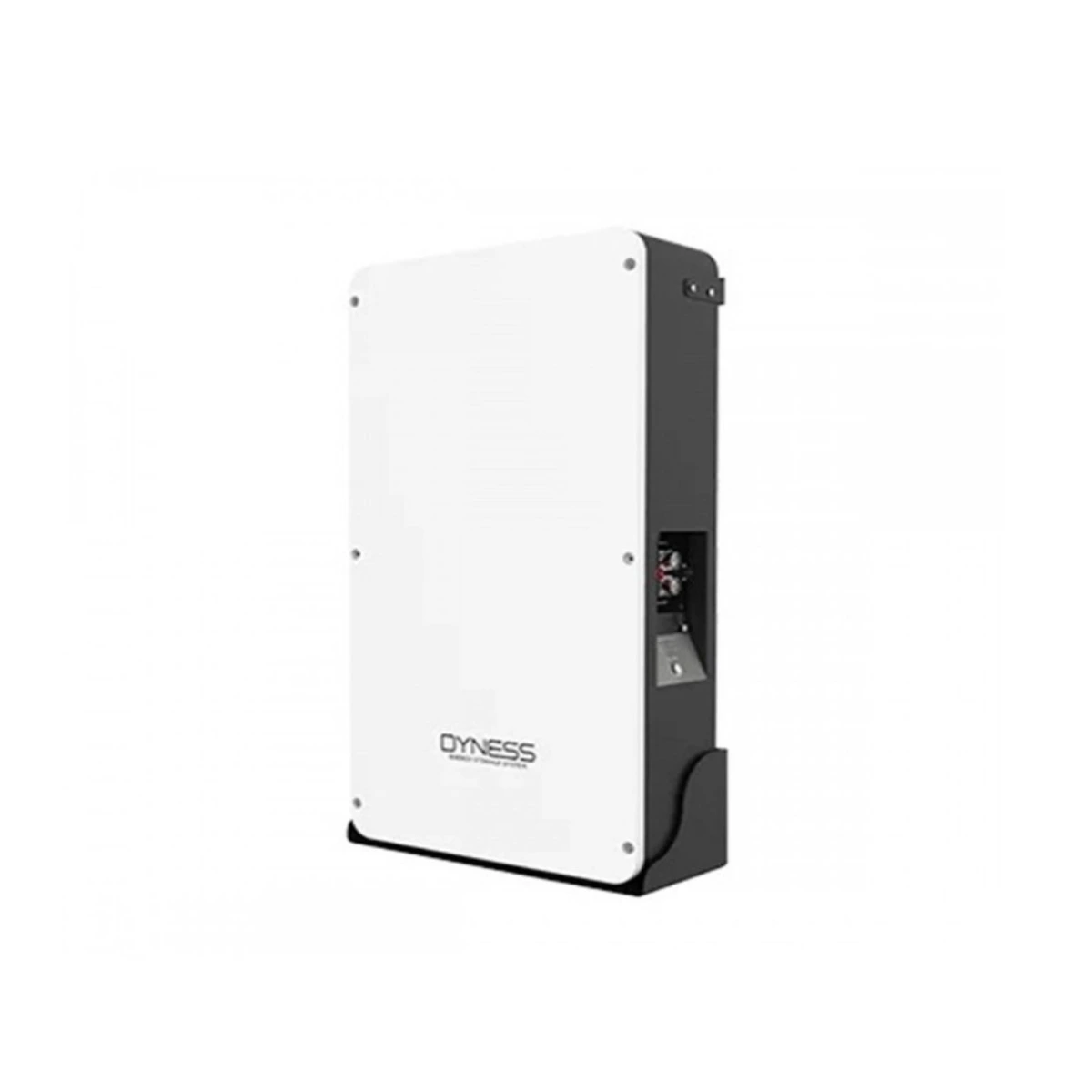
Dyness Powerbox Pro 10.24kWh – Low Voltage Solar Battery for Hybrid Inverters
Out of stock
New: 1389.88 €
0%
Dyness Solar Batteries – LiFePO4 Energy Storage for Professional Installers in Europe
Dyness is an international manufacturer of lithium iron phosphate (LiFePO4) battery energy storage systems for residential, commercial and industrial applications. Its portfolio includes low-voltage solar batteries, modular high-voltage storage, expandable battery systems and commercial BESS solutions for photovoltaic self-consumption, backup power, off-grid installations and intelligent energy management.
At 3Buy Solar, we supply and source solar batteries, hybrid inverters and energy storage equipment for European solar installers, EPC contractors, system integrators, solar wholesalers and approved B2B buyers.
Our Dyness product offering includes two established residential storage solutions: Dyness Powerbox Pro 10.24 kWh and Dyness Powerbox G2 10.24 kWh. For projects requiring high-voltage or higher-capacity storage, the wider Dyness manufacturer portfolio includes Tower, Tower Pro, Tower S3, STACK and PowerBrick systems.
Choosing a Dyness solar battery is not simply a question of capacity or price. Professional battery procurement requires verification of the inverter’s battery voltage, CAN/RS485 communication, firmware, BMS configuration, continuous discharge power, usable energy, approved parallel expansion and installation requirements.
Whether your project calls for a 10 kWh residential solar battery, a larger storage bank for an off-grid installation or commercial energy storage equipment, the right battery must be specified as part of the complete system.
Shop Dyness Batteries at 3Buy Solar
Request Dyness Wholesale and Project Pricing
Why Choose Dyness Solar Batteries?
Dyness manufactures battery energy storage systems spanning compact residential storage and larger scalable energy solutions.
The company’s LiFePO4 battery platforms are designed for applications where long service life, battery management, flexible capacity and inverter integration are important.
Key features across selected Dyness product families include:
- LiFePO4 battery technology: Lithium iron phosphate chemistry suited to stationary energy storage.
- Low- and high-voltage architectures: Battery systems for different hybrid inverter designs.
- Modular battery expansion: Selected products support multiple modules or approved parallel battery configurations.
- Integrated BMS: Battery management for cell monitoring, balancing, safety protection and inverter communication.
- CAN and RS485 interfaces: Communication with supported hybrid inverters and energy management systems.
- Residential energy storage: Products for photovoltaic self-consumption and backup-ready installations.
- Commercial battery storage: STACK and larger battery systems for commercial energy management.
- European project applications: Relevant to residential rooftops, commercial PV installations and off-grid energy systems.
These characteristics differ by product model. Not every Dyness battery supports identical expansion, communication, mounting or operating conditions.
Dyness Official Manufacturer Website
Dyness Battery Product Range – Powerbox, Tower, STACK and Commercial ESS
Dyness offers battery storage systems across different voltage architectures and energy capacities.
| Dyness product family | Architecture | Intended application |
|---|---|---|
| Powerbox Pro 10.24 kWh | Low-voltage LiFePO4 | Residential PV, backup and off-grid systems |
| Powerbox G2 10.24 kWh | Low-voltage LiFePO4 | Residential hybrid inverter storage |
| DL5.0C and related DL modules | Low-voltage modular storage | Residential and modular battery systems |
| PowerBrick families | Modular low-voltage storage | Higher-capacity battery configurations |
| Tower T7–T21 | High-voltage modular storage | Compatible residential HV hybrid systems |
| Tower Pro | High-voltage modular storage | Residential and larger storage installations |
| Tower S3 | High-voltage modular storage | Expandable HV energy storage |
| STACK100 / STACK100 Pro | Modular high-voltage ESS | Larger residential and small C&I projects |
| STACK280 | Scalable energy storage | Commercial and industrial projects |
| Integrated C&I storage families | Product-specific architectures | Commercial load shifting, peak shaving and energy management |
The wider Dyness product portfolio is included to support technical research and project planning. It does not indicate that every model is currently stocked by 3Buy Solar.
Dyness Powerbox Pro 10.24 kWh – Low-Voltage LiFePO4 Solar Battery
The Dyness Powerbox Pro is a 51.2V nominal low-voltage lithium iron phosphate battery designed for compatible hybrid inverters, PV self-consumption, residential storage and selected off-grid installations.
It provides 10.24 kWh nominal storage capacity in an enclosed battery system with integrated battery management and communication.
At 3Buy Solar, the Powerbox Pro has its own purchasing and technical information page.
Buy Dyness Powerbox Pro 10.24 kWh at 3Buy Solar
Dyness Powerbox Pro Technical Specifications
| Parameter | Specification |
|---|---|
| Battery chemistry | LiFePO4 |
| Nominal energy | 10.24 kWh |
| Nominal voltage | 51.2V |
| Nominal battery capacity | 200Ah |
| Operating voltage range | 44.8–57.6V |
| Nominal power | 5.12 kW |
| Recommended charge/discharge current | 100A |
| Recommended depth of discharge | 90% in referenced datasheet |
| Communication | CAN / RS485; interface details vary by revision |
| Protection level | IP65 |
| Manufacturer-listed cycle life | At least 6,000 cycles under specified testing conditions |
| Mounting | Wall-mounted or floor-mounted, subject to installation instructions |
| Expansion | Revision-dependent; verify the applicable manufacturer documentation |
Important: Dyness’s older product datasheet lists different expansion and physical specifications from the current manufacturer product listing. Professional installers should confirm the exact supplied hardware generation, serial number and installation manual rather than combining specifications from different revisions.
Powerbox Pro for Residential and Off-Grid PV Systems
Powerbox Pro may be suitable for:
- Residential solar battery retrofits.
- Compatible 48V-class hybrid inverter systems.
- Photovoltaic self-consumption.
- Off-grid installations.
- Backup-ready energy storage.
- Modular low-voltage storage projects.
It must be connected to a compatible low-voltage battery interface. The presence of CAN or RS485 communication does not make Powerbox Pro suitable for a high-voltage inverter battery input.
Dyness Powerbox Pro Official Product Information
Dyness Powerbox Pro Manufacturer Datasheet – PDF
Dyness Powerbox G2 10.24 kWh – Low-Voltage Battery Storage for Hybrid Inverters
The Dyness Powerbox G2 is a 51.2V nominal LiFePO4 energy storage battery with 10.24 kWh nominal and 9.728 kWh published usable energy.
It is designed for compatible hybrid solar inverters, residential PV storage, energy management and battery expansion projects.
The Powerbox G2 uses CAN and RS485 communication and includes a built-in battery management system.
Buy Dyness Powerbox G2 10.24 kWh at 3Buy Solar
Dyness Powerbox G2 Technical Specifications
| Parameter | Specification |
|---|---|
| Battery technology | LiFePO4 |
| Nominal energy | 10.24 kWh |
| Usable energy | 9.728 kWh |
| Nominal voltage | 51.2V |
| Nominal capacity | 200Ah |
| Operating voltage | 44.8–57.6V |
| Nominal charge/discharge power | 5.12 kW |
| Maximum discharge power | 10.24 kW under specified conditions |
| Recommended current | 100A |
| Maximum discharge current | 200A |
| Peak discharge current | 300A for 2 minutes at 25°C |
| Recommended DoD | 95% |
| Communication | CAN / RS485 |
| Protection rating | IP65 |
| Dimensions | 710 × 165 × 640 mm |
| Weight | 96 kg |
| Expansion | Up to 50 units in parallel, subject to approved system design |
| Wi-Fi | Built-in |
| Heating | Optional on specified variants |
| Fire protection | Manufacturer-listed integrated aerosol protection feature |
The peak discharge capability must not be confused with the recommended continuous operating current.
The actual available power also depends on the inverter, battery temperature, state of charge and approved operating configuration.
Powerbox G2 Inverter Compatibility
Dyness lists selected inverter manufacturers for Powerbox G2, including Deye, Solis, Growatt, Victron Energy, GoodWe, SOFAR, Solplanet and others.
However, manufacturer-level compatibility is not model-level compatibility.
Before confirming a battery-inverter pairing, verify the current Dyness compatibility list for the exact battery and inverter model.
Powerbox G2 Manufacturer Datasheet – PDF
Powerbox G2 Installation Manual – 3Buy Solar PDF
Dyness Powerbox Pro vs Powerbox G2 – Which 10 kWh Solar Battery Should You Buy?
Both batteries are low-voltage LiFePO4 storage products with 10.24 kWh nominal energy.
Their differences matter when specifying a new installation or expanding an existing battery system.
| Buying criterion | Powerbox Pro | Powerbox G2 |
|---|---|---|
| Nominal energy | 10.24 kWh | 10.24 kWh |
| Nominal voltage | 51.2V | 51.2V |
| Nominal capacity | 200Ah | 200Ah |
| Nominal power | 5.12 kW | 5.12 kW |
| Recommended current | 100A | 100A |
| Recommended DoD | 90% in referenced revision | 95% |
| Published usable energy | Revision-dependent | 9.728 kWh |
| Protection rating | IP65 | IP65 |
| Communication | CAN/RS485; revision-dependent details | CAN/RS485 |
| Expansion | Hardware/revision-dependent | Up to 50 units, subject to approval |
| Built-in Wi-Fi | Check supplied revision | Yes |
| Best buying approach | Confirm hardware revision and inverter match | Confirm inverter match and project requirements |
Which Dyness Battery Is Better for Residential Solar Storage?
For a conventional residential hybrid system, both batteries should be evaluated against the inverter’s approved battery list.
Powerbox G2 offers a clearly published 95% recommended depth of discharge, integrated Wi-Fi and detailed expansion specifications.
Powerbox Pro remains relevant for suitable low-voltage hybrid and off-grid architectures, but the supplied hardware generation and its corresponding documentation must be confirmed.
The best choice depends on the total system specification, actual usable energy, installed cost, warranty conditions and commissioning requirements.
Dyness Tower T7, T10, T14, T17 and T21 – High-Voltage Solar Batteries
The Dyness Tower family uses modular high-voltage LiFePO4 battery architecture for compatible hybrid inverter systems.
Unlike Powerbox batteries, which operate in the nominal 48V class, Tower batteries use high-voltage module configurations.
The exact number of modules determines the battery’s system voltage and usable capacity.
Dyness Tower Series Capacity Comparison
| Dyness model | Battery modules | Nominal capacity | Nominal voltage |
|---|---|---|---|
| Tower T7 | 2 | 7.10 kWh | 192V |
| Tower T10 | 3 | 10.66 kWh | 288V |
| Tower T14 | 4 | 14.21 kWh | 384V |
| Tower T17 | 5 | 17.76 kWh | 480V |
| Tower T21 | 6 | 21.31 kWh | 576V |
The Tower series is suitable only for hybrid inverters supporting the relevant battery operating voltage and approved Dyness communication configuration.
Dyness Tower T10 – Important Installation Information
Tower T10 provides 10.66 kWh nominal storage using three battery modules in a high-voltage configuration.
It is not interchangeable with Powerbox G2 or Powerbox Pro.
Professional installers must verify:
- Battery voltage range.
- Compatible high-voltage inverter model.
- Required battery control equipment.
- Number of battery modules.
- Communication configuration.
- Correct assembly and commissioning sequence.
- Approved expansion limits.
- Firmware requirements.
Can Two Dyness Tower T10 Batteries Be Connected in Parallel?
Dyness publishes support for parallel Tower configurations, with the manufacturer listing up to 12 towers under the applicable product specifications.
However, this does not authorise installers to connect two Tower T10 systems by simply joining their DC outputs.
The actual installation requires the Dyness-approved parallel arrangement, communication, control equipment, cabling and compatible inverter configuration.
For an installation requiring two Tower T10 systems, obtain the manufacturer’s current parallel installation instructions before ordering components.
Dyness Tower Official Product Page
Browse Solar Batteries at 3Buy Solar
Dyness PowerBrick, Tower Pro and Tower S3 – Higher-Capacity Residential Energy Storage
Dyness continues to develop its storage portfolio beyond the traditional 10 kWh residential battery segment.
Selected newer product families include PowerBrick, PowerBrick Plus, PowerBrick MAX, Tower Pro and Tower S3.
Dyness PowerBrick Battery Systems
The PowerBrick range offers larger modular low-voltage storage units.
These products may be suitable for customers requiring greater capacity per battery enclosure, provided that the battery current, voltage and communication specifications match the inverter.
The manufacturer lists 16.08 kWh-class PowerBrick products within its current portfolio.
Dyness Tower Pro
Tower Pro is a modular high-voltage solution with manufacturer-listed capacities from approximately 7.68 to 23.04 kWh, depending on configuration.
It should not be treated as identical to the older Tower series.
Dyness Tower S3
Tower S3 provides another high-voltage modular platform with larger expansion options under approved configurations.
For professional procurement, Tower S3 requires separate verification of the battery controller, module generation, inverter compatibility and permitted expansion architecture.
Explore Current Dyness Battery Product Families
Dyness STACK100, STACK100 Pro and STACK280 – Commercial Energy Storage
Dyness manufactures modular storage solutions for larger residential, commercial and industrial applications.
The STACK families are relevant where systems require greater energy capacity, dedicated power conversion equipment and coordinated battery management.
Dyness STACK100
Dyness identifies STACK100 as a modular high-voltage storage platform for larger residential and small commercial and industrial applications.
Its current compatibility guidance specifically addresses inverter pairing, BMS communication and system connection requirements.
Dyness STACK100 Pro
STACK100 Pro is a separate product generation with its own compatibility documentation.
The compatibility list for STACK100 should not automatically be used for STACK100 Pro.
Dyness STACK280
STACK280 is part of Dyness’s larger commercial battery storage offering.
For commercial projects, the battery configuration must be selected alongside the required power conversion system, energy management system, grid connection and operational objectives.
Typical applications include:
- Commercial PV self-consumption.
- Peak demand reduction.
- Time-of-use load shifting.
- Industrial energy management.
- Agricultural energy storage.
- Warehouse and logistics facilities.
- Commercial EV charging support.
- Selected backup and microgrid applications.
Commercial BESS Sizing – kWh Is Not kW
Battery energy capacity and power output are different specifications.
A 100 kWh battery does not automatically provide 100 kW continuously.
Commercial buyers must verify continuous charge/discharge power, PCS limits, usable energy, thermal management and the required discharge duration.
Explore Dyness Inverter Matching and STACK Compatibility
Dyness STACK100 Inverter Compatibility and Connection Guide
Browse 3Buy Solar Energy Storage Solutions
Dyness Inverter Compatibility – Deye, Growatt, Solis, Victron and Other Hybrid Inverters
Dyness batteries are used with selected inverter platforms from multiple manufacturers, but correct compatibility must always be established at the exact model level.
The presence of a CAN or RS485 port does not guarantee compatibility.
Before purchasing or commissioning, installers should verify:
- Battery and inverter model numbers.
- Battery nominal and operating voltage.
- Inverter supported battery voltage range.
- CAN/RS485 protocol.
- Communication cable pinout.
- Battery and inverter firmware.
- Approved parallel battery quantity.
- BMS configuration.
- Maximum charge and discharge current.
- Country-specific configuration requirements.
Dyness with Deye Hybrid Inverters
Selected low-voltage Dyness batteries appear in compatibility documentation for supported Deye inverter platforms.
When integrating Powerbox G2 or Powerbox Pro with Deye, confirm the exact inverter series, communication protocol, recommended current limits and approved firmware.
Browse Deye Solar Inverters and Energy Storage
Dyness with Growatt Hybrid Inverters
Selected Dyness batteries can be used with supported Growatt inverter platforms.
Growatt manufactures different inverter architectures, including low-voltage and high-voltage battery systems. Compatibility with one range does not imply compatibility with another.
Dyness with Solis Inverters
Dyness publishes compatibility information covering selected Solis inverter models.
Installers should confirm the exact Solis model, battery protocol and firmware requirements before commissioning.
Dyness with Victron Energy
Selected Dyness low-voltage batteries can be integrated into compatible Victron systems.
Victron installations require particular attention to the supported battery communication path, GX device configuration, charge current limits and any relevant DVCC requirements.
Browse Victron Off-Grid and Energy Storage Equipment
Dyness with SMA, Solplanet and Other Inverters
Dyness compatibility documentation identifies selected products from additional inverter manufacturers.
Professional buyers can evaluate the relevant solar inverter ranges through:
These are related inverter product resources, not confirmation that every listed inverter brand supports Dyness batteries.
In particular, proprietary battery ecosystems require careful compatibility checks.
Official Dyness Inverter Compatibility Lists
Dyness BMS, Battery Communication and System Expansion
The battery management system is central to safe lithium battery operation.
A Dyness BMS supervises battery operating conditions and helps manage functions such as cell protection, charge/discharge limits, battery balancing and communication with supported inverters.
Dyness CAN and RS485 Communication
Different Dyness models provide supported communication interfaces for inverter integration.
The correct protocol and communication cable must be selected for the battery-inverter combination.
Common installation issues include:
- Incorrect CAN or RS485 wiring.
- Wrong inverter battery protocol.
- Unsupported firmware.
- Incorrect DIP switch settings.
- Communication termination problems.
- Incorrect inverter current settings.
- Missing battery controller.
- Unapproved parallel battery configuration.
Expanding Existing Dyness Batteries
Battery expansion must follow the exact Dyness documentation for the installed product generation.
Before connecting new batteries to an existing installation, confirm:
- Existing battery model and serial number.
- New battery model and hardware generation.
- Approved expansion quantity.
- State-of-charge requirements.
- Battery age and operating condition.
- BMS firmware compatibility.
- Power and communication cable specifications.
- DC current protection.
- Inverter battery capacity and charge/discharge limits.
Different generations of Dyness battery modules must not be assumed interchangeable.
For BMS-related components and procurement, see Battery BMS and Controllers.
Dyness Batteries for Off-Grid Solar and Backup Power
Dyness low-voltage battery systems can be considered for suitable off-grid and backup applications with approved inverter combinations.
Such installations may include:
- Rural residential properties.
- Off-grid houses.
- Agricultural facilities.
- Remote technical installations.
- Backup-ready residential systems.
- Solar PV self-consumption with essential-load backup.
Battery Capacity and Backup Duration
A battery’s nominal capacity does not equal the usable AC energy delivered to a load.
Backup duration depends on usable battery energy, inverter conversion efficiency, standby losses and operating limits.
For example, a Dyness Powerbox G2 is specified with 9.728 kWh usable energy.
If the connected system delivers 1 kW continuously, the ideal battery-side duration is approximately 9.7 hours before conversion losses and any further operating restrictions.
Actual backup time will vary.
For professional off-grid design, also consider:
- Maximum continuous inverter output.
- Motor starting currents.
- Winter photovoltaic generation.
- Battery autonomy requirements.
- Charging power.
- Low-temperature operation.
- Generator integration where applicable.
Dyness Batteries with Solar Panels, Inverters and Complete Storage Kits
A solar battery is one element of a complete photovoltaic energy storage system.
A typical hybrid installation can include solar panels, a compatible hybrid inverter, Dyness batteries, communication wiring, AC/DC protection, energy monitoring and optional backup switching.
Professional buyers should ensure that the entire system bill of materials is compatible.
Solar Panels
Dyness batteries can form part of photovoltaic systems using appropriately specified solar panels.
PV module compatibility is primarily established through the connected solar inverter and overall electrical design, not directly through the battery brand.
Hybrid Inverters
Select an inverter supporting the battery voltage, charging requirements and approved Dyness communication protocol.
Electrical Protection
A complete energy storage installation also requires appropriate switching, cabling, earthing and electrical protection.
For the associated components, browse Solar PV Protection and Disconnectors and Solar Installation Accessories.
Complete Solar and Energy Storage Kits
For installer projects, a correctly specified inverter and battery package can reduce the risk of ordering incompatible components or missing essential accessories.
Dyness Solar Battery Prices – Compare Real System Cost, Not Only €/kWh
Dyness battery pricing depends on the specific product model, hardware generation, nominal and usable capacity, order quantity, shipping destination and availability.
For B2B buyers, the economically relevant comparison includes the complete installed system.
What Should Professional Buyers Compare?
- Net battery purchase price.
- Nominal and usable energy.
- Continuous charge/discharge power.
- Compatible inverter requirements.
- Battery controller and accessories.
- Communication cables.
- Electrical protection.
- Mounting and installation.
- Commissioning requirements.
- Warranty conditions.
- Expected energy throughput.
- Service and replacement arrangements.
- Total delivery cost.
Dyness Powerbox G2 vs Powerbox Pro – Procurement Decision
If the required storage capacity is approximately 10 kWh, compare both products against the same inverter and installation requirements.
A lower €/kWh purchase price is not necessarily better if the system requires additional accessories, more installation work or different power-conversion equipment.
For repeat installer purchases, standardising around an approved battery-inverter combination may also simplify commissioning, spare parts and after-sales service.
Dyness Powerbox Pro Product Page
Dyness Powerbox G2 Product Page
3Buy Solar B2B Price List and Trade Purchasing
Dyness Battery Warranty – What European Installers Must Check
Battery warranties must be evaluated by exact product family and applicable manufacturer document.
Dyness Powerbox G2 has published ten-year limited warranty terms, subject to conditions.
For Powerbox G2, the manufacturer warranty document includes a capacity performance threshold of 70% of nominal energy over the applicable warranty period or the specified minimum energy throughput, whichever occurs first.
It also describes registration conditions, operational restrictions and exclusions.
An important purchasing consideration is that using the product outside the permitted communication requirements can materially affect warranty terms.
What Does the Dyness Warranty Cover?
Check the actual document for:
- Start date of warranty coverage.
- Product warranty period.
- Performance warranty conditions.
- Minimum warranted energy throughput.
- Capacity retention threshold.
- Installation and communication requirements.
- Registration requirements.
- Excluded operating conditions.
- Claim and service procedures.
A manufacturer statement about cycle life is not the same as an unrestricted lifetime warranty.
Dyness Powerbox G2 Warranty Certificate – 3Buy Solar PDF
Dyness CE, IEC 62619, UN38.3 and Battery Technical Documentation
Professional European battery procurement requires product-specific documentation.
Depending on the actual product and market, relevant documentation can include:
- Manufacturer datasheet.
- Installation and operation manual.
- Inverter compatibility list.
- Warranty certificate.
- EU Declaration of Conformity.
- EMC conformity evidence.
- IEC 62619 battery safety documentation.
- UN38.3 transport test evidence.
- Applicable technical compliance records.
- Battery serial identification and traceability.
CE and EMC Documentation
3Buy Solar hosts a DEKRA-issued EMC attestation for Powerbox G2.
An EMC attestation is useful supporting evidence, but should not automatically be described as a complete EU Declaration of Conformity covering every applicable legal requirement.
UN38.3 Documentation
UN38.3 relates to lithium battery transport testing and should not be confused with product safety certification or grid-connection approval.
Installation Manuals
Dyness installation manuals should be used for the correct DC wiring, communication, grounding, mounting and commissioning instructions.
Powerbox G2 Installation Manual – 3Buy Solar PDF
Powerbox G2 EMC Attestation – 3Buy Solar PDF
Powerbox G2 UN38.3 Test Document – 3Buy Solar PDF
Dyness Smart ESS App Installation Guide – 3Buy Solar PDF
These documents should also remain accessible directly from the relevant Dyness product page so procurement teams and installers do not need to search the brand description for mandatory technical documents.
Dyness Solar Battery Installation and Training – 3Buy Solar YouTube
Professional battery storage installations require accurate inverter pairing, battery commissioning, communication setup and safe electrical design.
The official 3Buy Solar YouTube channel is an additional resource for solar installers, electricians and system integrators researching hybrid solar inverters, solar batteries, photovoltaic equipment and energy storage applications.
Relevant technical subjects for Dyness installers include:
- Low-voltage vs high-voltage energy storage.
- Solar battery sizing.
- Hybrid inverter and battery compatibility.
- CAN and RS485 battery communication.
- BMS configuration and commissioning.
- Backup and off-grid inverter applications.
- Parallel battery expansion.
- Residential and commercial battery storage.
Visit the Official 3Buy Solar YouTube Channel
Video resources support technical learning, but Dyness installation instructions and approved compatibility documents remain authoritative for the actual product configuration.
Dyness Battery Reviews and Energy Storage Expertise – 3Buy Solar Resources
Professional solar procurement should consider more than manufacturer marketing specifications.
3Buy Solar publishes technical and purchasing resources for solar inverters, battery storage and European installer applications.
Solar Inverter & Energy Storage Brand Reputation 2026
Read Solar Inverter & Energy Storage Brand Reputation 2026 – What Installers Trust Most.
The article discusses equipment selection, procurement confidence, reliability, technical support, warranty and installer considerations across major solar inverter and battery storage manufacturers, including Dyness.
This is useful context for comparing brands, but does not replace the official model-specific inverter compatibility documentation.
European B2B Solar Procurement
The 3Buy Solar B2B Price List provides trade-oriented purchasing information across solar inverters, batteries and photovoltaic system components.
For related products, browse the 3Buy Solar Solar Battery Category and Energy Storage Solutions.
Dyness Manufacturer Case Studies
Dyness also publishes real installation examples across European markets.
These include residential battery installations in countries such as Romania, Czechia, the Netherlands and Italy.
Such manufacturer case studies can support technical research into installation environments and product use cases, but they should not be represented as projects completed by 3Buy Solar.
Dyness Residential Energy Storage Case Studies
Dyness Battery Wholesale and B2B Procurement in Europe
3Buy Solar supports professional solar battery procurement for installers, EPC contractors, resellers, solar wholesalers and project integrators.
Dyness purchasing enquiries can include residential battery units, larger quantities, repeat installer orders and project-specific storage requirements.
What Can Professional Buyers Request?
- Dyness Powerbox Pro 10.24 kWh.
- Dyness Powerbox G2 10.24 kWh.
- Low-voltage energy storage systems.
- High-voltage Dyness Tower solutions, subject to sourcing.
- Larger Dyness STACK and commercial battery enquiries.
- Compatible hybrid inverter sourcing.
- Battery documentation and compatibility references.
- Project quantity and delivery quotations.
- Combined procurement with solar panels and complete kits.
How to Request a Dyness Battery Quotation
For a commercially useful offer, provide:
- Exact Dyness battery model.
- Required capacity: kWh nominal or usable.
- Quantity: Units or project total capacity.
- Inverter manufacturer and exact model.
- System application: Residential, commercial, off-grid or backup.
- Existing battery details: If expanding an installation.
- Delivery country and postcode.
- Target delivery date.
- Technical documentation or certification requirements.
For larger projects, provide the planned inverter or PCS, expected power requirements and installation architecture.
Availability, minimum order quantities and delivery times must be confirmed against current sourcing conditions.
Request Dyness B2B Pricing and Availability
Why Buy Dyness Batteries Through 3Buy Solar?
3Buy Solar focuses on the practical purchasing and engineering requirements of professional European solar installers and energy storage buyers.
Relevant Battery and Inverter Procurement
Our product catalogue connects residential batteries with solar inverters, solar PV modules, installation accessories and complete kits.
Model-Specific Technical Information
Dyness battery selection requires attention to usable energy, inverter compatibility, discharge power, BMS communication and the exact hardware generation.
Product Documentation
Selected Dyness product pages provide access to installation manuals, warranty documentation and technical certificates for professional purchasing and installation.
European B2B Logistics
European delivery is arranged according to actual stock location, order quantity, product dimensions and destination.
Project Sourcing
Where a Dyness product is not immediately available through the online catalogue, professional buyers can submit a request with the exact product reference and required quantity.
Supporting First-Party Resources
The 3Buy Solar technical article library and official YouTube channel complement manufacturer documentation with relevant energy storage and purchasing context.
Dyness Manufacturer Datasheets, Manuals and Technical Resources
For final battery selection and installation, use the correct manufacturer’s current documents.
Official Dyness resources:
- Dyness Manufacturer Website
- Dyness Current Energy Storage Product Portfolio
- Dyness Inverter Compatibility Download Centre
- Powerbox Pro Manufacturer Product Page
- Powerbox Pro Datasheet – PDF
- Powerbox G2 Datasheet – PDF
- Dyness Tower Product Information
- Dyness STACK100 Inverter Compatibility Guidance
3Buy Solar-hosted product documents:
- Powerbox G2 Installation Manual
- Powerbox G2 Warranty Certificate
- Powerbox G2 EMC Attestation
- Powerbox G2 UN38.3 Test Documentation
- Dyness Smart ESS App Guide
Frequently Asked Questions About Dyness Solar Batteries
Is Dyness a good solar battery brand?
Dyness manufactures LiFePO4 energy storage systems for residential, commercial and industrial applications. Product suitability should be assessed through the exact battery specifications, inverter compatibility, warranty conditions, installation requirements and expected lifecycle costs.
What is the difference between Dyness Powerbox Pro and Powerbox G2?
Both have 10.24 kWh nominal energy and 51.2V nominal voltage. Powerbox G2 lists 9.728 kWh usable energy, integrated Wi-Fi and 95% recommended depth of discharge. Powerbox Pro specifications differ between documented hardware revisions, so installers should verify the supplied generation.
Is Dyness Powerbox G2 a 48V battery?
It is commonly described as a 48V-class low-voltage lithium battery, but its nominal voltage is 51.2V.
How much usable energy does Dyness Powerbox G2 provide?
The manufacturer specifies 9.728 kWh usable energy under the stated operating conditions.
Can Dyness Powerbox G2 work with Deye hybrid inverters?
Selected Deye inverter models are supported by Dyness compatibility documentation. The exact inverter model, battery firmware, CAN/RS485 settings and inverter charge/discharge limits must be verified.
Can Dyness Powerbox batteries work with Growatt or Solis inverters?
Selected Growatt and Solis inverter models are supported. Compatibility cannot be assumed for every inverter generation.
Are Dyness Powerbox batteries compatible with high-voltage inverters?
Not through a high-voltage battery input. Powerbox Pro and Powerbox G2 are low-voltage batteries intended for compatible low-voltage battery interfaces.
Is Dyness Tower T10 a high-voltage battery?
Yes. Tower T10 is a modular high-voltage battery with 10.66 kWh nominal capacity and 288V nominal voltage.
Can two Dyness Tower T10 systems be connected together?
Dyness permits selected parallel Tower configurations, but the connection must use the officially approved electrical and control architecture. Two batteries must not be directly paralleled without manufacturer approval.
Does Dyness manufacture commercial battery storage?
Yes. The portfolio includes modular STACK and other commercial energy storage platforms for higher-capacity applications.
Can Dyness batteries be used off-grid?
Selected low-voltage Dyness batteries can be used with supported off-grid inverter systems. The design must account for charging, power limits, battery autonomy, communication and protection.
What is the warranty on Dyness Powerbox G2?
The published limited warranty includes a ten-year period subject to specified conditions, including registration, operation, capacity retention and energy throughput requirements. The applicable document must be checked before purchase.
What certificates should installers request for a Dyness battery?
Relevant documents can include the model-specific EU Declaration of Conformity, EMC evidence, IEC 62619 documentation, UN38.3 transport test evidence, installation manual and warranty certificate.
Where can I buy Dyness solar batteries in Europe?
Professional buyers can access Dyness products at 3Buy Solar and request project quotations through the 3Buy Solar B2B sales contact.
Can Dyness batteries be purchased as part of a complete solar kit?
Yes, when the selected battery is appropriately matched with a supported inverter and the remaining system equipment. Every complete kit should use an approved battery-inverter configuration.
Buy Dyness Solar Batteries and Energy Storage in Europe – 3Buy Solar
Looking for Dyness Powerbox Pro 10.24 kWh, Dyness Powerbox G2, Dyness Tower high-voltage batteries or larger commercial energy storage systems?
3Buy Solar supports professional solar installers, EPC contractors, electrical resellers and energy storage integrators sourcing LiFePO4 batteries and related photovoltaic equipment across Europe.
Whether you need a 10 kWh solar battery, a scalable low-voltage storage bank, a high-voltage hybrid battery or a complete solar PV and energy storage kit, the correct starting point is the technical specification.
Request Dyness B2B Project Pricing
3Buy Solar – European B2B Solar Battery, Hybrid Inverter and Energy Storage Procurement for Professional Installers.
Pro-ready. Simple for all. Always 3Buy.