


 EV Accessories and Mounting


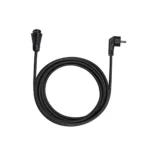

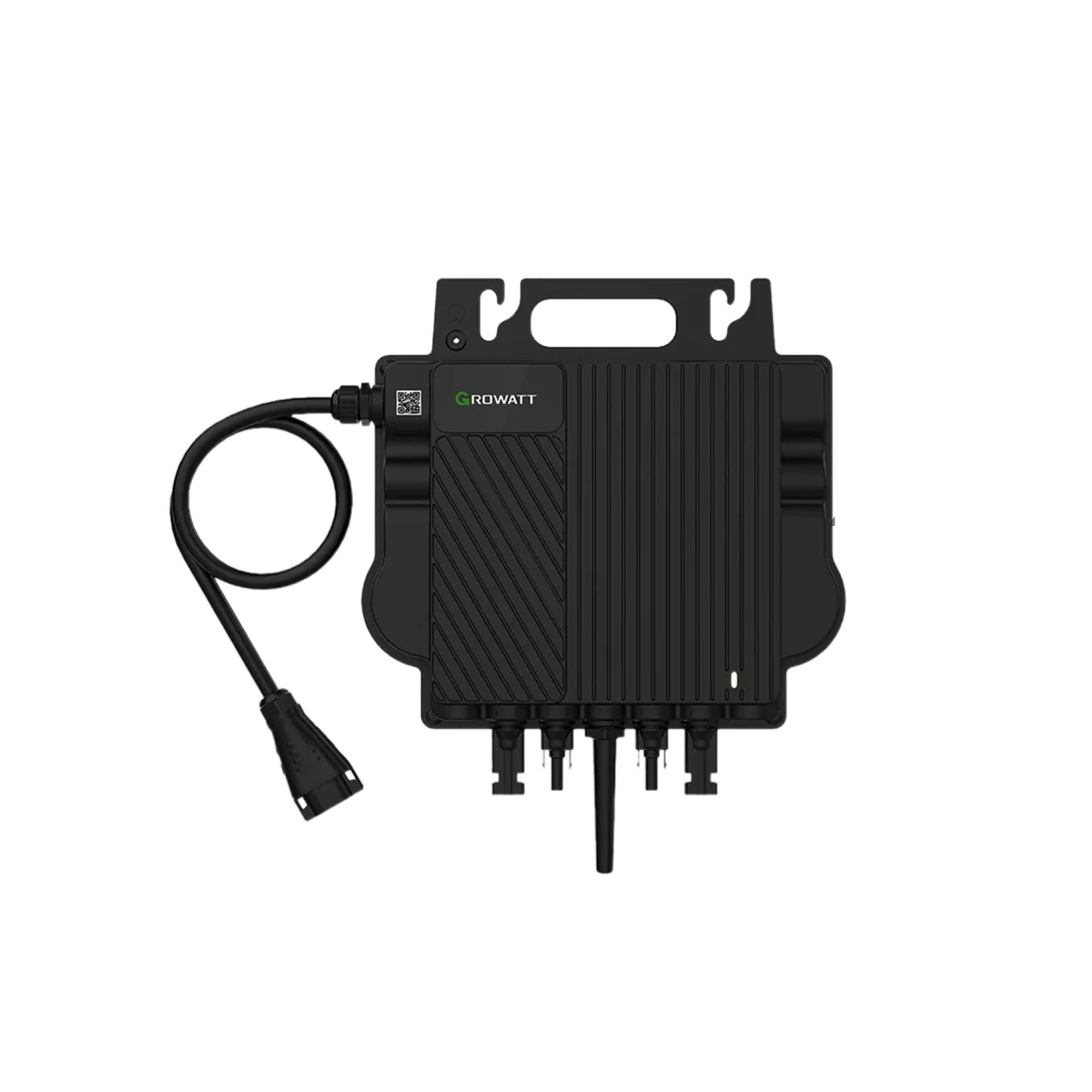


Growatt NEO 800W Micro Inverter for Low Voltage Energy Storage for Balcony
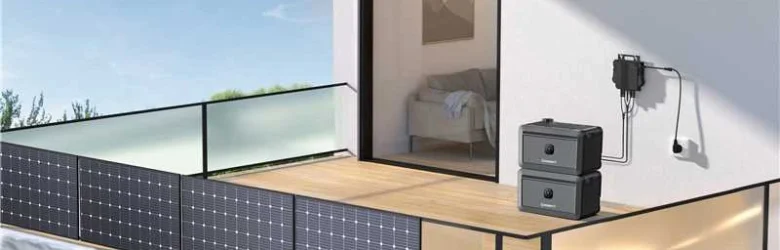
One of the most popular and best solutions for balcony solar panel system installations in Germany
Growatt NEO 800W Micro Inverter
The Growatt NEO 800W microinverter is built for the everyday reality of European residential rooftops, where installers encounter mixed roof orientations, varying module layouts, and shading patterns that change throughout the day. The NEO 800W sits at the centre of Growatt’s AC microinverter lineup and is designed specifically for installations where two modern high-efficiency PV modules must be controlled individually while delivering a stable and predictable AC output into the household circuit. Its power class fits the majority of contemporary residential rooftops, where modules typically sit between 400 and 500 watts and are arranged in pairs across different roof sections.
What sets the NEO 800W apart is its straightforward design philosophy. Instead of trying to cover every possible rooftop configuration with a single high-output device, Growatt designed this model to meet the specific needs of installers who work with split rooftops, partial shading, and small surfaces where module placement requires flexibility. The 800W output class matches the typical production of two standard modules operating under normal conditions, making the microinverter well-suited for a wide range of small residential systems without oversizing or unnecessary complexity.
Designed Around Real Residential Conditions
European residential rooftops rarely follow the ideal “one large string” layout. Many properties have skylights, chimneys, dormers, satellite equipment, roof windows, and irregular shapes that create small installation zones. The NEO 800W supports this kind of layout by accepting two modules on two separate MPPT channels. Each module operates independently, which is useful when the roof sections face different orientations or receive different sunlight levels.
In everyday situations, installers frequently see one module partially shaded in the morning while the second module remains fully exposed. In a string inverter, this would pull the entire string down to the lowest-performing module. With the NEO 800W, the shaded module affects only its own MPPT. The second module continues to operate at full capacity, maintaining higher system productivity throughout the day.
This independent behaviour is especially important in installations with:
East–west module configurations
A small south-facing surface combined with a secondary surface
Light shading from chimneys, trees, or neighbouring buildings
Irregular roof geometry where modules cannot be placed in symmetrical groups
Two-module add-ons to existing systems where available space is limited
The dual-MPPT architecture ensures stable AC output even when module conditions differ significantly.
Key Features – Growatt NEO 800W Microinverter
800W AC output for two high-efficiency PV modules
Dual MPPT inputs for independent module tracking
Supports 400–500W modules commonly used in EU residential systems
Built-in WiFi for inverter-level monitoring
Low-voltage AC architecture for simple, safe rooftop wiring
CE & EMC certified for European grid compliance
Passive-cooled, sealed enclosure for long-term outdoor operation
Lightweight, rail-mount design for fast installation
Power Class Matching for Modern PV Modules
The 800W AC output rating is selected specifically around two-module configurations that are common in European home installations. Typical modules used in residential projects today fall into the 400–500W range, depending on manufacturer, technology (mono-PERC or TOPCon), and physical dimensions. Pairing two such modules with the NEO 800W provides a balanced inverter loading ratio without unnecessary clipping during peak production hours.
The input parameters of the microinverter are designed for modules used in mainstream residential systems rather than oversized commercial modules. This means installers can select widely available module types from major European distributors without worrying about unusual voltage or current ranges. The inverter’s operating window complies with the electrical characteristics of the most common module series found across Germany, Austria, the Netherlands, Belgium, France, Italy, Spain, Poland, Czechia, and other European markets.
As with any rooftop system, the installer should confirm that the chosen modules fall within the inverter’s permitted Voc, Isc, and MPPT working range. These values determine long-term operational reliability and prevent shutdowns under cold morning conditions when module voltage temporarily rises.
AC Architecture for Simple, Low-Voltage Rooftop Wiring
The NEO 800W operates entirely on the AC side after converting DC from the two connected modules. This AC architecture means that installers do not need to design long high-voltage DC strings or manage DC cable routing over the roof surface. The maximum DC voltage stays low, which can simplify installation approval and improve safety in certain markets where DC limitation is preferred for small systems.
The AC output connects into a branch cable using the standard microinverter AC connectors defined in the installation manual. These connectors allow a series of microinverters to be arranged into a unified AC chain. The NEO 800W’s power class allows multiple units to be grouped safely into a household circuit, subject to national electrical rules and overcurrent protection requirements. Installers must consider breaker ratings, cable cross-sections, and the total AC load of the combined microinverter group, but this is standard practice for AC-only rooftop systems.
Because microinverters operate in parallel directly on the AC network, there is no single central device determining the behaviour of multiple modules. Each NEO 800W works independently, which allows easier system expansion. A house that starts with two modules on one roof face can later add another pair on a garage or pergola without redesigning the entire inverter configuration.
Grid Compliance and Safety Functions
The NEO 800W includes the protection measures that installers expect from equipment certified for European low-voltage grids. This includes mandatory anti-islanding functionality, voltage and frequency protection, reactive power behaviour according to local requirements, and quick response times during disturbances.
The inverter is supplied with the necessary CE marking and EMC certification, and is supported by grid-protection documentation that installers can provide to local grid operators during system registration. The German NA-Schutz documentation is particularly important for installers working in markets where grid operators require proof of compliance for each device.
During commissioning, the installer can select the appropriate grid profile using Growatt’s communication tools, ensuring that the inverter matches the required standards of the country in which it is installed. These profiles define how the inverter behaves during underfrequency, overfrequency, voltage fluctuations, and reconnection timings.
Monitoring Through Integrated WiFi
Monitoring is now standard in residential PV systems, and the NEO 800W includes integrated WiFi capability. This allows the installer to pair the inverter with the Growatt ShinePhone application or the ShineServer online platform. Once connected, the microinverter transmits detailed information about its operation, including:
Real-time AC power
Daily and historical production
Individual MPPT performance
System status information
Alerts and error codes
This monitoring is particularly useful in systems with two-module-per-microinverter layouts, as installers and homeowners can immediately see if one MPPT performs differently due to shading or module faults. It also helps during service visits, as performance data can be reviewed remotely without requiring immediate on-site inspection.
Mechanical Design and Rooftop Durability
The NEO 800W microinverter is built for long-term rooftop exposure. The sealed enclosure and passive cooling design allow the unit to operate in environments with rain, dust, snow, and wide temperature variations. The absence of active cooling components reduces the number of wearable parts inside the unit, lowering maintenance requirements over time.
The aluminium housing provides structural rigidity and supports efficient thermal dissipation during high-power operation. The mounting bracket supplied with the inverter allows the unit to be attached to module rails in orientations suitable for cable layout and rooftop geometry. Installers should follow the spacing recommendations defined in the installation manual to ensure adequate airflow around the unit.
The microinverter’s compact dimensions allow placement close to the module frame, reducing the length of DC wiring on the roof. The AC cable is routed along the mounting structure and connected to the branch cable to complete the AC chain.
Practical System Design Guidance
When designing a system around the NEO 800W, installers should consider the specific characteristics of the two modules attached to the inverter. Because each MPPT operates independently, the modules do not have to face the same direction or sit on the same roof plane. However, each module must remain within the inverter’s permissible voltage and current limits under the coldest and warmest expected temperatures.
The AC trunk cable must be sized according to the total number of microinverters connected to the circuit. For example, several NEO 800W units connected in parallel will contribute to a combined power load that must not exceed the circuit breaker rating. Growatt provides guidance on the maximum number of units that can be connected per branch, depending on the grid and the cable cross-section.
Proper grounding and bonding of the mounting structure and electrical components must follow local regulations. Installers should ensure that the AC trunk cabling is secured along the mounting structure and that all connectors are locked into place before energising the system.
Build a reliable solar panel system for your balcony with Growatt NEO Microinverter
Suitable Applications for the NEO 800W
This microinverter is commonly selected for systems such as:
Standard residential rooftop systems with a pair of modules per unit
East–west roofs where module orientation differs on each surface
Add-on PV modules for expanding an existing system
Installations on garages, carports, sheds, outbuildings, and auxiliary structures
Projects with shading obstacles affecting only some modules
Homes requiring module-level monitoring
Systems where low DC voltage is preferred for rooftop safety
Because the NEO 800W is sized for two modern modules, it provides installers with predictable performance behaviour and reduces design complexity for small systems.
Operational Behaviour in Real Conditions
During everyday operation, the NEO 800W continuously adjusts each MPPT to match real irradiance levels on the two modules. Morning and evening sunlight varies by roof orientation, and partial shading from objects like trees or chimneys can influence module production at different times. Because the inverter’s two MPPT channels operate independently, each module generates its optimal output regardless of what affects the other. This ensures a smooth and stable AC feed throughout the day.
Under full sun, the inverter regulates output and manages thermal conditions through passive cooling. If the unit approaches its temperature limits, it reduces power gradually to maintain safe operation. These thermal derating behaviours are standard for microinverters and form part of the long-term protection strategy.
A Practical Choice for European Installers
Professional installers across Europe often choose the NEO 800W when they need:
Dual-MPPT performance in a compact unit
Stable AC output for two high-efficiency modules
A microinverter that fits typical residential installations
Monitoring without the need for extra hardware
Straightforward installation steps
Reliable documentation and certificates for grid approval
A predictable long-term behaviour under European rooftop conditions
The NEO 800W is built around usability and installation practicality rather than extreme specifications. It aligns with the everyday needs of residential PV professionals who require equipment that performs consistently, offers stable monitoring, and comes with the documentation expected by grid operators and inspectors.
Yu need more info on sizing an energy storage system? Read our article on How to Size a Solar Panel System with Microinverters?
Product Datasheet and Downloads
FAQs About Growatt NEO Microinverters
The Growatt NEO 600, 800, and 1000M-X microinverters support modern high-power PV modules, including large-format mono-PERC and TOPCon modules commonly used in European residential and small commercial systems. Module compatibility depends on the inverter’s MPPT voltage/current window, typically suitable for panels in the 400–580 W range. Installers should always check the official datasheet to match module Voc and operating current with the inverter’s MPPT limits.
Check out the installation videos on our 3Buy Solar Youtube Channel or alternatively visit the product page on the Growatt manufacturer site for further info.
Yes. Every NEO 600–1000M-X model includes built-in WiFi communication, enabling real-time module-level monitoring through the Growatt ShinePhone and ShineServer platforms. This allows installers and end users to track performance, diagnose issues, and optimize system yield remotely.
Yes, the NEO series is well-suited for rooftops with varied orientation or partial shading. Each unit uses independent MPPT channels (depending on model), allowing each module to operate at its optimal point without affecting the rest of the array. This makes the NEO series a strong choice for complex residential rooftop layouts.
The NEO series holds CE, EMC, and full grid-compliance certifications required for EU markets. Additional documents include the official Netz- und Anlagenschutz (NA-Protection) certificate for German grid operators. These certifications ensure the microinverters meet all safety, EMC, and grid-connection regulations for residential and small commercial PV installations across Europe.







Reviews
Clear filtersThere are no reviews yet.