EV Accessories and Mounting


Balcony Solar System Installation – Technical and Commercial Guide
What Is a Balcony Solar System
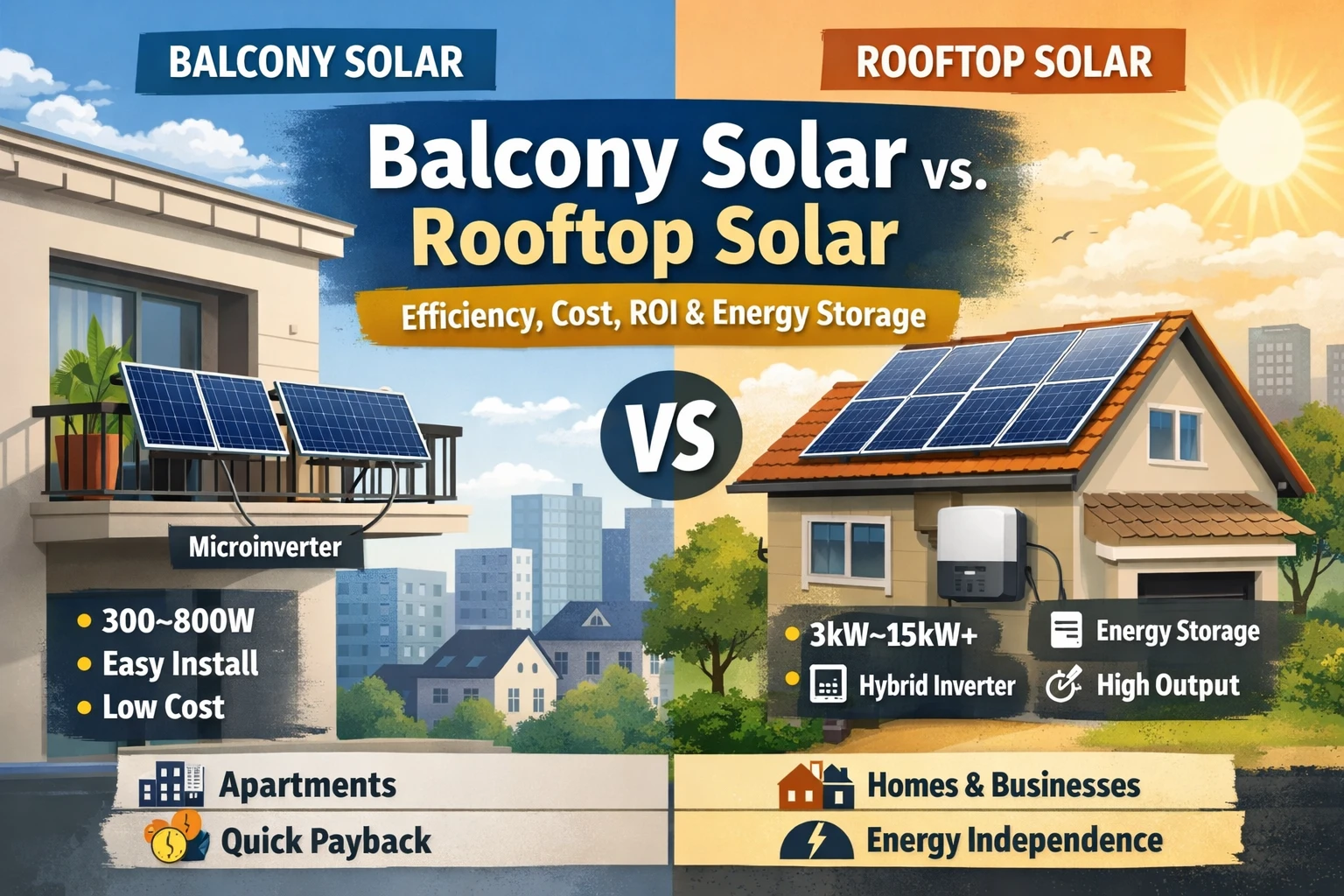
A balcony solar system is a small-scale photovoltaic system installed on a balcony using solar panels and a microinverter or hybrid inverter. It generates electricity for direct household consumption and can optionally integrate energy storage through a solar battery. These systems are typically plug-and-play and range between 300W and 800W in Europe.
Checkout out our article on the comparison of balcony v rooftop solar systems. … or about the comaprison of balcony versus portable solar kits.
Why Balcony Solar Systems Are Growing Fast in Europe
Balcony solar systems are no longer niche products. They are driven by:
- Rising electricity prices across Europe
- Regulatory support for plug-in solar systems
- Increased demand for decentralized energy
- Growth of prosumer and small-scale PV adoption
For a solar wholesaler or solar distributor, this is a high-volume entry product that leads to upselling solar inverter systems, solar batteries, and complete kits.
System Architecture – What Actually Makes a Balcony Solar Kit
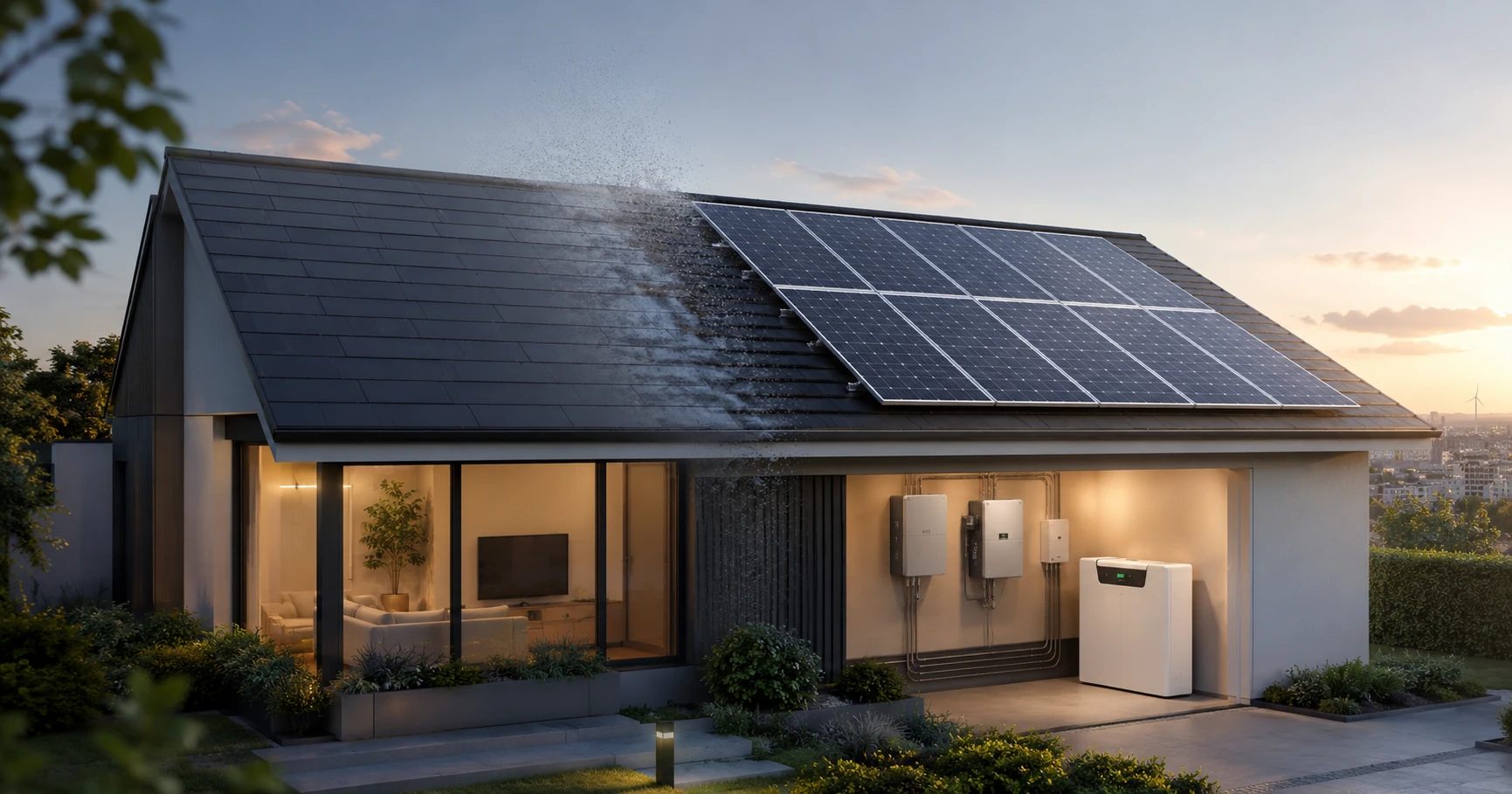
A professional balcony solar system is not just panels. It is a compact PV system including:
- High-efficiency solar panels (monocrystalline solar panels preferred)
- Microinverter or compact hybrid inverter
- AC connection cable (plug-in or grid connection)
- Mounting system for balcony railings
- Optional solar battery or energy storage system
The inverter is the critical component, as it defines system efficiency, safety, and grid compliance.
Microinverter vs Hybrid Inverter – What Installers Need to Know
Microinverter Systems (Most Common)
- Plug-and-play installation
- Module-level optimization
- Lower system complexity
- Ideal for 300W–800W balcony systems
Hybrid Inverter Systems (Advanced Setup)
- Allows solar battery integration
- Enables energy storage and backup
- Higher system cost but greater flexibility
For most balcony solar kits, microinverters dominate due to simplicity and compliance with EU plug-in standards.
System Sizing – What Actually Works in Real Projects
Typical balcony solar system sizes:
- 300W system – entry-level, minimal savings
- 600W system – standard EU limit in many countries
- 800W system – new regulatory maximum in several markets
Key constraint is not technology — it is regulation.
Installers and resellers must align system size with:
- Local grid injection limits
- Balcony space
- Load profile of the household
Installation – What Matters in Real Conditions
Orientation and Yield
- South-facing = highest output
- East/West = viable with lower yield
- Shading = major performance loss
Mounting Constraints
- Railing systems must handle wind load
- Weight distribution must be safe
- No structural damage allowed
Electrical Connection
- Plug-in systems must comply with local standards
- Grid registration may be required
- Anti-islanding protection is mandatory
This is where low-quality kits fail — not at the panel, but at compliance and safety.
Real Performance Expectations (Not Marketing Numbers)
Typical annual production:
- 300W system: ~250–350 kWh/year
- 600W system: ~500–700 kWh/year
- 800W system: ~700–900 kWh/year
Actual output depends on:
- Location (Germany vs Southern Europe)
- Orientation
- Shading
- Inverter efficiency
ROI and Payback – What Customers Actually Care About
Typical payback period:
- 3 to 6 years in most European markets
Drivers of ROI:
- Electricity price
- Self-consumption rate
- System cost
- Regulatory incentives
Balcony solar systems are not high-output systems — they are fast ROI systems.
Where Energy Storage Fits in Balcony Solar Systems
Energy storage is not standard in entry-level systems but is becoming more relevant.
Solar battery integration allows:
- Higher self-consumption
- Reduced grid dependency
- Backup capability (with hybrid inverter)
However:
- Adds cost
- Extends payback period
- Requires more complex system design
For a solar PV supplier, this is an upsell opportunity — not a default configuration.
Legal Framework – What Cannot Be Ignored
Across Europe:
- Plug-in systems are increasingly legalized
- 600W–800W limits are standard
- Registration is often required
- Smart meters may be mandatory
Ignoring compliance is the fastest way to create liability for installers and distributors.
Common Mistakes in Balcony Solar Projects
- Oversizing systems beyond legal limits
- Using low instead of high-quality microinverters
- Ignoring shading impact
- Poor mounting installation
- Unrealistic ROI expectations
These are the exact reasons why many low-cost solar webshop kits fail in real use.
Professional Recommendation (From a Solar Wholesaler and Distributor Perspective)
For installers, EPCs, and resellers:
- Use high-efficiency solar panels
- Choose reliable microinverters
- Offer compliant 600W–800W systems
- Add solar battery only when justified
- Sell complete kits to reduce installation errors
Balcony solar is not about maximum output — it is about optimized small-scale efficiency and fast deployment.
Balcony Solar Is a Volume Product, Not a Niche
Balcony solar systems are one of the fastest-scaling segments in Europe.
For solar wholesalers and distributors:
- It is a customer acquisition product
- It leads to larger PV system sales
- It supports energy storage upsell
For installers:
- It is fast, repeatable business
- Low complexity
- High demand
The winners in this segment will not be those who sell the cheapest kits, but those who deliver reliable, compliant, and scalable solar solutions.
FAQ
What is a balcony solar system
A balcony solar system is a small photovoltaic system installed on a balcony using solar panels and a microinverter to generate electricity for household use.
How much power can a balcony solar system produce
Most systems produce between 300W and 800W depending on size and regulations.
Do balcony solar systems need registration
Yes, in many European countries they must be registered with the grid operator.
Are balcony solar systems worth it
Yes, they typically offer a 3–6 year payback period depending on electricity prices and system cost.
Can balcony solar systems use batteries
Yes, but only when paired with a hybrid inverter and proper system design.