EV Accessories and Mounting



A Practical RFQ Guide for Commercial Battery Storage, C&I BESS and Scalable Energy Storage Projects in Europe
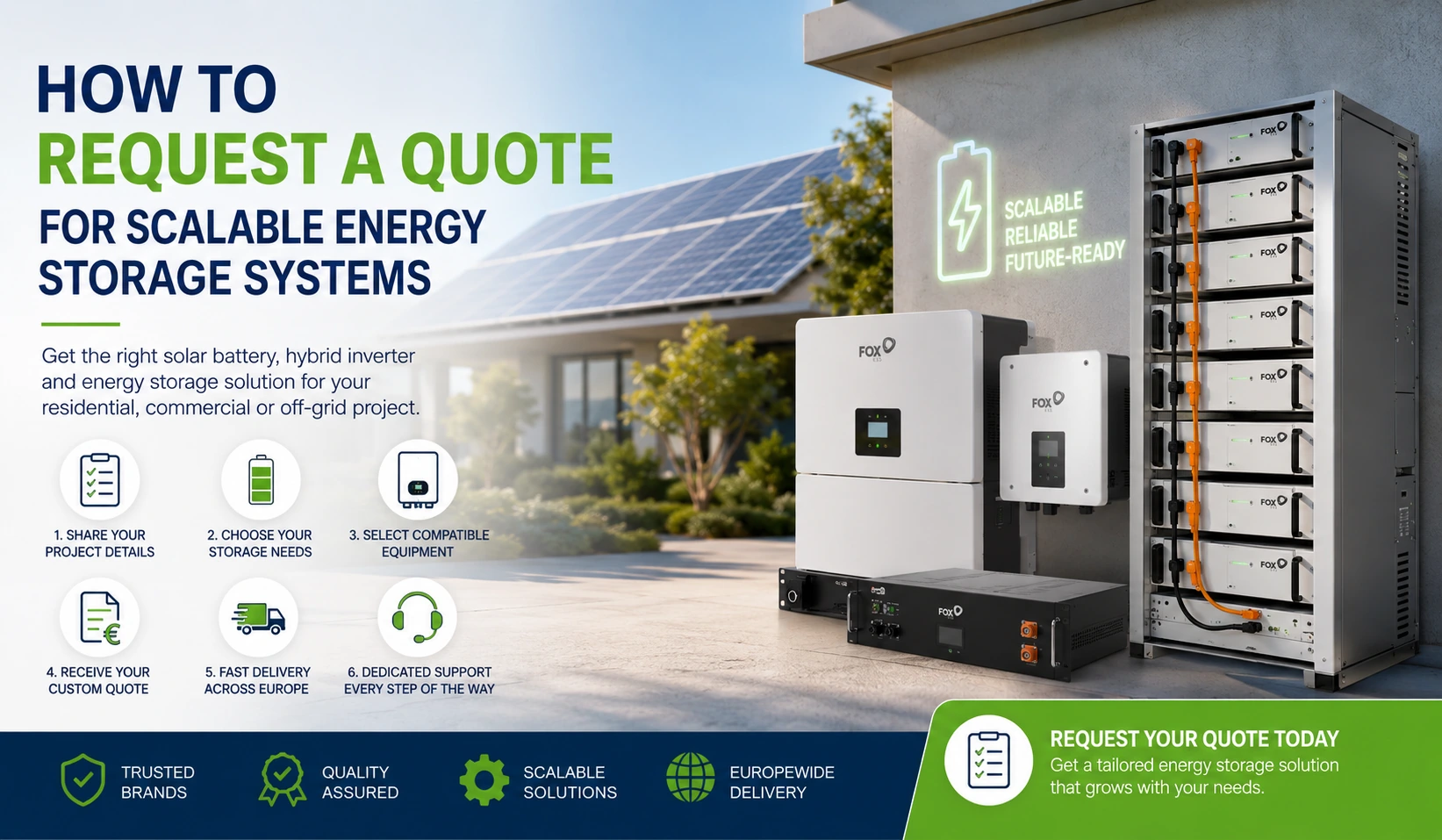
Requesting a quote for a commercial energy storage system is not the same as asking for the price of a battery.
For a useful quotation, the supplier needs to understand the project behind the equipment: required storage capacity, charge and discharge power, load profile, existing or planned solar PV, grid connection, inverter or PCS architecture, backup requirements, installation environment, expansion plans and delivery schedule.
This becomes increasingly important with commercial battery storage and C&I BESS projects, where two systems with the same capacity in kWh can have completely different power, controls, installation requirements and costs.
3Buy Solar supports professional buyers across Europe with commercial energy storage systems, solar batteries, hybrid inverters, battery cabinets, scalable BESS configurations and complete solar PV and energy storage solutions.
Typical enquiries range from smaller commercial battery systems through 30 kWh, 50 kWh, 100 kWh, 200 kWh and larger scalable energy storage projects for solar self-consumption, peak shaving, load shifting, backup, EV charging infrastructure and energy management.
If you are preparing an RFQ, the most useful starting point is not simply:
“Please quote a 100 kWh battery.”
Instead, tell us what the system needs to do.
That makes it possible to compare equipment on the basis of the actual project rather than capacity alone.
What Information Is Needed for a Commercial Energy Storage Quote?
For an initial commercial battery storage quotation, provide as much of the following information as is available:
- Project country and postcode
- Application and project type
- Required battery capacity in kWh
- Required charge/discharge power in kW
- Existing or planned PV capacity in kWp
- Annual electricity consumption in kWh or MWh
- 15-minute or 30-minute load profile, where available
- Maximum site demand in kW
- Grid connection capacity in kW or kVA
- Grid import/export restrictions
- Single-phase or three-phase connection
- Existing inverter or PCS manufacturer and model
- Peak shaving requirement
- Backup requirement
- Critical backup load in kW
- Required backup duration
- AC-coupled or DC-coupled preference, if already specified
- Indoor or outdoor installation
- Available installation space
- Preferred battery or inverter manufacturer
- EMS, Modbus or other communication requirements
- Required documentation
- Target delivery date
- Target commissioning date
- Expansion requirements
- Project quantity
You do not necessarily need every item before requesting a quote.
An early-stage project may only have a site location, approximate PV size, consumption data and target battery capacity. A project approaching procurement should normally have considerably more detail.
The important point is to provide the information that is already known rather than reducing a complex commercial project to a single battery capacity.
Commercial Energy Storage RFQ: Start With the Application
The application is one of the first things we need to know.
A 100 kWh battery designed primarily to absorb excess solar generation is not necessarily specified in the same way as a 100 kWh system intended for peak shaving or backup.
Typical commercial and industrial applications include:
PV Self-Consumption
The battery stores surplus solar PV generation that would otherwise be exported or curtailed and makes that energy available when site demand exceeds PV production.
Useful RFQ information includes:
- PV system size
- Expected annual PV generation
- Site consumption profile
- Export limitation
- Daytime and evening loads
- Required battery capacity
For an existing PV system, include the inverter manufacturer and exact model.
Peak Shaving
A battery can discharge during periods of high demand to reduce the site’s grid peak.
For a peak-shaving quotation, provide the load profile and maximum demand wherever possible.
Annual electricity consumption alone is not enough.
A site consuming 500 MWh annually with relatively flat demand requires a different design from a site consuming the same amount but experiencing short 300 kW demand peaks.
Useful data includes:
- 15-minute load profile
- Maximum measured demand
- Grid connection limit
- Target peak
- Duration of peak events
- Available charging periods
Load Shifting
The battery is charged when electricity is available at a favourable time or cost and discharged during higher-cost or higher-demand periods.
Here, the required energy capacity in kWh and required power in kW both matter.
Commercial Backup
If backup is required, specify:
- Critical loads
- Required backup power
- Required autonomy
- Three-phase or single-phase loads
- Motor or compressor starting loads
- Switching requirements
- Whether the whole site or selected circuits require backup
A large battery does not automatically provide large backup power. The inverter or PCS and system architecture determine how much power can actually be supplied.
EV Charging Support
Commercial EV charging can create substantial short-duration loads.
Battery storage may be used alongside charging infrastructure where grid capacity is limited or where PV generation is available on site.
Provide:
- Number of chargers
- Charger power
- Expected simultaneous charging
- Existing grid capacity
- PV capacity
- Operating hours
- Expected charging profile
C&I Energy Management
Larger C&I projects may combine several objectives:
PV self-consumption + peak shaving + EV charging + backup + tariff optimisation.
These projects normally require a more detailed energy profile and control strategy before final equipment can be specified.
kWh and kW: Specify Both Where Possible
This is one of the most important parts of a commercial energy storage RFQ.
kWh describes energy.
kW describes power.
They are not interchangeable.
A 100 kWh BESS tells us approximately how much energy the battery can store. It does not tell us whether the project needs 25 kW, 50 kW, 100 kW or 200 kW of charge/discharge power.
For example:
100 kWh / 50 kW
and
100 kWh / 100 kW
have the same nominal energy capacity but are very different systems.
The second system can theoretically discharge the same amount of stored energy much faster and requires equipment designed for the higher power.
This affects:
- Inverter or PCS selection
- Battery current
- C-rate
- DC architecture
- Protection
- Cabling
- Thermal management
- Grid connection
- Backup capability
- System cost
If the required kW is not yet known, provide the load profile and project objective so it can be evaluated.
30 kWh, 50 kWh, 100 kWh and Larger Commercial Battery Storage
Commercial energy storage does not begin at one fixed capacity.
A smaller business may need 30–50 kWh. A larger commercial PV installation may require 100–200 kWh. Industrial projects can move considerably beyond this.
The correct capacity depends on the application.
30–50 kWh Commercial Battery Storage
Systems around 30–50 kWh can be suitable for smaller commercial buildings, workshops, farms, offices, hospitality sites and other businesses where the objective is primarily PV self-consumption, smaller peak reduction or limited backup.
When requesting a quote, include the required power rather than only the storage capacity.
50–100 kWh Battery Storage
A 50 kWh or 100 kWh commercial battery system is increasingly relevant for larger rooftop PV installations, agricultural sites, workshops, retail premises, offices and EV charging applications.
At this size, project data becomes more important.
A quotation should consider:
- Battery capacity
- Usable energy
- Inverter/PCS power
- PV capacity
- Site load
- Peak demand
- Grid limitations
- Required operating mode
- Installation location
- Scalability
100–500 kWh C&I BESS
For larger projects, battery storage increasingly becomes an integrated BESS project rather than simply a battery purchase.
Browse our commercial energy storage systems when sourcing larger commercial and C&I storage configurations.
Projects in this range may require:
- Battery cabinets
- Dedicated PCS
- EMS
- Site controller
- Protection equipment
- Metering
- Monitoring
- HVAC or thermal management
- Fire-safety provisions
- Communication integration
- Site-specific engineering
For these projects, provide a load profile and single-line diagram where available.
Provide the Site Load Profile
For commercial energy storage, the load profile is often one of the most useful documents you can send with an RFQ.
Ideally, provide 15-minute or 30-minute interval consumption data.
This allows the project to be assessed against actual site behaviour rather than monthly or annual averages.
A load profile can reveal:
- Base load
- Daytime demand
- Night load
- Short demand peaks
- Seasonal variation
- Operating hours
- Weekend behaviour
- Potential battery charging windows
- Potential peak-shaving opportunities
If interval data is unavailable, provide:
- Annual electricity consumption
- Monthly consumption
- Maximum recorded demand
- Operating hours
- Major electrical loads
- Expected future loads
For a new building without historical consumption data, provide the available electrical design information and expected operating profile.
Existing and Planned Solar PV
If the project includes solar PV, provide the PV system details.
For an existing installation:
- PV capacity in kWp
- Solar panel quantity and power where relevant
- Inverter manufacturer
- Exact inverter model
- Number of inverters
- AC rating
- Available monitoring data
- Grid export limit
- Annual PV generation where known
For a new project, provide the planned PV capacity and inverter architecture.
This information helps determine whether the energy storage system should be integrated through an existing hybrid platform, an AC-coupled configuration, a new hybrid inverter or another commercial storage architecture.
Not every existing solar inverter can simply accept a battery.
AC-Coupled or DC-Coupled Energy Storage
If the project design has already established the coupling architecture, include it in the RFQ.
If not, provide the existing system information and let the technical design determine the appropriate approach.
DC-Coupled Storage
In a DC-coupled system, PV and battery storage are integrated on the DC side through compatible equipment.
This can be particularly relevant for new hybrid PV installations.
AC-Coupled Storage
AC coupling can be useful for retrofits and projects where an existing PV system remains in place while battery storage is added separately.
The right architecture depends on:
- Existing equipment
- Project objective
- Required power
- Grid connection
- Backup requirements
- Control strategy
- System size
There is no universal answer. The project decides.
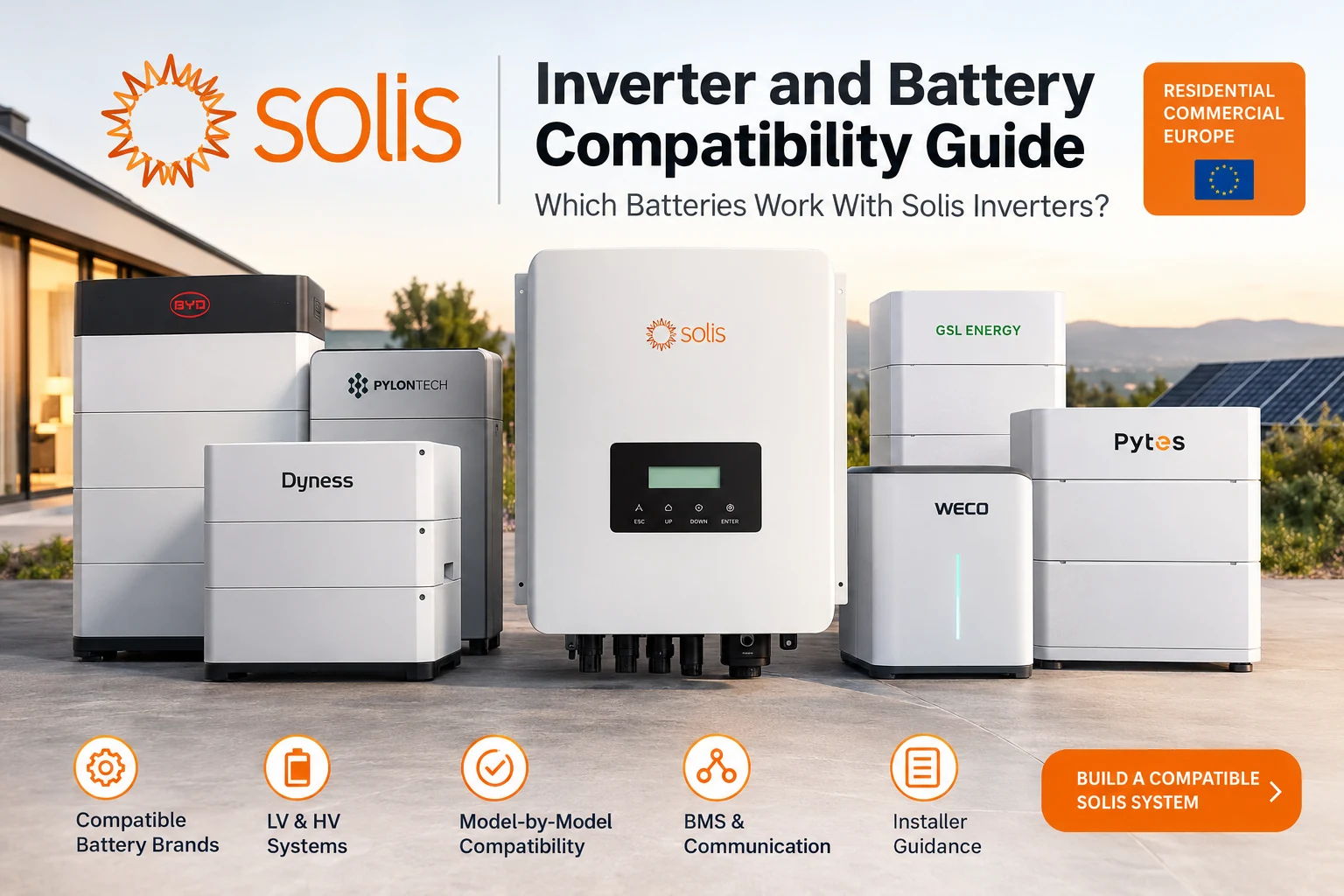
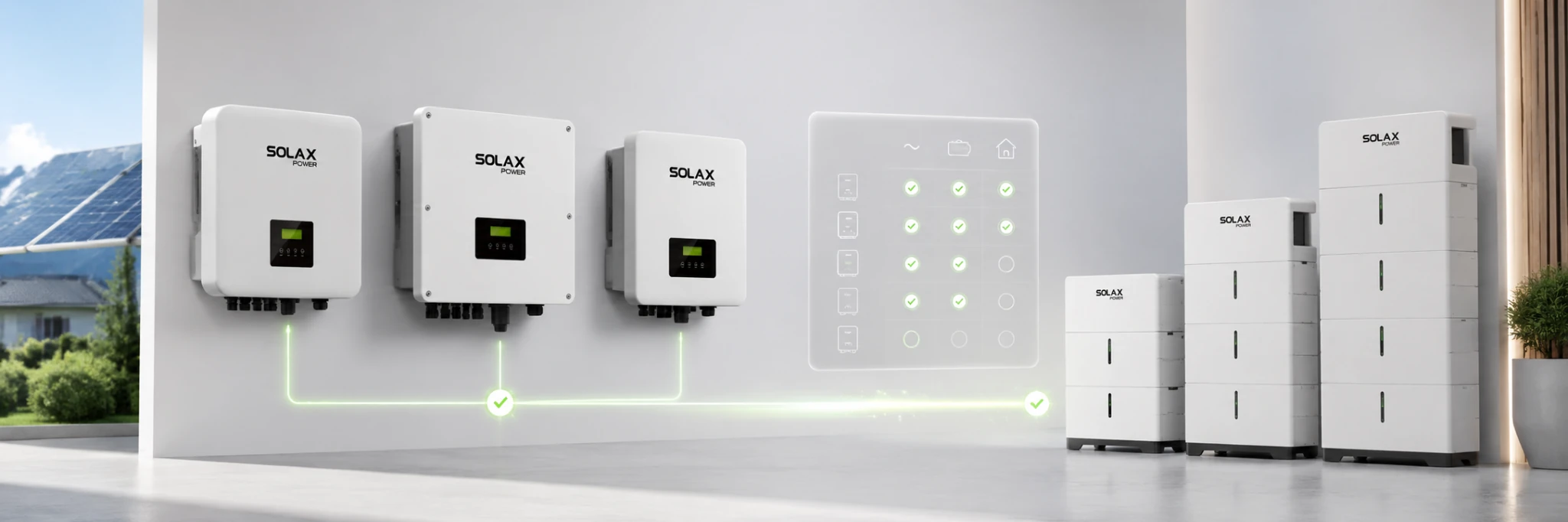
Battery and Inverter Compatibility
Compatibility remains critical even in larger commercial systems.
For solar batteries connected to hybrid inverters, check:
- Battery voltage
- Inverter battery-voltage range
- Maximum battery current
- BMS protocol
- CAN or RS485 communication
- Supported battery model
- Firmware
- Module limits
- Charge/discharge limits
- Manufacturer approval
Having the correct voltage is not enough.
A battery can be electrically within the inverter’s voltage range and still fail to communicate correctly with the inverter.
For this reason, an RFQ should identify the exact inverter model, not simply the manufacturer.
If the project requires a new inverter and battery together, the quotation can instead be prepared around a compatible system platform.
Browse hybrid inverters when comparing battery-ready inverter platforms.
High-Voltage or Low-Voltage Battery Storage
Battery voltage architecture should be matched to the inverter or PCS.
High-Voltage Batteries
High-voltage batteries are widely used with modern hybrid inverter platforms and larger modular battery systems.
An HV battery commonly uses multiple modules connected in series to create the required operating voltage.
Check:
- Minimum module quantity
- Maximum module quantity
- Minimum system voltage
- Maximum system voltage
- BMS/controller
- Inverter operating range
- Expansion limits
Low-Voltage Batteries
Low-voltage batteries are commonly based around 48V/51.2V architecture and remain widely used in hybrid, backup and off-grid applications.
At lower DC voltage, current becomes particularly important.
Check:
- Maximum continuous battery current
- Inverter battery-current limit
- Cable requirements
- Parallel battery limits
- Busbars
- Protection
- BMS communication
Do not select an HV or LV architecture purely on battery price. It must fit the complete system.
LiFePO4 Battery Storage
Many modern stationary battery storage systems use LiFePO4 – lithium iron phosphate – chemistry.
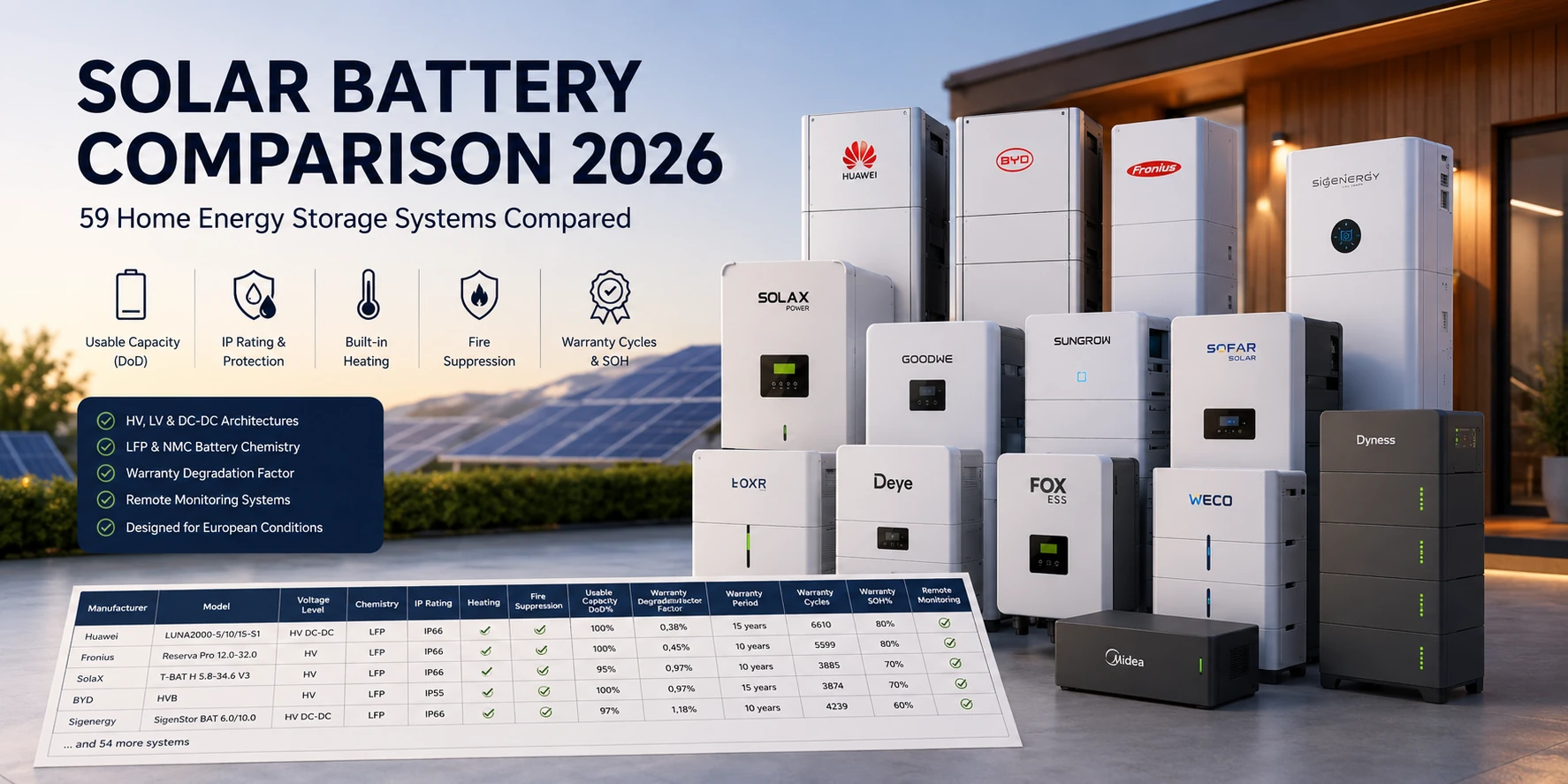
When comparing LiFePO4 batteries for a project, the headline capacity is only one specification.
Check:
- Nominal energy
- Usable energy
- Nominal voltage
- Operating-voltage range
- Depth of discharge
- Continuous charge current
- Continuous discharge current
- Peak current
- Cycle specification
- BMS
- Communication
- IP rating
- Operating temperature
- Expansion limits
- Warranty
Two batteries with the same nominal capacity can behave very differently once power, communication and system architecture are taken into account.
Nominal Capacity vs Usable Capacity
A quotation should clearly identify whether the stated capacity is nominal or usable.
For example, a battery described as 100 kWh nominal may provide less than 100 kWh of usable energy depending on the permitted operating window.
This matters when comparing offers.
A lower-priced system is not necessarily cheaper if it provides less usable energy or requires additional equipment that another quotation already includes.
For procurement comparisons, look at usable kWh rather than nominal capacity alone.
Charge and Discharge Power
Battery power must match the application.
For PV self-consumption, the system may need enough charging power to absorb the expected solar surplus.
For peak shaving, the battery must provide sufficient discharge power during the peak event.
For backup, it must support the critical load.
For EV charging support, considerably higher instantaneous power may be required.
Check both the battery and inverter/PCS limitations.
The maximum system power is not determined by whichever component has the largest number on its datasheet. The complete system has to operate within the limits of all connected equipment.
Grid Connection and Import/Export Limits
Commercial storage design is closely connected to the site’s grid connection.
Include:
- Connection capacity
- Import limit
- Export limit
- Transformer rating where relevant
- Grid operator requirements already known
- Existing generation
- Planned additional generation
If the purpose of the battery is to avoid increasing an existing grid connection, say so clearly.
For example:
“The site has a 100 kW grid connection but planned EV charging would create a peak above this level. The battery should keep grid import below 100 kW.”
That gives the system designer far more useful information than:
“Please quote 100 kWh.”
Peak Shaving Requirements
If peak shaving is one of the objectives, provide:
Current maximum demand: 180 kW
Target maximum grid demand: 120 kW
Typical peak duration: 30–60 minutes
Peak frequency: weekdays
Load profile: attached
That immediately defines the job the battery is expected to perform.
Without this information, the battery may be oversized in energy, undersized in power, or both.
Backup and Critical Loads
Commercial backup should be defined precisely.
“Backup required” is not enough.
Tell the supplier:
- Which loads need backup
- Total critical load in kW
- Maximum starting load
- Required autonomy
- Single-phase or three-phase
- Whether uninterrupted operation is required
- Whether a generator is present
- Whether automatic transfer is required
Not every hybrid inverter or commercial BESS provides the same backup functionality.
The battery may contain enough stored energy for several hours while the inverter or PCS remains unable to supply a particular high-power load.
EMS, Monitoring and Communication
For larger commercial systems, specify whether integration with an Energy Management System is required.
Relevant requirements may include:
- Modbus TCP
- Modbus RTU
- API access
- External meter integration
- Site controller
- Remote monitoring
- PV integration
- EV charger integration
- Generator control
- Building-management integration
- Export limitation
- Dynamic charge/discharge control
If the project has a defined control specification, include it with the RFQ.
For simpler projects, state the required operating objective and available site equipment.
Installation Location
The installation environment can eliminate otherwise suitable products.
Tell the supplier whether the battery or BESS will be installed:
- Indoors
- Outdoors
- In a plant room
- In a warehouse
- In a technical room
- Under a canopy
- In an outdoor cabinet
- In a containerised system
- In a high-temperature environment
- In a cold environment
Also provide available dimensions where space is restricted.
Relevant product specifications include:
- IP rating
- Operating temperature
- Humidity limits
- Altitude
- Ventilation
- Clearances
- Floor loading
- Access for maintenance
- Cabinet dimensions
- Weight
For larger battery cabinets, access and unloading requirements should be considered before the equipment arrives.
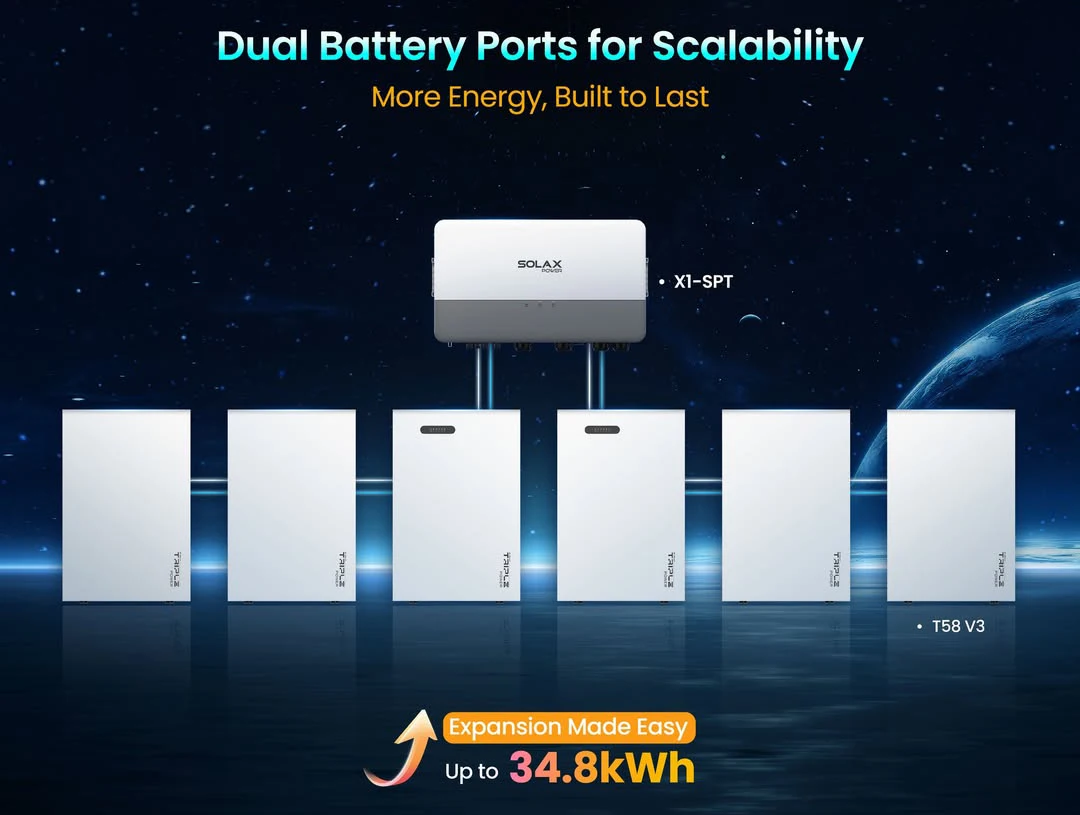
Scalability and Future Expansion
Scalability has to be planned rather than assumed.
Battery platforms can impose limits on module quantity, parallel operation, voltage, firmware and control architecture.
If expansion is likely, tell the supplier what you expect.
For example:
“Initial requirement is 100 kWh / 50 kW. The system should support expansion to approximately 200 kWh within two years.”
or:
“Phase 1 requires one battery cabinet. Phase 2 may require additional cabinets as the PV array and EV charging infrastructure are expanded.”
Then check:
- Maximum battery capacity
- Maximum cabinets
- Parallel-system limits
- BMS architecture
- PCS expansion
- EMS capability
- Physical space
- Future module availability
- Firmware requirements
A system that is cheap today can become an expensive choice if it cannot accommodate the next project phase.
Delivery Country and Project Logistics
Commercial batteries and BESS equipment are not ordinary parcel shipments.
Provide:
- Delivery country
- Postcode
- Full site type
- Requested Incoterm where applicable
- Unloading capability
- Forklift availability
- Loading dock availability
- Restricted vehicle access
- Required delivery week
- Target commissioning date
For battery cabinets and larger energy storage systems, dimensions and weight can materially affect freight and unloading.
If equipment is being delivered directly to a construction site, mention this in the RFQ.
3Buy Solar supports energy storage procurement across European markets, subject to product availability, project requirements and delivery conditions.
Technical Documentation Required for a BESS Project
If the project requires specific documentation, state this before the quotation is finalised.
Depending on the equipment and project, documentation may include:
- Datasheets
- Installation manuals
- Battery compatibility lists
- Warranty conditions
- EU Declaration of Conformity
- Safety documentation
- Transport documentation
- Wiring diagrams
- Communication documentation
- Commissioning instructions
- Certificates supplied by the manufacturer
Do not wait until equipment reaches site to discover that a required document is unavailable.
For tender and EPC work, provide the documentation requirements with the initial RFQ where possible.
Preferred Manufacturer or Open Specification?
If the project specifies a manufacturer, include the exact brand or approved-equipment list.
If it does not, say:
Open to technically compatible alternatives.
That allows the quotation to consider different battery, inverter or BESS platforms where they meet the required specification.
3Buy Solar works across multiple solar PV and energy storage brands, which allows project sourcing to be approached around the required system rather than forcing every project into one manufacturer ecosystem.
If an existing inverter is already installed, however, compatibility can significantly narrow the available battery options.
How to Write a Commercial Energy Storage RFQ
A good RFQ does not need to be complicated.
It needs to be specific.
Example: 50–100 kWh Commercial PV + Storage Project
We are requesting a quotation for a commercial battery storage system for an existing 50 kWp rooftop PV installation in Austria.
The site is three-phase and operates Monday to Friday. Annual electricity consumption is approximately 95 MWh. We are considering 50–100 kWh of storage for increased PV self-consumption and peak shaving.
The existing inverter details and recent load data are attached.
Please quote a scalable battery storage configuration including compatible inverter/PCS where required, BMS, monitoring, necessary connection accessories, available technical documentation and delivery.
Outdoor installation is preferred. Future expansion should be possible if supported by the proposed system.
That is enough information to begin a meaningful technical discussion.
Example: 100–200 kWh C&I BESS RFQ
We require a quotation for a scalable C&I battery energy storage system for a commercial site in Germany.
Existing PV capacity: 250 kWp
Target storage capacity: 100–200 kWh
Target PCS power: approximately 100 kW
Grid connection: three-phase
Application: PV self-consumption and peak shaving
Load profile: 15-minute data available
Installation: outdoor battery cabinet
Backup: not required
EMS: Modbus communication required
Future expansion: preferred
Target delivery: Q4 2026Please include the proposed battery configuration, PCS/inverter, usable capacity, continuous charge/discharge power, monitoring/EMS requirements, required accessories, technical documentation, warranty information, lead time and delivery.
This is the kind of RFQ that can be priced and evaluated efficiently.
What Should a Commercial Energy Storage Quote Include?
A serious commercial battery storage quotation should make the proposed system understandable.
Depending on the project stage, it should identify:
- Manufacturer
- Battery model
- Battery quantity
- Nominal capacity
- Usable capacity
- Inverter or PCS
- Continuous power
- Voltage architecture
- Battery chemistry
- BMS
- Communication
- Maximum expansion
- Monitoring/EMS
- Required accessories
- Protection scope where included
- Backup functionality where applicable
- Warranty
- Technical documentation
- Lead time
- Delivery conditions
- Quotation validity
Be careful when comparing quotations from different suppliers.
One offer may quote a battery cabinet only.
Another may include the PCS, BMS, EMS, communication equipment and accessories.
The headline price tells very little until you know what is actually included.
Compare Complete Systems, Not Only Battery Price
This is where procurement teams can easily compare the wrong numbers.
For example:
Offer A: €X for 100 kWh battery modules.
Offer B: €Y for a 100 kWh battery system including BMS, cabinet and connection equipment.
Offer A may appear cheaper while requiring thousands of euros of additional equipment before it can operate.
Compare:
- Usable capacity
- Continuous power
- BMS
- PCS/inverter
- Cabinet
- EMS
- Cables
- Communication equipment
- Monitoring
- Required protection
- Warranty
- Delivery
- Commissioning scope where applicable
For commercial storage, the useful metric is not simply the cheapest battery €/kWh.
It is the cost and suitability of the complete system required by the project.
Common Mistakes When Requesting a Commercial BESS Quote
Asking Only for a Battery Price
“Price for 100 kWh battery?” leaves too many unanswered questions.
At minimum, explain the application and required power.
Providing Annual Consumption but No Load Profile
Annual consumption is useful, but it cannot show when demand occurs.
For peak shaving and energy-management projects, interval data is considerably more valuable.
Confusing kW and kWh
A request for “100 kW battery” can mean either power or storage capacity.
Specify both where possible:
100 kWh / 50 kW
is unambiguous.
Ignoring the Existing Inverter
For retrofit projects, provide the exact inverter model.
Do not assume any solar battery can be connected to an existing PV inverter.
Forgetting Grid Limits
If the project exists because of a restricted grid connection, that constraint belongs at the top of the RFQ.
Ignoring BMS and Communication Compatibility
CAN or RS485 connectors alone do not prove compatibility.
The inverter and battery must support the correct communication protocol.
Not Defining Backup
“Backup” can mean one 3 kW critical-load circuit or an entire commercial building.
Specify what actually needs to remain powered.
Ignoring Future Expansion
If the project is expected to double in two years, say so before equipment is selected.
Comparing Nominal Capacity Only
Compare usable energy and available power, not only the number printed beside “capacity”.
Leaving Logistics Until the End
A large battery cabinet arriving at a site without suitable unloading equipment creates an avoidable problem.
Include logistics early.
Commercial Energy Storage vs Residential Battery Quotes
Residential and commercial storage share some equipment concepts, but the procurement process is not identical.
A residential solar battery quote may primarily consider:
- Household consumption
- PV size
- Evening use
- Inverter compatibility
- Backup
- 5–20 kWh capacity
- Installation location
Commercial and C&I projects are more likely to require:
- Interval load data
- Peak demand
- Grid connection limits
- kW and kWh specification
- PCS selection
- EMS integration
- Commercial backup requirements
- Cabinet or rack architecture
- Freight planning
- Site documentation
- Phased expansion
- Project schedule
Residential battery storage remains available through the broader solar battery range, while this RFQ process is particularly valuable when the project moves beyond straightforward product selection.
Off-Grid and Special Energy Storage Projects
Scalable storage is also used in off-grid and grid-constrained projects.
These systems require additional information because the battery may carry a much larger proportion of the site’s energy demand.
For an off-grid quotation, provide:
- Daily energy consumption
- Maximum load
- Starting/surge loads
- Required autonomy
- PV capacity
- Location
- Seasonal usage
- Generator availability
- Required inverter power
- Installation conditions
An off-grid quotation may include PV modules, batteries, off-grid inverter, MPPT charge controller, monitoring, DC protection and generator integration.
Off-grid storage should never be sized from battery capacity alone.
Requesting a Commercial Energy Storage Quote from 3Buy Solar
3Buy Solar supports professional solar PV and energy storage procurement across Europe.
Depending on the project, a quotation can cover:
- Solar batteries
- Commercial energy storage systems
- C&I BESS
- Hybrid inverters
- Battery modules
- Battery cabinets
- BMS components
- High-voltage batteries
- Low-voltage batteries
- PCS/inverter equipment
- Monitoring
- Smart meters
- Energy storage accessories
- Energy storage kits
- Solar PV components
- Technical documentation
- Project delivery
For installers and EPCs, an RFQ can also be used to check whether the proposed battery and inverter architecture is suitable before final equipment selection.
Where a project specification already exists, send it with the enquiry.
Where it does not, provide the available site data and explain what the storage system is expected to achieve.
Before Accepting a Commercial Energy Storage Quote
Before placing an order, check the complete configuration.
Review:
- Exact battery model
- Number of modules/cabinets
- Nominal capacity
- Usable capacity
- Continuous power
- PCS/inverter model
- Voltage architecture
- BMS
- Communication
- Expansion limits
- Monitoring
- EMS requirements
- Backup capability
- Included accessories
- Protection scope
- Installation requirements
- IP rating
- Operating temperature
- Warranty
- Documentation
- Delivery
- Lead time
For a retrofit, reconfirm compatibility with the existing equipment.
For a scalable system, confirm what is required to expand it later.
For C&I projects, make sure the quoted power and energy figures correspond to the project specification.
Better Project Data Produces a Better Energy Storage Quote
A useful commercial energy storage quotation starts with the site, not the battery catalogue.
Define what the system needs to achieve.
Is the objective PV self-consumption, peak shaving, load shifting, backup, EV charging support, grid-capacity management or a combination of these?
Then provide the numbers that define the project:
kWh. kW. PV kWp. Load profile. Peak demand. Grid capacity. Backup load. Site location.
From there, battery architecture, inverter or PCS, BMS, EMS, scalability and installation requirements can be evaluated much more accurately.
For European installers, EPCs and commercial project buyers, this also makes quotations easier to compare. Instead of receiving several offers for vaguely similar batteries, you can compare systems against the same technical requirement.
3Buy Solar supplies solar PV, battery storage and scalable energy storage equipment for residential, commercial and C&I projects across Europe, with project sourcing based on the required system configuration and available manufacturer documentation.
For a commercial battery storage or BESS quotation, send the project information you already have. A load profile, existing PV/inverter details and clear kW/kWh requirement are particularly useful.
Frequently Asked Questions
How do I request a quote for commercial energy storage?
Provide the project location, application, required storage capacity in kWh, required power in kW, PV capacity, load profile where available, grid connection, backup requirements, installation environment and target delivery date. For an existing PV system, include the inverter manufacturer and exact model.
What information is required for a C&I BESS RFQ?
For a C&I BESS project, provide the site load profile, annual consumption, maximum demand, grid connection limit, existing or planned PV capacity, target battery capacity, target PCS power, operating objective, installation location, communication requirements and project schedule.
Can I request a 50 kWh commercial battery storage quote?
Yes. For a 50 kWh system, also provide the required charge/discharge power and application. A 50 kWh battery intended for solar self-consumption may require a different configuration from one intended for high-power peak shaving or backup.
Can I request a 100 kWh BESS quote?
Yes. State whether 100 kWh refers to the required nominal or usable energy where known and provide the required system power in kW. Include the load profile, PV capacity, grid connection and application for a more accurate quotation.
What is the difference between kW and kWh in a BESS quote?
kWh describes the amount of energy stored. kW describes the rate at which the system can charge or discharge. A 100 kWh battery could be paired with different PCS/inverter power ratings depending on the project.
Do I need a load profile to request an energy storage quote?
Not for an initial enquiry, but it is highly recommended for commercial projects involving peak shaving, load shifting or energy management. A 15-minute or 30-minute load profile provides much more useful design information than annual consumption alone.
What load profile format should I send?
CSV or spreadsheet data with timestamps and interval consumption or demand is generally useful. If interval data is unavailable, provide monthly consumption, annual consumption, maximum demand and operating hours.
Can commercial battery storage be added to an existing solar PV system?
Often yes, but the correct architecture depends on the existing inverter, PV system and project objective. The solution may be AC-coupled, use a compatible battery-ready inverter or require another system design.
Why do you need the exact inverter model?
Battery compatibility is model-specific. Voltage range, battery current, BMS protocol, firmware and supported battery models can differ even between inverter series from the same manufacturer.
Can I request a commercial energy storage quote for peak shaving?
Yes. Provide the site’s current maximum demand, target peak, grid connection limit and load profile. The required battery power can be as important as the battery capacity.
Can a commercial BESS provide backup power?
Yes, where the selected system architecture supports it. Specify the critical load in kW, required backup duration, phase configuration and any high-starting-current equipment. Battery capacity alone does not determine backup performance.
What does PCS mean in a BESS?
PCS means Power Conversion System. It manages power conversion between the battery and AC electrical system in many commercial and industrial energy storage configurations.
Do I need an EMS for commercial battery storage?
It depends on the project. Larger or more complex systems may require an Energy Management System to coordinate the battery, PCS, PV, grid, meters, loads or EV charging equipment. Include any Modbus, API or external-control requirements in the RFQ.
Can a commercial energy storage system be expanded later?
Many systems are scalable, but expansion limits vary. Check maximum battery capacity, cabinet quantity, PCS architecture, BMS limits, firmware and manufacturer requirements before selecting the initial configuration.
Should I compare BESS quotations by €/kWh?
€/kWh can be useful as one comparison metric, but it is not enough. Compare usable capacity, available power, PCS, BMS, EMS, cabinets, accessories, warranty, documentation and delivery scope.
What is the difference between nominal and usable battery capacity?
Nominal capacity is the rated total energy of the battery. Usable capacity is the amount available within the manufacturer’s operating limits. For project comparisons, usable energy is usually the more relevant figure.
What documents should I request with a commercial energy storage system?
Depending on the project, check for datasheets, installation manuals, compatibility information, warranty conditions, EU Declaration of Conformity, safety documentation, wiring information and other certificates required by the project.
Can I request a complete PV and battery storage quotation?
Yes. A project quotation can include solar panels, hybrid inverter or PCS, battery storage, monitoring, meters and relevant system components depending on the project requirements.
Does 3Buy Solar provide commercial energy storage quotes across Europe?
3Buy Solar supports energy storage procurement for European projects, subject to product availability, delivery conditions and the technical requirements of the project. Include the destination country and postcode in the RFQ so the appropriate supply and logistics options can be evaluated.
What should I send first for a commercial BESS quotation?
At minimum, send the country, project application, required or estimated kWh, required or estimated kW, existing/planned PV size and available consumption data. If you have a load profile, SLD or technical specification, include it with the enquiry.
Technical & GPSR Disclaimer
This guide is for general technical and procurement information only. Product specifications, firmware, compatibility and documentation may change; always verify the exact model against the manufacturer’s current datasheet, installation manual and compatibility list before ordering or installation.
Installation, commissioning and maintenance must be carried out by qualified professionals in accordance with manufacturer instructions and applicable EU, national and local requirements, including Regulation (EU) 2023/988 (GPSR) where applicable.
3Buy Solar does not treat this guidance as project-specific engineering approval or guaranteed compatibility.