EV Accessories and Mounting


What a Battery Management System (BMS) Does in Solar Energy Storage
A Battery Management System (BMS) is the control unit responsible for monitoring, protecting, and optimizing a solar battery within an energy storage system. It ensures that every cell operates within safe limits and that the full system—solar panels, solar inverter, and solar battery—works together reliably.
In modern PV installations, whether residential complete kits or commercial energy storage solutions, the BMS is not optional. It is the core system layer that enables safe operation, stable performance, and long-term reliability.
From a solar PV supplier and solar wholesaler perspective, one principle consistently applies:
A solar battery is only as reliable as its BMS.
Core Functions of a BMS in Solar Battery Systems
A BMS manages multiple critical parameters in real time:
- Cell voltage monitoring and pack voltage control
- Charge and discharge current regulation
- Temperature monitoring across the battery system
- State of Charge (SoC) calculation
- State of Health (SoH) tracking
- Cell balancing for uniform performance
- Safety protection against electrical and thermal faults
- Communication with the solar inverter and monitoring platforms
These functions make the BMS the central control system of any solar battery and energy storage solution.
Why BMS Quality Matters in Solar Energy Storage
Solar batteries consist of multiple cells connected in series and parallel configurations. Even high-quality cells are not identical, and small variations can increase over time.
Without a BMS, this leads to:
- Reduced usable capacity
- Unstable performance under load
- Accelerated degradation
- Increased risk of system failure
- Safety concerns under extreme conditions
A high-quality BMS ensures that all cells operate within safe parameters, maintaining system stability and extending battery lifetime.
For installers and EPC companies sourcing solar panels, solar inverter systems, and solar batteries as complete kits, BMS performance is a key factor in long-term system reliability.
Key BMS Functions Explained for Installers and EPCs
Cell Voltage Monitoring
The BMS monitors individual cell voltages to prevent:
- Overcharging, which damages cells
- Deep discharge, which reduces battery lifespan
This protection is critical in all solar battery systems, especially in hybrid inverter configurations.
Current Monitoring and Protection
The BMS regulates current flow to maintain safe operation:
- Continuous charge and discharge limits
- Peak load handling
- Short-circuit protection
This is particularly important in systems with hybrid solar inverters and dynamic load profiles.
Temperature Control and Thermal Safety
Temperature is one of the main factors affecting battery lifespan. The BMS continuously monitors thermal conditions and adjusts operation to prevent:
- Charging at low temperatures
- Overheating during high discharge
- Internal thermal stress
This ensures stable performance across seasonal conditions.
State of Charge (SoC) and State of Health (SoH)
The BMS calculates the battery’s charge level and long-term condition using:
- Current flow tracking
- Voltage behavior
- Temperature data
Accurate SoC improves energy management, while SoH is essential for warranty tracking and asset evaluation.
Cell Balancing for Maximum Lifetime
Over time, cells drift in performance. The BMS corrects this through balancing:
- Passive balancing dissipates excess energy as heat
- Active balancing redistributes energy between cells
Effective balancing increases usable capacity and extends system lifetime in energy storage applications.
Safety Switching and System Protection
The BMS controls safety mechanisms such as:
- Automatic disconnection under fault conditions
- Precharge circuits to protect inverter components
- Controlled shutdown during abnormal events
These features are essential in both residential and commercial energy storage systems.
Communication with Solar Inverter Systems
Modern solar battery systems rely on communication between the BMS and the solar inverter.
The BMS provides:
- Safe charge and discharge limits
- Real-time system status
- Fault and diagnostic information
The inverter adjusts operation based on this data, ensuring system stability and preventing shutdowns.
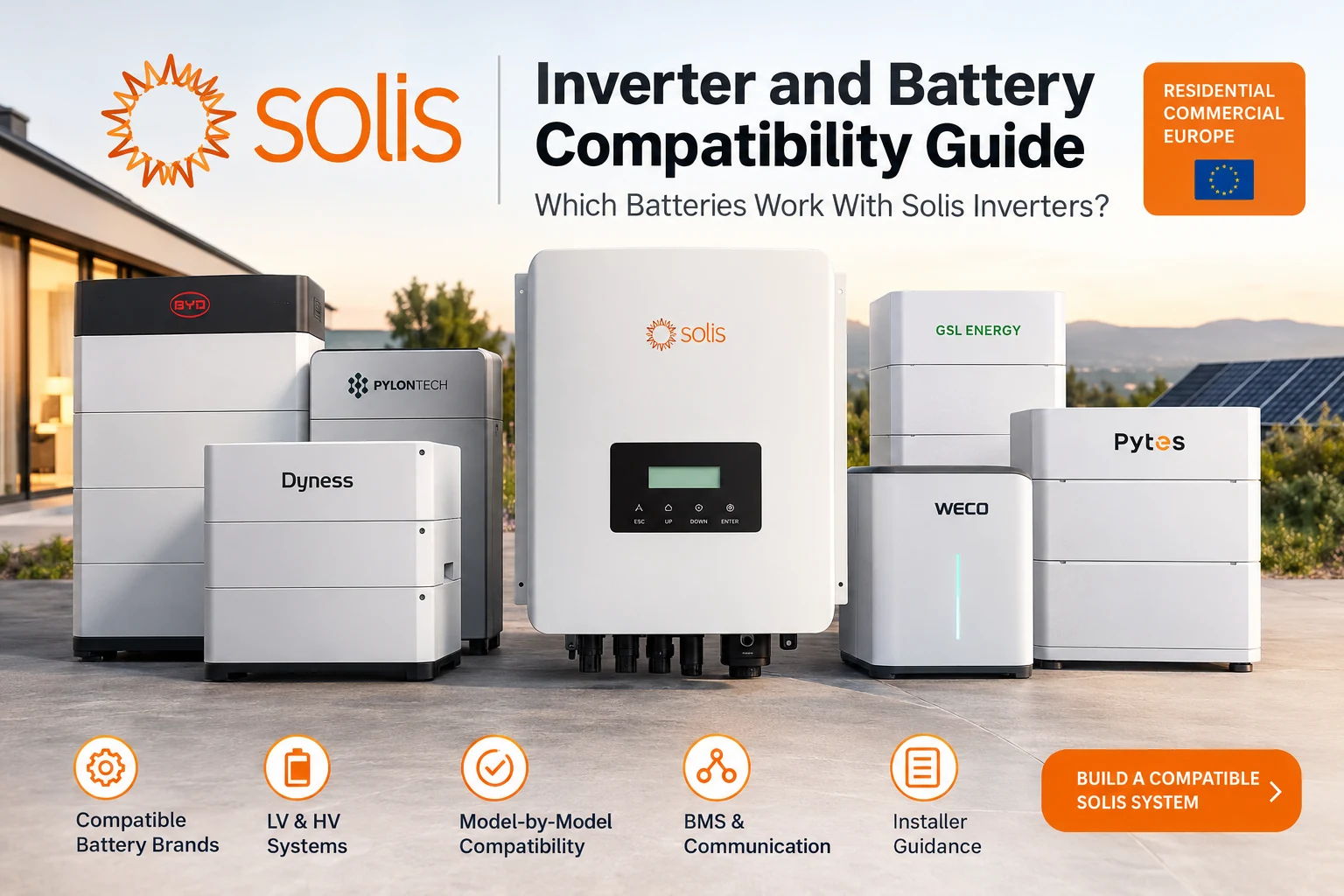
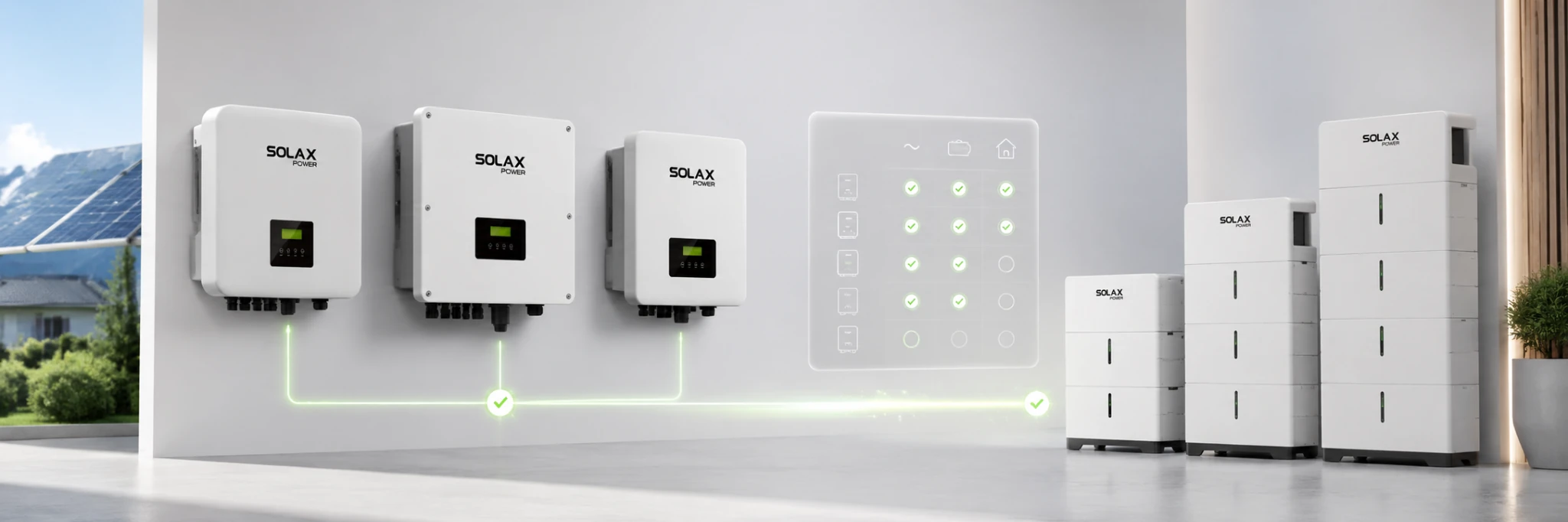
Compatibility between solar inverter and BMS is critical when designing complete kits.
BMS and Solar Inverter Compatibility in Complete Kits
In professional installations, a “compatible” system means that the solar inverter can communicate directly with the BMS via supported protocols such as CAN or RS485.
This enables:
- Safer charging and discharging
- Higher usable battery capacity
- Reduced system errors
- Improved diagnostics and maintenance
- Compliance with warranty requirements
For solar wholesalers and EPCs, compatibility should be treated as a mandatory procurement requirement.
Types of Battery Management Systems in the Market
Integrated BMS
Most modern solar batteries include a built-in battery management system designed for the specific system.
Advantages include:
- Reliable integration with solar inverter systems
- Manufacturer-supported warranties
- Certified safety performance
External BMS
External BMS systems are used in custom battery configurations and require careful validation:
- Supported battery chemistry
- Voltage and current range
- Balancing performance
- Communication compatibility
System Architectures
- Centralized BMS for smaller systems
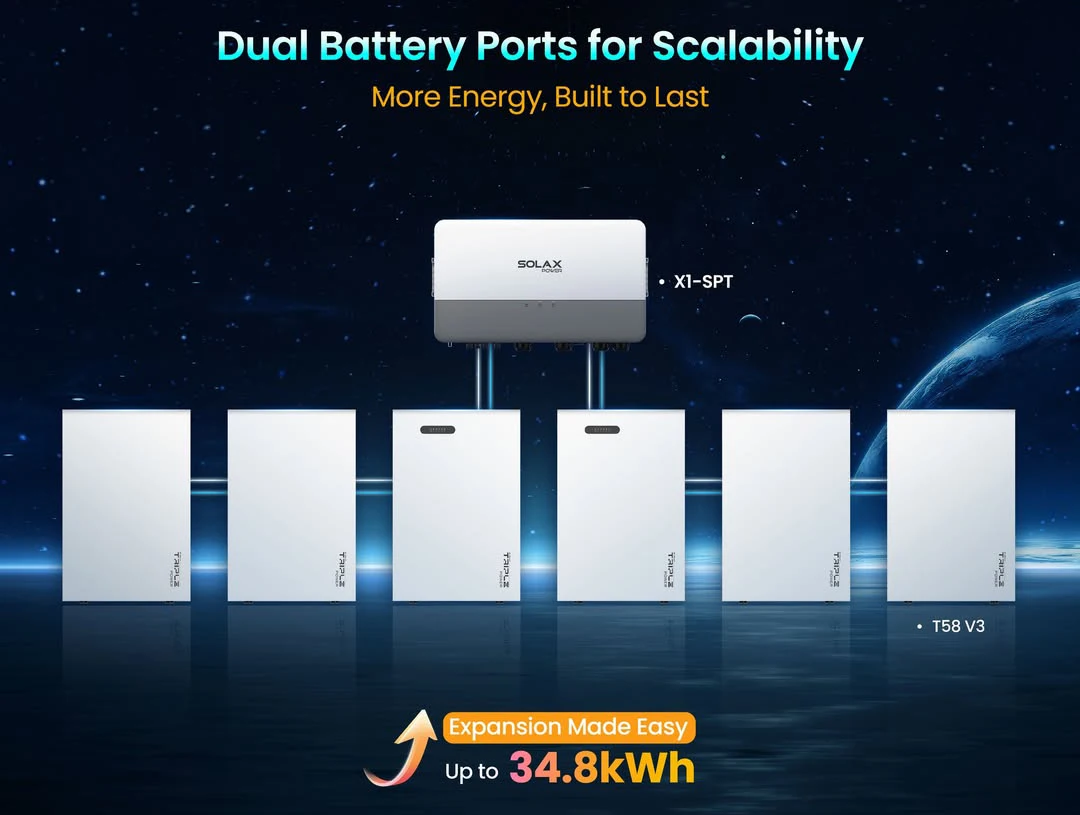
- Modular BMS for scalable energy storage
- Distributed systems for large installations
Modular designs are preferred for expandable solar battery systems.
BMS Procurement Checklist for Installers and Solar Wholesalers
When sourcing solar batteries and energy storage systems, verify:
- Supported battery chemistry (LFP, NMC)
- Operating voltage range
- Charge and discharge current limits
- Balancing method and performance
- Temperature monitoring logic
- Solar inverter communication compatibility
- Fault detection and diagnostics
- Certification and compliance for EU markets
- Firmware update capability
This ensures the system meets professional standards for complete solar kits and commercial projects.
Common BMS Alarms and Their Meaning
Typical system alerts include:
- Overvoltage indicating excessive charging
- Undervoltage due to deep discharge
- Overcurrent caused by load spikes
- Overtemperature from poor ventilation or high demand
- Cell imbalance due to aging or mismatch
A high-quality BMS provides clear diagnostics, enabling installers to resolve issues quickly.
Best Practices for Solar Installers Using BMS-Based Systems
- Use solar batteries approved for the selected solar inverter
- Avoid charging outside recommended temperature ranges
- Ensure proper system ventilation
- Keep firmware updated across hybrid inverter and energy storage components
- Follow manufacturer guidelines for system expansion
These practices ensure long-term system stability and protect warranty conditions.
Why BMS Knowledge Is Critical for Solar Projects
The Battery Management System is the foundation of safe and reliable solar battery and energy storage operation.
For solar installers, EPC companies, and solar distributors, understanding BMS functionality ensures:
- Safer installations
- Higher system reliability
- Better long-term performance
- Reduced service issues
- Strong alignment with warranty requirements
In modern PV systems combining solar panels, solar inverter technology, and energy storage solutions, the BMS is not just a component—it is the system’s operational intelligence.