EV Accessories and Mounting



Balcony Solar vs Portable Solar Kits – Technical and Commercial Comparison
What Is the Difference Between Balcony Solar and Portable Solar Kits
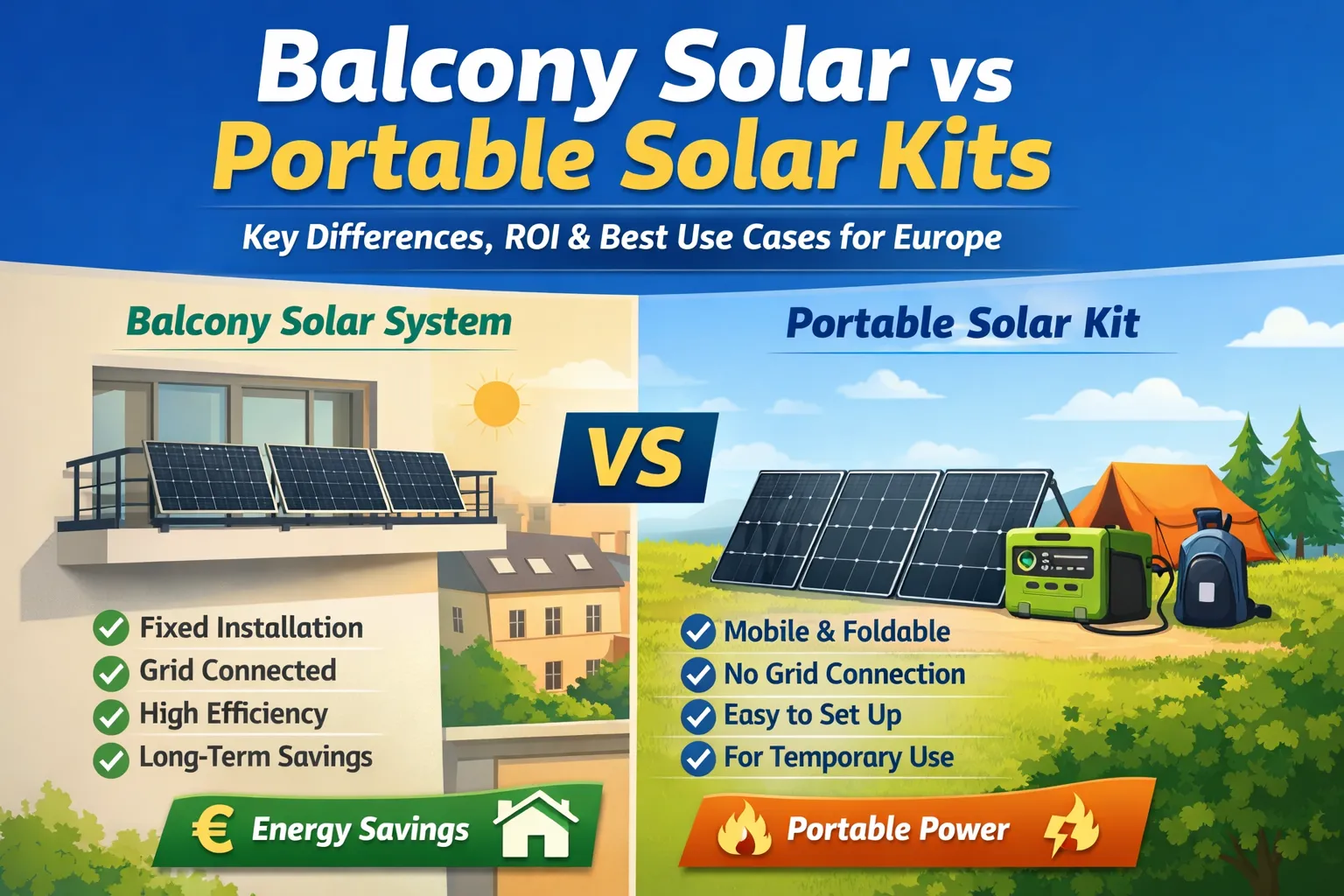
Balcony solar systems and portable solar kits are both small-scale photovoltaic solutions, but they serve different purposes.
A balcony solar system is a semi-permanent installation using solar panels and a microinverter or hybrid inverter connected to the household grid. It is designed for continuous energy generation and long-term use.
A portable solar kit is a mobile system designed for temporary use, typically including foldable solar panels and basic power output options. These systems are not optimized for permanent grid connection or continuous household supply.
System Architecture Comparison
Balcony Solar Systems
- Fixed installation on balcony railing or structure
- Grid-connected via microinverter or hybrid inverter
- Continuous energy production
- Optional solar battery and energy storage integration
Portable Solar Kits
- Foldable or movable solar panels
- Often paired with portable power stations
- No permanent grid connection
- Limited scalability
Efficiency and Energy Output
Balcony solar systems are designed for higher efficiency and stable output.
Typical performance:
- 300W to 800W systems
- Optimized solar panel angle and positioning
- Consistent daily generation
Portable solar kits:
- Lower efficiency due to non-fixed positioning
- Output depends heavily on user placement
- Typically used for occasional energy needs
For any solar wholesaler or installer, balcony solar systems deliver significantly higher long-term energy yield.


Solar Inverter and Energy Storage Integration
Balcony solar systems use:
- Microinverters for plug-and-play operation
- Hybrid inverters for energy storage systems
- Integration with solar batteries
Portable solar kits:
- Often rely on integrated power stations
- Limited compatibility with external solar inverter systems
- Minimal energy storage scalability
This makes balcony solar systems far more suitable for integration into complete solar kits.
Installation and Setup
Balcony Solar
- Requires mounting system
- Simple electrical connection
- Semi-permanent installation
- Compliance with EU regulations
Portable Solar Kits
- No installation required
- Plug-and-use
- Fully mobile
- No regulatory complexity
Portable systems win on simplicity, but lose on performance and long-term value.
ROI and Payback Comparison
Balcony solar systems:
- Typical payback: 3–6 years
- Continuous savings on electricity bills
- Long-term asset value
Portable solar kits:
- No clear ROI for household energy
- Primarily convenience-based usage
- Not designed for grid offset
From a financial perspective, balcony solar systems are a significantly stronger investment.
Use Case Comparison
Balcony Solar Systems Are Best For
- Apartment owners and urban households
- Continuous electricity generation
- Reducing energy bills
- Integration with solar battery and energy storage
Portable Solar Kits Are Best For
- Camping and outdoor activities
- Temporary power supply
- Emergency backup use
- Off-grid mobile applications
Space and Scalability
Balcony solar systems:
- Limited by balcony size
- Scalable within regulatory limits
- Can be upgraded with energy storage
Portable solar kits:
- Not scalable
- Limited by panel size and portability
- No integration into larger PV systems
Cost and Value Comparison
Balcony solar systems:
- Higher initial cost
- Lower cost per kWh over time
- Strong long-term value
Portable solar kits:
- Lower upfront cost
- Higher cost per kWh
- Limited long-term value
For installers and solar distributors, balcony solar systems offer better margin potential and repeat business opportunities.
Which One Should You Choose
Choose balcony solar systems if:
- You want long-term energy savings
- You need grid-connected solar power
- You plan to integrate solar inverter and energy storage solutions
Choose portable solar kits if:
- You need temporary or mobile power
- Installation is not possible
- You require flexibility over performance
Professional Recommendation for Solar Installers and Wholesalers
From a solar PV supplier and solar wholesaler perspective:
- Balcony solar systems are a scalable residential product
- Portable solar kits are niche and non-recurring
- Focus should be on complete solar kits with solar panels, solar inverter, and energy storage
Balcony systems create:
- Repeat customers
- Upsell opportunities (solar battery, hybrid inverter)
- Long-term customer relationships
Balcony Solar Wins for Real Energy Use
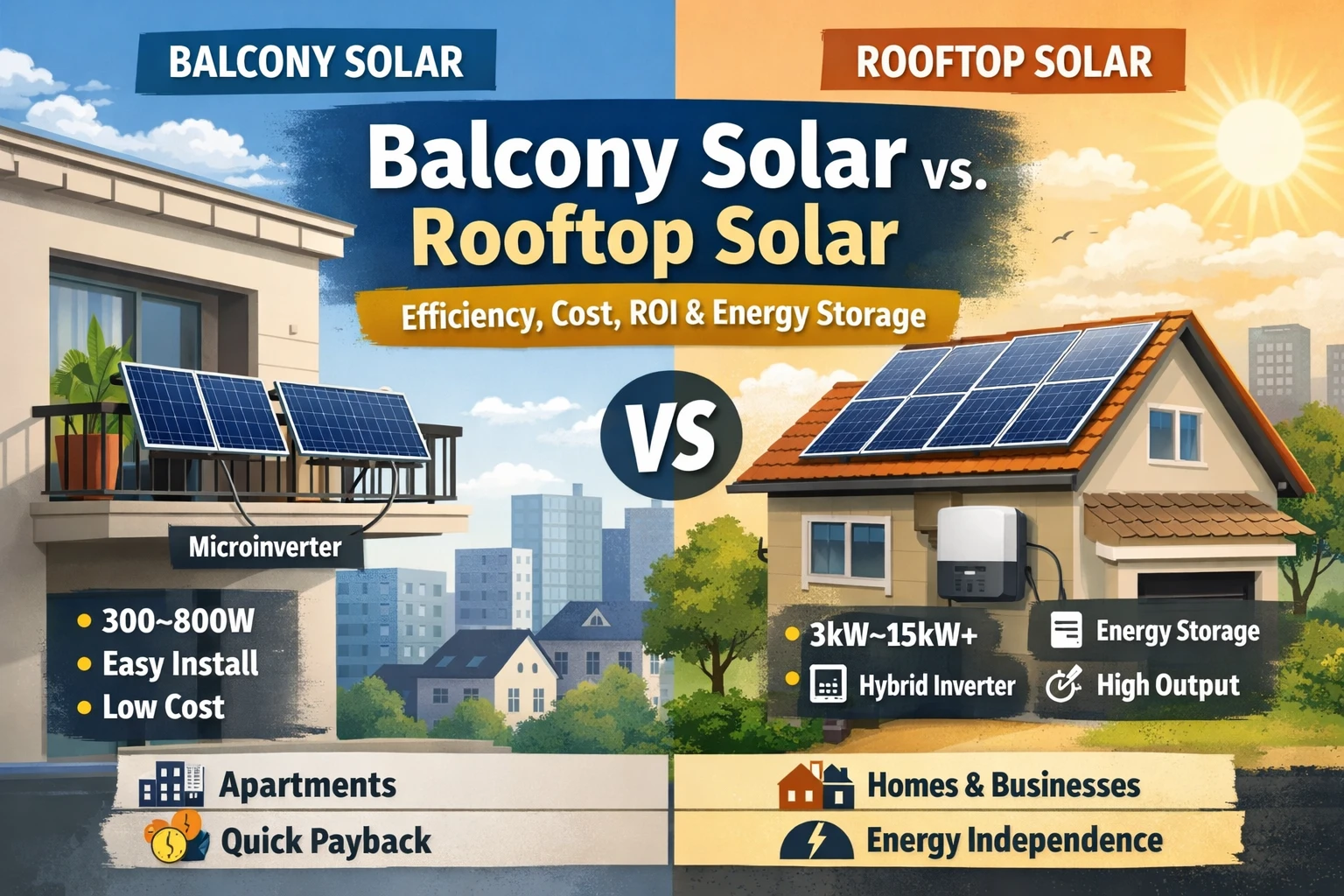
Balcony solar systems are designed for real energy production, grid integration, and long-term ROI. Portable solar kits are designed for flexibility and temporary use. For European households, installers, and solar distributors, the difference is clear: Read more about the comparison of balcony and rooftop solar systems.
Balcony solar systems deliver measurable value, while portable solar kits provide convenience.
FAQ
What is the main difference between balcony solar and portable solar kits
Balcony solar systems are fixed, grid-connected systems for continuous energy generation, while portable solar kits are mobile and used for temporary power.
Which system is more efficient
Balcony solar systems are more efficient due to fixed positioning and optimized solar inverter integration.
Can portable solar kits be connected to the grid
No, most portable solar kits are not designed for grid connection.
Are balcony solar systems worth it
Yes, they typically offer a 3–6 year payback period and reduce electricity costs.
Can both systems use solar batteries
Balcony solar systems can integrate solar batteries, while portable systems usually rely on built-in storage.