EV Accessories and Mounting


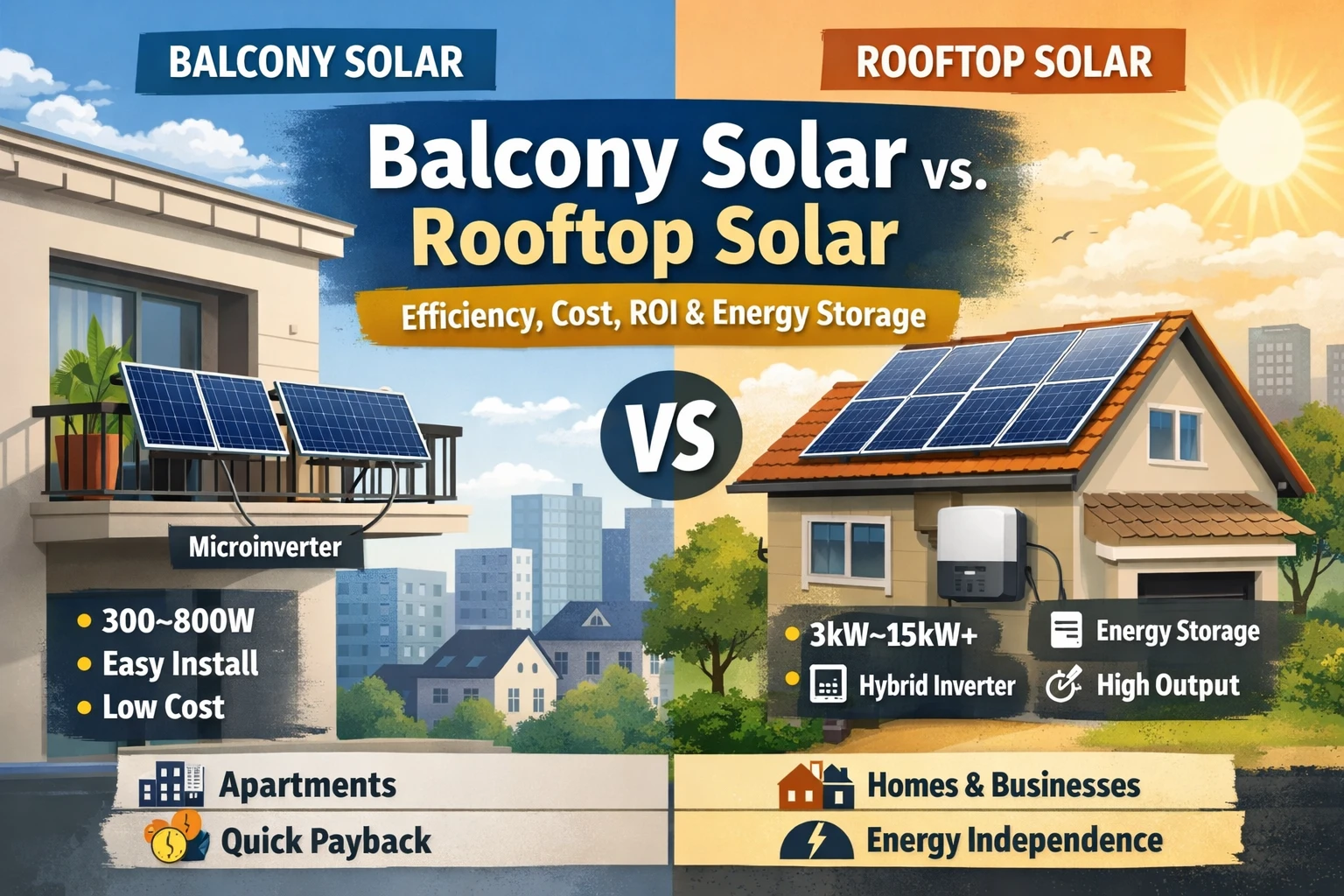

Balcony Solar vs Rooftop Solar – Full Technical and Commercial Comparison
What Is the Difference Between Balcony Solar and Rooftop Solar
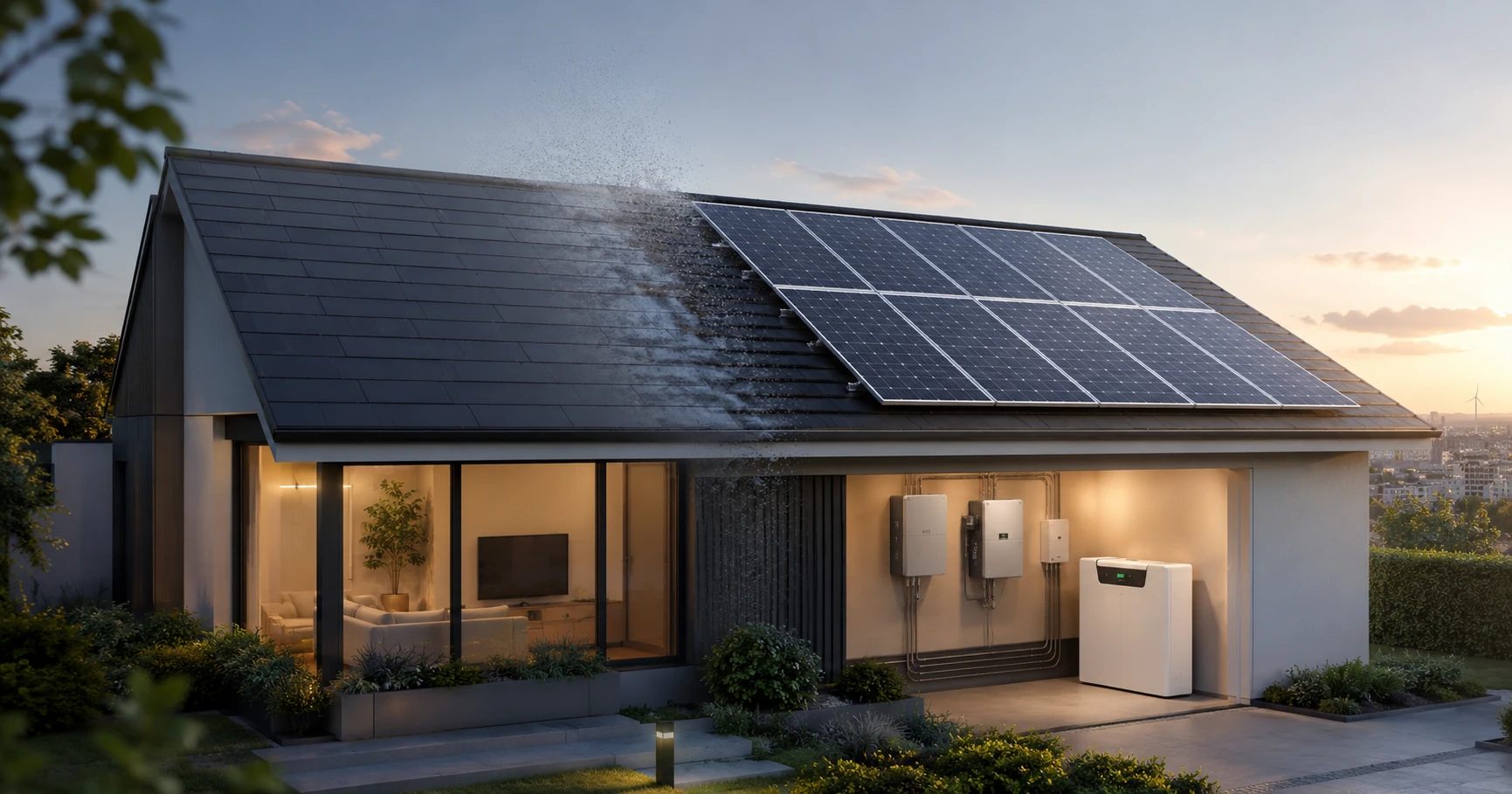
Balcony solar systems are small-scale photovoltaic systems installed on balconies using solar panels and typically a microinverter. Rooftop solar systems are full-scale installations mounted on roofs, using larger solar panel arrays, string or hybrid solar inverters, and often integrated energy storage systems.
The key difference is scale. Balcony solar is designed for compact, plug-and-play energy generation, while rooftop solar is built for maximum output and long-term energy independence.
Quick Comparison – Balcony Solar vs Rooftop Solar
Balcony solar systems:
- Typical size: 300W to 800W
- Installation: plug-and-play
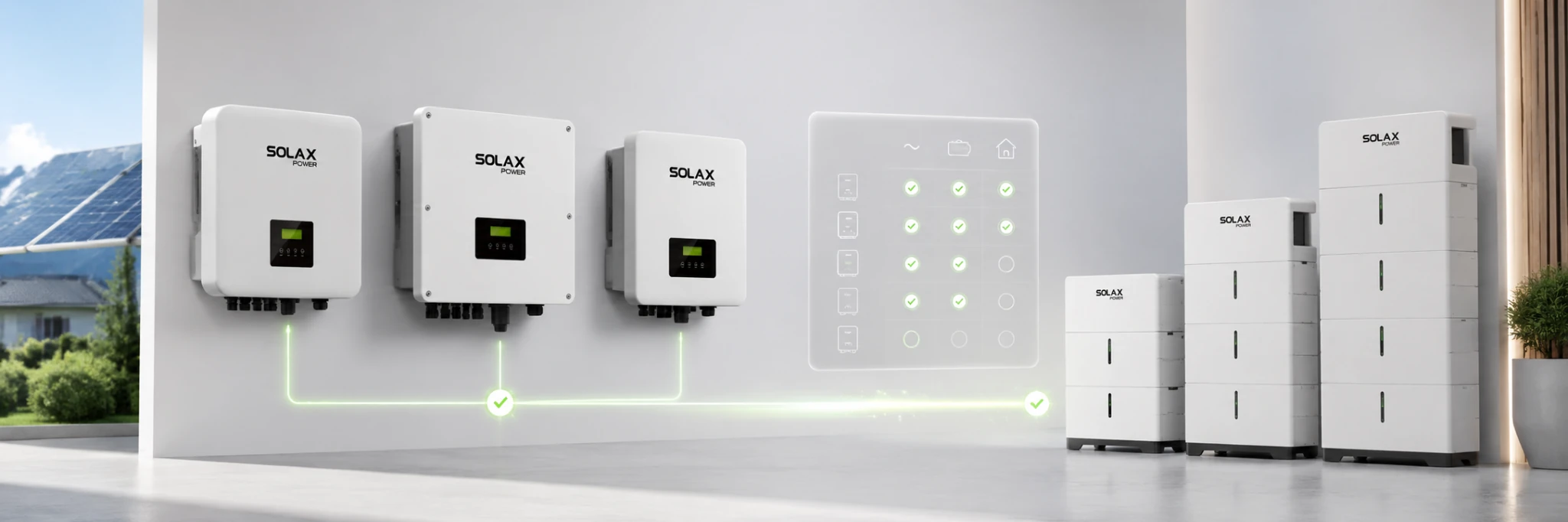
- Inverter: microinverter
- Energy storage: optional, limited
- Use case: apartments and small households
Rooftop solar systems:
- Typical size: 3kW to 15kW+
- Installation: professional
- Inverter: string inverter or hybrid inverter
- Energy storage: fully scalable
- Use case: houses and commercial buildings
System Size and Power Output
The biggest difference is system capacity and energy production.
Balcony solar:
- Limited by regulations (600W–800W in most EU markets)
- Generates ~500–900 kWh per year
Rooftop solar:
- Scalable depending on roof size
- Generates several thousand kWh annually
- Can fully cover household consumption
For solar installers and EPCs, rooftop systems are the primary solution for full energy supply, while balcony systems serve as entry-level or supplementary installations.
Solar Panels – Efficiency and Space Utilization
Both systems use similar solar panel technologies, but the available installation area defines performance.
Balcony solar:
- Limited space
- Requires high-efficiency solar panels
- Output constrained by surface area
Rooftop solar:
- Large installation area
- Optimized panel layout
- Maximum energy yield per system
From a solar PV supplier perspective, rooftop systems drive higher volume sales of solar panels and complete kits.
Solar Inverter Setup – Microinverter vs Hybrid Inverter
Balcony solar systems typically use microinverters due to simplicity and compliance.
- Easy installation
- Plug-and-play operation
- Lower system complexity
Rooftop solar systems use:
- String inverters for standard installations
- Hybrid inverters for energy storage integration
Hybrid inverter systems allow full integration of solar battery solutions and advanced energy management.
Energy Storage and Solar Battery Integration
Energy storage is where rooftop solar systems clearly outperform balcony solar.
Balcony solar:
- Limited or no solar battery integration
- Mostly direct consumption
- Minimal backup capability
Rooftop solar:
- Full solar battery integration
- Scalable energy storage systems
- Backup power capability
- Load management and optimization
For solar wholesalers and installers, energy storage solutions represent a major upsell opportunity in rooftop systems.
Installation Complexity and Cost
Balcony solar systems are designed for simplicity.
Balcony solar:
- DIY or minimal installation
- Low upfront cost
- Fast deployment
Rooftop solar:
- Requires professional installation
- Higher upfront investment
- Permits and system design required
However, rooftop systems benefit from economies of scale, reducing cost per watt. Learn more about balcony solar system installation.
ROI and Payback Period
Balcony solar:
- Lower upfront cost
- Faster payback (typically 3–6 years)
- Limited total savings
Rooftop solar:
- Higher upfront cost
- Payback typically 5–10 years
- Much higher long-term savings
For installers and EPCs, rooftop solar delivers higher project value, while balcony solar offers fast-turnover sales.
Use Cases – Which System Is Right
Balcony solar is ideal for:
- Apartment owners
- Urban environments
- Limited installation space
- Entry-level solar adoption
Rooftop solar is ideal for:
- Homeowners
- Commercial buildings
- Full energy independence
- Large-scale energy production
Professional Perspective – Solar Wholesaler and Installer Strategy
From a solar wholesaler and solar distributor perspective:
Balcony solar systems:
- High-volume, low-complexity products
- Customer acquisition channel
- Gateway to larger systems
Rooftop solar systems:
- Core business for installers and EPCs
- Higher margins
- Strong demand for solar panels, solar inverter, and solar battery systems
Offering both solutions allows solar distributors to cover the full customer lifecycle.
Key Decision Factors
Choose balcony solar if:
- You have no roof access
- You want low-cost entry into solar
- You need a simple plug-and-play solution
Choose rooftop solar if:
- You want maximum energy production
- You plan to integrate energy storage
- You want long-term energy independence
Balcony Solar vs Rooftop Solar
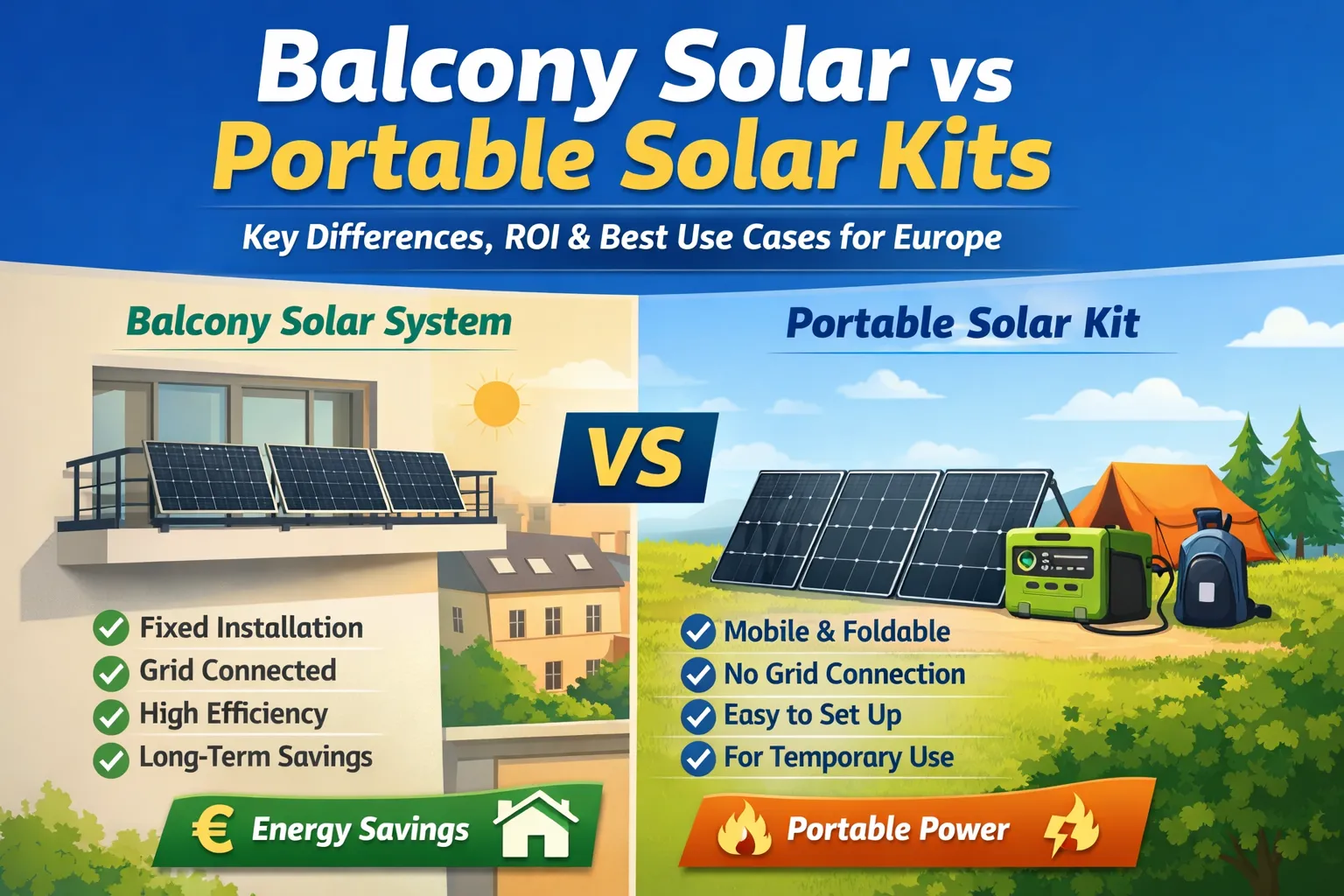
Balcony solar systems and rooftop solar systems serve different roles in the solar market. Read about the comparison of balcony and portable solar kits.
Balcony solar is a compact, accessible solution with fast ROI and simple installation. Rooftop solar is a full-scale energy system delivering maximum output, energy storage integration, and long-term savings. For solar installers, EPCs, and solar wholesalers, the combination of both systems provides a complete portfolio, from entry-level solar kits to advanced solar inverter and energy storage solutions.
FAQ
Which is better balcony solar or rooftop solar
Rooftop solar is better for maximum energy production, while balcony solar is better for small spaces and lower upfront cost.
Can balcony solar replace rooftop solar
No, balcony solar systems are too small to fully replace rooftop systems but can reduce electricity consumption.
Do both systems use the same solar panels
Yes, both use similar solar panels, but rooftop systems use more panels and generate significantly more energy.
Which system supports solar battery storage
Rooftop solar systems fully support solar battery and energy storage solutions, while balcony systems have limited capability.
Is balcony solar worth it
Yes, balcony solar is a cost-effective entry into solar energy, especially for apartments and urban users.