EV Accessories and Mounting


String Inverters vs. Micro-Inverters vs. Optimizers – Expert View – Which Is the Best?
Choosing the right solar inverter is one of the most important decisions in any solar PV system. Solar panels produce DC electricity, but homes, commercial buildings, and the grid use AC electricity. The inverter is the component that converts this DC power into usable AC power, manages system performance, and often connects the PV system to monitoring, safety, battery storage, and smart energy management.
For installers, EPCs, resellers, solar wholesalers, and homeowners, the question is not simply “Which inverter is best?” The better question is:
Which inverter technology is best for this roof, this budget, this energy profile, this battery plan, and this long-term maintenance strategy?
In 2026, the three most common inverter architectures are:
- String inverters
- Micro-inverters
- Power optimizers with a central inverter
Each option can be the best choice in the right project. A simple, unshaded roof may be ideal for a string inverter. A complex residential roof with several orientations may perform better with micro-inverters. A system that needs module-level monitoring, flexible design, and future solar battery integration may be better suited to optimizers or hybrid inverter solutions.
For professional buyers, this guide compares all three technologies from a procurement-ready point of view: performance, shading, monitoring, cost, reliability, battery compatibility, serviceability, and use case.
The European solar inverter market is still growing strongly, with Mordor Intelligence estimating Europe’s solar inverter market at USD 3.12 billion in 2026 and projecting it to reach USD 4.18 billion by 2031. That growth is driven by residential solar, commercial PV, utility-scale projects, hybrid systems, and rising demand for energy storage.
Quick Answer: Which Solar Inverter Is Best?
For most professional solar PV projects, the best choice depends on the installation type:
| Project Type | Best Inverter Choice | Why |
|---|---|---|
| Simple unshaded residential roof | String inverter | Lowest cost, efficient, easy to install |
| Roof with shading, chimneys, dormers, or multiple orientations | Micro-inverters or optimizers | PV Module-level performance control |
| Residential PV with future battery storage | Hybrid string inverter or optimizer-based system | Better energy storage integration |
| Commercial rooftop PV | Three-phase string inverter | Scalable, cost-effective, easy O&M |
| High-monitoring residential systems | Micro-inverters or optimizers | PV Panel-level monitoring |
| Installer-focused complete kits | String or hybrid inverter | Easier procurement, stock planning, and system design |
| Premium homeowner system | Micro-inverters | High redundancy and module-level independence |
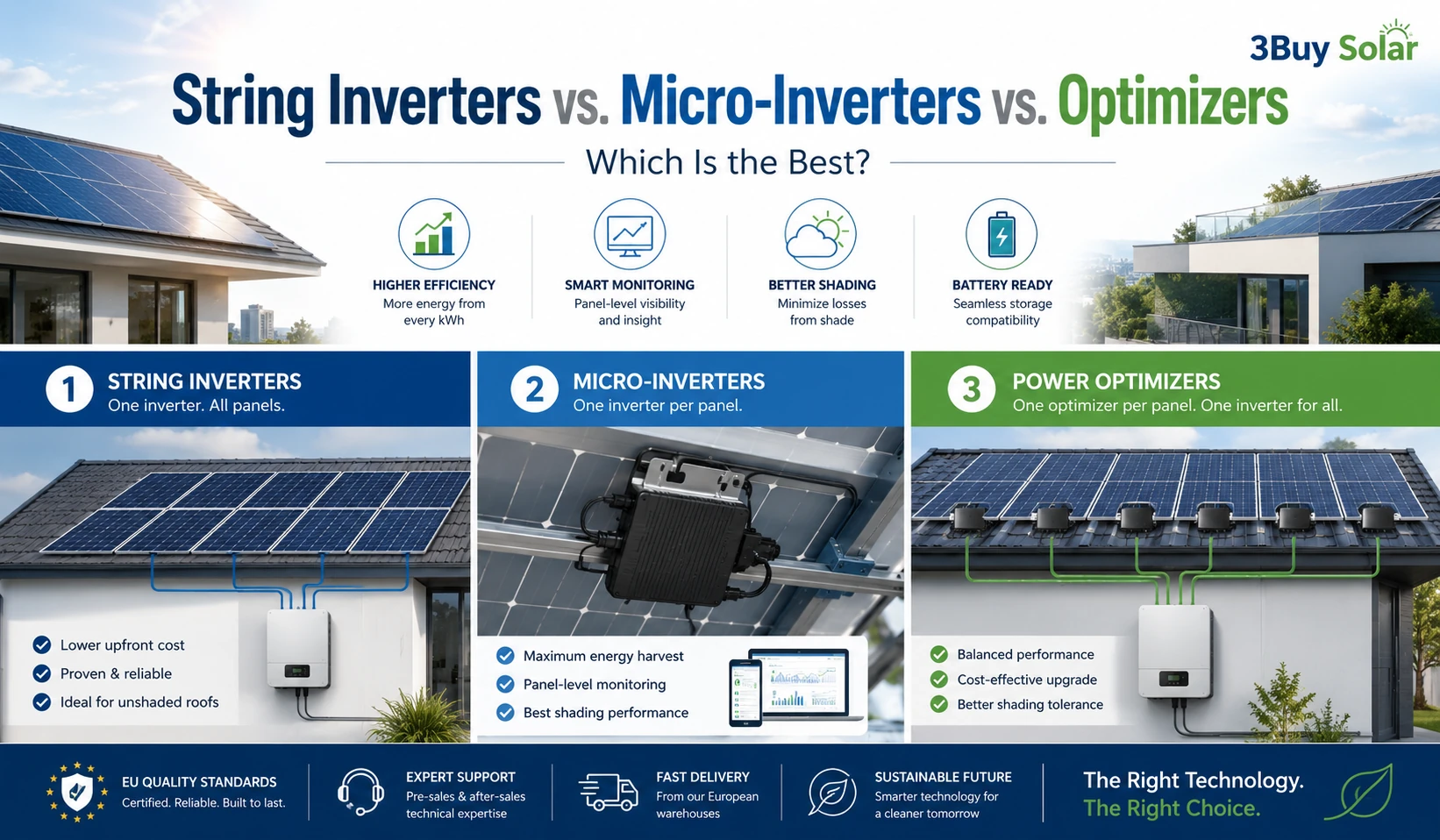
Which is the best to use and where?
- Best overall for cost and scalability: string inverter
- Best for complex roofs and module independence: micro-inverter
- Best middle ground between cost, monitoring, and performance: power optimizer system
- Best for solar battery and energy storage projects: hybrid inverter or optimizer-based hybrid system



What Is a String Inverter?
A string inverter connects multiple solar panels in series, forming one or more “strings.” The DC electricity from these solar panels is sent to one central inverter, which converts the combined DC power into AC electricity.
String inverters are the most common solution for residential, commercial, and utility-scale PV systems because they are efficient, familiar to installers, and cost-effective at scale. They are especially popular in Europe for standard rooftop systems, commercial buildings, warehouses, agricultural sites, and complete kits.
How String Inverters Work
In a string inverter system, solar panels are connected together in a series circuit. The inverter tracks the performance of the string using MPPT, or Maximum Power Point Tracking. Many modern string inverters include two or more MPPTs, allowing installers to connect separate roof orientations or panel groups.
For example, one MPPT may handle east-facing solar panels, while another MPPT handles west-facing solar panels. This makes string inverters suitable for many standard pitched roofs and commercial installations.
Advantages of String Inverters
String inverters are usually the most cost-effective option for solar PV systems. They use fewer electronic components on the roof, which can simplify installation and servicing. For installers and EPCs, they are easy to design, easy to source, and widely available from leading solar inverter brands.
A string inverter is often the best choice when:
- The roof has little or no shading.
- The solar panels face one or two clear orientations.
- The project needs competitive pricing.
- The system is commercial, industrial, or utility-scale.
- The customer wants a simple and proven inverter architecture.
- The buyer wants a complete kit with solar panels, inverter, mounting, and optional solar battery.
Disadvantages of String Inverters
The main disadvantage is shading sensitivity. If one panel in a string is shaded or underperforming, it can reduce the performance of the whole string, depending on the system design, bypass diode behaviour, and inverter MPPT configuration.
String inverters also usually provide system-level or string-level monitoring, not true panel-level monitoring unless paired with optimizers or additional monitoring equipment.
Best Use Cases for String Inverters
String inverters are ideal for:
- Residential roofs with clean orientation
- Commercial rooftops
- Ground-mounted PV systems
- Agricultural solar systems
- Warehouses and logistics buildings
- Solar wholesaler complete kits
- B2B solar distributor stock systems
- Hybrid PV systems with energy storage
- Projects where price per watt matters
For a solar PV supplier, solar distributor, or solar wholesaler, string inverters remain one of the most important product categories because they serve the largest range of residential, C&I, and EPC applications.
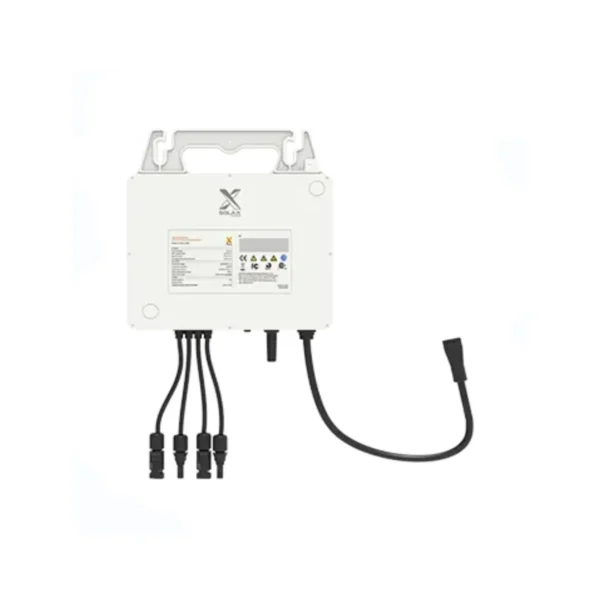


Growatt NEO 800W Microinverter | Dual-MPPT High-Efficiency Solar Micro Inverter
In stock
New: 89.88 €
0%

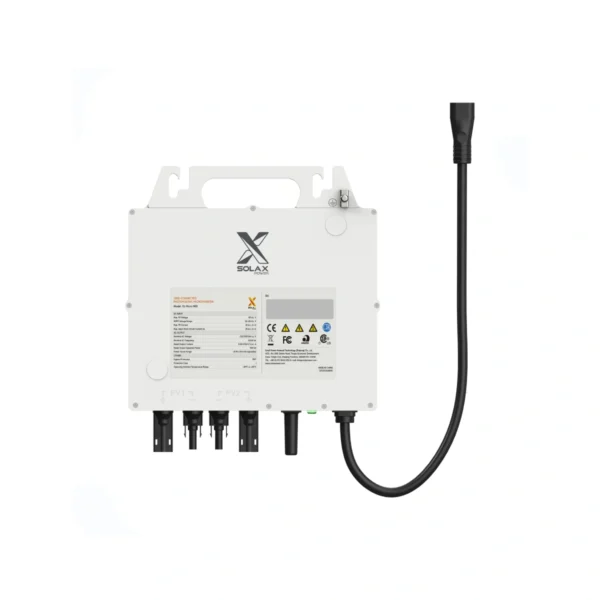
Solax X1-MICRO 2-in-1 G2 Single Phase Micro Inverter 2MPPT WIFI
Available on backorder
What Is a Micro-Inverter?
A micro-inverter is a small inverter installed behind each solar panel. Instead of sending DC electricity from a string of panels to one central inverter, each panel has its own inverter and converts DC to AC directly at module level.
This means every solar panel works independently. If one panel is shaded, dirty, mismatched, or underperforming, the other panels continue producing normally.
How Micro-Inverters Work
Each micro-inverter attaches to one solar panel, or sometimes to two or four panels depending on the product design. The micro-inverter converts DC electricity into AC electricity directly on the roof. The AC output from each module then connects into the system.
This architecture gives micro-inverters a major advantage on roofs with shading, multiple orientations, or complex layouts.
Advantages of Micro-Inverters
Micro-inverters offer panel-level independence. This improves performance in shaded or complex roof conditions and gives the system owner detailed monitoring for each solar panel.
They also remove the central inverter as a single point of failure. If one micro-inverter fails, the rest of the system can continue operating.
Micro-inverters are often preferred for premium residential systems, complex roofs, and customers who want detailed monitoring and long-term module-level visibility. Enphase, one of the best-known micro-inverter manufacturers, provides warranty documentation for micro-inverter systems, with some product lines historically carrying long warranty periods depending on region and activation date.
Disadvantages of Micro-Inverters
Micro-inverters usually cost more upfront than traditional string inverters. They also place more electronics on the roof, which can make future replacement more labour-intensive if a unit fails.
For large commercial systems, micro-inverters may not always be the most cost-effective choice compared with three-phase string inverters.
Best Use Cases for Micro-Inverters
Micro-inverters are ideal for:
- Shaded residential roofs
- Roofs with chimneys, dormers, trees, or antennas
- Multiple roof planes and different orientations
- Small premium residential systems
- High-monitoring homeowner projects
- Projects where panel-level AC conversion is preferred
- Systems where partial system failure risk must be reduced
For B2C customers, micro-inverters are easy to explain: each solar panel works independently. For installers, the decision depends on roof complexity, budget, service model, and product availability.

What Is a Power Optimizer?
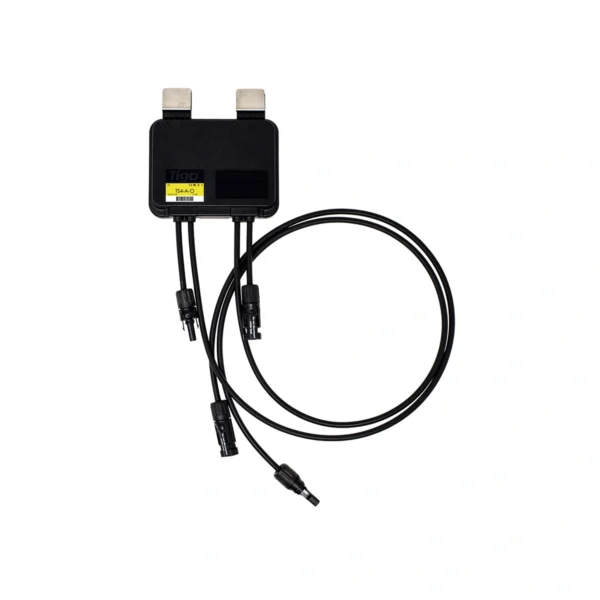
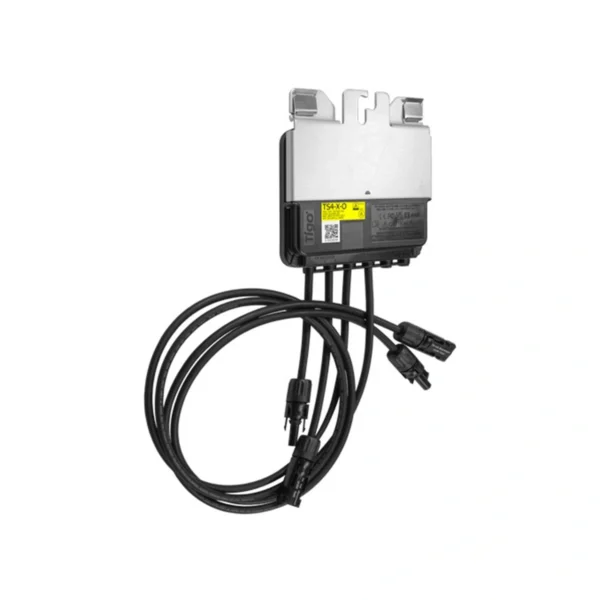
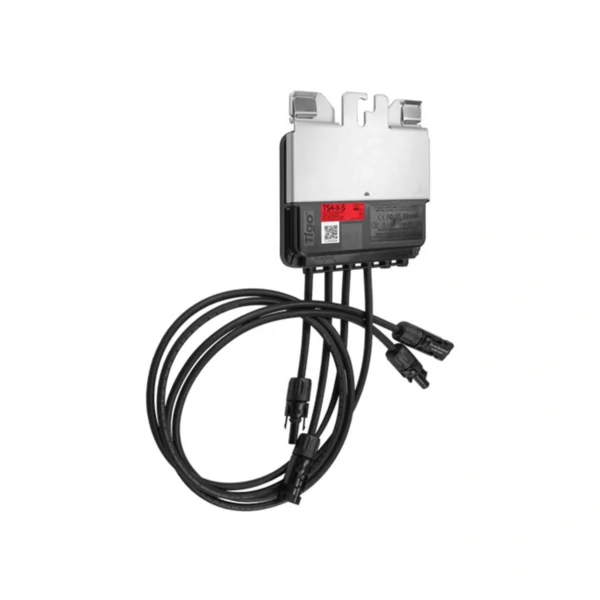
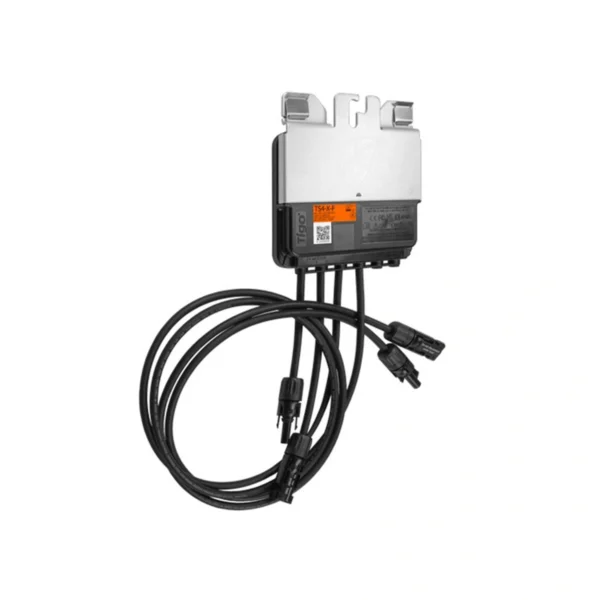
A power optimizer is a module-level electronic device installed behind each solar panel. Unlike a micro-inverter, it does not convert DC to AC at the panel. Instead, it optimizes the DC output of each solar panel before sending the electricity to a central inverter.
In simple terms, power optimizers combine some of the benefits of micro-inverters with the central conversion architecture of a string inverter.
How Power Optimizers Work
Each solar panel has its own optimizer. The optimizer performs module-level MPPT and helps each panel operate closer to its best output. The optimized DC electricity is then sent to a compatible inverter, which converts it into AC electricity.
SolarEdge is the most widely known optimizer-based inverter ecosystem, while some Huawei systems also support smart PV optimizers for selected use cases. SolarEdge warranty documentation has listed 25 years for power optimizers, while the central inverter has separate warranty terms.
Huawei’s optimizer documentation also describes rapid shutdown behaviour when optimizers are installed across all PV modules, reducing output voltage after shutdown triggers.
Advantages of Power Optimizers
Power optimizers improve performance on roofs with shading, different panel orientations, or module mismatch. They also enable module-level monitoring, making troubleshooting easier for installers and O&M teams.
They are often less expensive than full micro-inverter systems while offering many of the same design advantages. For many installers, optimizers are the middle ground between a basic string inverter and a premium micro-inverter system.
Disadvantages of Power Optimizers
Optimizer systems still depend on a central inverter. If the central inverter fails, the system stops producing until the inverter is repaired or replaced.
They also add electronics behind each module, which increases component count compared with a standard string inverter system.
Best Use Cases for Power Optimizers
Power optimizers are ideal for:
- Partially shaded residential roofs
- Roofs with multiple orientations
- Systems needing module-level monitoring
- Premium residential PV systems
- Battery-ready installations
- Huawei and SolarEdge-based energy storage projects
- Projects needing design flexibility without using micro-inverters
- Installers who want panel-level control with central inverter architecture
For solar wholesalers and distributors, optimizers are useful because they allow a single inverter ecosystem to serve many different roof conditions.
String Inverter vs. Micro-Inverter vs. Optimizer: Full Comparison
| Feature | String Inverter | Micro-Inverter | Power Optimizer |
|---|---|---|---|
| DC to AC conversion | Central inverter | At each panel | Central inverter |
| Panel-level optimization | No, unless added | Yes | Yes |
| Panel-level monitoring | Limited | Yes | Yes |
| Shading performance | Lower | Excellent | Very good |
| Upfront cost | Lowest | Highest | Medium |
| Roof electronics | Low | High | Medium-high |
| Maintenance access | Ground/wall inverter | Roof-level devices | Roof-level devices plus central inverter |
| Battery integration | Excellent with hybrid inverter | Brand/system dependent | Strong in compatible ecosystems |
| Best for simple roofs | Excellent | Often unnecessary | Good but may be over-specified |
| Best for complex roofs | Limited | Excellent | Excellent |
| Best for commercial PV | Excellent | Less common | Selective use |
| Best for complete kits | Excellent | Good for premium kits | Good for advanced kits |
Which Inverter Performs Best in Shading?
For shaded roofs, micro-inverters and optimizers usually outperform basic string inverter systems.
With a traditional string inverter, panels are electrically connected in series. If one panel is shaded, output from the string may be reduced. Modern solar panels include bypass diodes, and modern string inverters include better MPPT technology than older systems, but shading still matters.
Micro-inverters and optimizers solve this problem at module level. Each solar panel can operate more independently, which reduces losses from shading, mismatch, dirt, snow, bird droppings, or different roof angles.
Best Choice for Shading
Light or no shading: string inverter
Moderate shading: optimizer system
Complex shading or multiple roof faces: micro-inverters or optimizers
Premium residential shading solution: micro-inverters
Battery-ready shaded system: optimizers or hybrid inverter with compatible optimizer support
Which Inverter Is Best for Solar Battery and Energy Storage?
For solar battery and energy storage systems, the best choice is often a hybrid string inverter or an optimizer-based hybrid ecosystem, depending on the battery brand and system design.
Hybrid inverters can manage solar panels, battery charging, battery discharging, backup functions, and grid interaction in one system. This is why many European installers choose hybrid inverters for residential solar battery projects and energy storage complete kits.
Best Choice for Energy Storage
| Energy Storage Goal | Recommended Option |
|---|---|
| Lowest-cost battery-ready PV system | Hybrid string inverter |
| Premium smart home energy system | Hybrid inverter with compatible solar battery |
| Panel-level monitoring plus battery | Optimizer ecosystem |
| AC-coupled battery retrofit | Micro-inverter compatible battery system |
| Commercial storage | Three-phase hybrid or dedicated battery inverter |
For 3Buy Solar customers, the best procurement approach is usually to select the inverter and solar battery together, not separately. Battery compatibility, inverter communication, BMS integration, backup requirements, and grid-code compliance all matter.
A solar battery is not just an accessory. It must be matched correctly with the solar inverter, solar panels, monitoring platform, and installation design.
Which Inverter Is Most Reliable?
Reliability depends on system design, component quality, installation quality, temperature, ventilation, firmware, warranty, and after-sales support.
String Inverter Reliability
String inverters have fewer roof-level electronics, which many installers prefer. The central inverter is usually mounted on a wall, in a garage, utility room, or shaded outdoor position. This makes maintenance easier.
However, the central inverter is also a single point of failure. If it stops working, the whole system usually stops producing.
SMA’s current home warranty information states a 5-year factory warranty for its products, with repair or replacement support for product-related issues during that period.
Micro-Inverter Reliability
Micro-inverters remove the central inverter failure point. If one unit fails, only one panel or a small number of panels are affected. This can improve system uptime.
The trade-off is that there are more electronic devices on the roof, exposed to heat, cold, wind, and installation conditions.
Optimizer Reliability
Optimizer systems sit between the two. They use roof-level electronics on each panel plus a central inverter. This enables module-level control but also increases total component count.
For installers, the key is not only the product warranty. It is also the replacement process, stock availability, monitoring access, labour time, and distributor support.
Which Inverter Is Best for Installers?
For installers, the best inverter is the one that matches the project design, reduces call-backs, supports clean commissioning, and is available from stock.
Installers Should Choose String Inverters When:
The roof is simple and unshaded.
The client wants the best price-performance ratio.
The project is commercial or industrial.
The system uses standard solar panels and standard mounting.
The buyer needs a complete kit at competitive B2B pricing.
The project requires simple installation and fast commissioning.
Installers Should Choose Micro-Inverters When:
The roof is complex.
The customer wants panel-level monitoring.
The roof has unavoidable partial shading.
The installation is premium residential.
The client values redundancy and long-term module independence.
The system design benefits from AC module-level conversion.
Installers Should Choose Optimizers When:
The roof has shading or mixed orientations.
The project needs panel-level monitoring.
The client wants a SolarEdge-style ecosystem.
The system may include energy storage later.
The installer wants flexibility but does not want full micro-inverter architecture.
The design needs module-level safety and troubleshooting.
Which Inverter Is Best for Homeowners?
For homeowners, the best inverter depends on the roof.
A standard south-facing or east-west roof with little shade is usually well served by a quality string inverter or hybrid inverter. This gives strong performance at a lower cost and makes future solar battery integration easier if the inverter is battery-ready.
A complex roof with multiple directions, shadows, chimneys, or dormers may benefit from micro-inverters or optimizers. These technologies help each solar panel perform more independently and give the homeowner better monitoring.
For homeowners planning a solar battery, EV charger, heat pump, or smart energy system, the inverter should be selected as part of the full energy storage design.
Which Inverter Is Best for Commercial Solar PV?
For commercial solar PV, three-phase string inverters are usually the strongest choice.
Commercial rooftops often use larger panel arrays, repeated string layouts, and multiple MPPT inputs. Three-phase string inverters provide strong efficiency, scalable system design, and easier service access.
Micro-inverters are less common in large commercial PV because the cost and roof-level component count can be higher. Optimizers may be used in commercial systems where shading, monitoring, fire safety, or design constraints justify the additional hardware.
Best Commercial Choice
Most commercial rooftops: three-phase string inverter
Complex commercial roofs: string inverter with optimizers
Small premium commercial systems: micro-inverters may be considered
Commercial storage: hybrid or dedicated storage inverter architecture
For EPCs and procurement teams, the focus should be on system yield, inverter availability, warranty process, monitoring platform, EU grid-code compliance, and distributor support.
Cost Comparison: Which Inverter Is Cheapest?
String inverters are usually the lowest-cost option. Micro-inverters are usually the highest-cost option. Optimizers normally sit in the middle.
However, the cheapest inverter is not always the best long-term choice.
A lower-cost string inverter may be perfect for a clean roof. But on a shaded roof, the lost production over years may cost more than the upfront saving. On the other hand, using micro-inverters on a large unshaded commercial roof may add unnecessary cost without a meaningful performance benefit.
Cost Ranking
- Lowest cost: string inverter
- Medium cost: power optimizer system
- Highest cost: micro-inverter system
Value Ranking by Use Case
Simple roof: string inverter offers best value.
Complex roof: optimizers or micro-inverters offer better value.
Battery-ready residential system: hybrid inverter offers best value.
Premium monitoring system: micro-inverters or optimizers offer best value.
Commercial PV: three-phase string inverter offers best value.
Are Micro-Inverters Better Than String Inverters?
Micro-inverters are not automatically better than string inverters. They are better for certain roofs and certain customers.
Micro-inverters are better when each solar panel needs to work independently. This is useful for shaded roofs, complex layouts, and premium residential systems.
String inverters are better when the system is simple, clean, scalable, and price-sensitive. For commercial systems and installer complete kits, string inverters often remain the best procurement choice.
The best solar inverter is the one that matches the project conditions.
Are Power Optimizers Better Than Micro-Inverters?
Power optimizers and micro-inverters solve similar problems in different ways.
Micro-inverters convert DC to AC at each panel. Power optimizers optimize DC at each panel and send it to a central inverter.
Micro-inverters offer the highest level of module independence. Optimizers offer module-level control while keeping a central inverter architecture. Optimizers can be a strong middle-ground solution when the customer wants panel-level monitoring and better shading performance but also wants a central inverter ecosystem.
For battery integration, many optimizer-based systems are attractive because the inverter, battery, and monitoring platform can be designed as one ecosystem.
Inverter Selection by Roof Type
| Roof Type | Recommended Inverter |
|---|---|
| One clear roof face, no shade | String inverter |
| East-west roof, no major shade | Dual-MPPT string inverter |
| Multiple roof planes | Optimizers or micro-inverters |
| Partial shading from trees | Optimizers or micro-inverters |
| Chimneys or dormers | Optimizers or micro-inverters |
| Small premium residential roof | Micro-inverters |
| Battery-ready family home | Hybrid string inverter or optimizer system |
| Commercial flat roof | Three-phase string inverter |
| Commercial roof with obstacles | String inverter with optimizers |
Inverter Selection by Buyer Type
For Solar Installers
Choose inverters that reduce installation time, commissioning issues, and warranty call-backs. Keep string inverters, hybrid inverters, optimizers, and micro-inverters available depending on roof complexity.
For EPCs
Focus on bankability, technical documentation, monitoring, grid-code compliance, availability, warranty handling, and system-level performance.
For Solar Wholesalers and Distributors
Stock inverter categories by use case: residential string inverters, hybrid inverters, three-phase commercial inverters, optimizers, and selected micro-inverter systems. Procurement buyers need availability, compatibility, and fast logistics.
For Resellers and Online Solar Shops
Offer complete kits with clear inverter matching. Customers should understand whether the kit is best for standard roofs, shaded roofs, energy storage, or commercial PV.
For Homeowners
Start with roof conditions and future battery plans. The best inverter is the one that gives strong long-term production, safe operation, easy monitoring, and compatibility with future energy upgrades.
The Role of Hybrid Inverters
Hybrid inverters deserve special attention because energy storage is becoming one of the biggest growth areas in European solar.
A hybrid inverter can connect solar panels and a solar battery in one system. It manages PV generation, battery charging, battery discharge, and often backup or smart energy functions.
For homeowners and installers, this can reduce system complexity and improve battery compatibility. For wholesalers, hybrid inverter complete kits are one of the most important product categories because they combine solar inverter, solar battery, energy storage accessories, and solar panels into one procurement-ready package.
A hybrid inverter is usually the best choice when:
- The customer wants a solar battery now.
- The customer may add energy storage later.
- The project needs backup power.
- The household has high evening consumption.
- The system will support an EV charger or heat pump.
- The buyer wants a complete kit with matched components.
Final Verdict: Which Is the Best?
There is no single best inverter for every solar PV system.
The best inverter depends on the roof, shading, battery plan, budget, monitoring expectations, and installation type.
Choose a String Inverter If:
You want the best price-performance ratio.
The roof is simple and mostly unshaded.
The project is commercial or industrial.
You need a scalable inverter for multiple strings.
You want a clean complete kit for fast procurement.
Choose Micro-Inverters If:
The roof is complex or shaded.
The customer wants premium module-level monitoring.
You want each solar panel to operate independently.
The homeowner values redundancy.
The project is a premium residential system.
Choose Power Optimizers If:
You want module-level monitoring and better shading performance.
You prefer a central inverter architecture.
The roof has mixed orientations.
The system may include energy storage.
You want a strong middle ground between string inverters and micro-inverters.
Best Practical Recommendation
For most European solar installers and procurement buyers:
Use string inverters or hybrid string inverters for standard residential and commercial systems.
Use optimizers for shaded, complex, or monitoring-heavy systems.
Use micro-inverters for premium residential roofs where module-level independence is the priority.
At 3Buy Solar, professional buyers can source solar inverters, solar panels, solar batteries, energy storage solutions, and complete kits for residential, commercial, and reseller projects. Whether you need a cost-effective string inverter, a battery-ready hybrid inverter, optimizer-compatible system design, or premium micro-inverter technology, the right choice starts with matching the inverter architecture to the project.
FAQ: String Inverters vs. Micro-Inverters vs. Optimizers
What is the difference between a string inverter and a micro-inverter?
A string inverter converts DC electricity from a group of solar panels into AC electricity using one central inverter. A micro-inverter is installed behind each solar panel and converts DC to AC at module level. String inverters are usually more cost-effective, while micro-inverters offer better panel-level independence and monitoring.
Are micro-inverters better than string inverters?
Micro-inverters are better for shaded or complex roofs, but string inverters are often better for simple, unshaded roofs and commercial systems. The best choice depends on roof layout, budget, monitoring needs, and future energy storage plans.
What does a power optimizer do?
A power optimizer is installed behind a solar panel to improve its DC output before sending power to a central inverter. It helps reduce losses from shading, mismatch, or different roof orientations and usually enables module-level monitoring.
Which inverter is best for solar battery storage?
A hybrid inverter is usually the best choice for solar battery storage because it can manage solar panels and battery charging in one system. Optimizer-based systems can also be strong when the inverter, solar battery, and monitoring platform are designed together.
Which inverter is best for commercial solar PV?
For most commercial solar PV systems, three-phase string inverters are the best option because they are scalable, cost-effective, efficient, and easier to service. Optimizers may be added when shading, safety, or monitoring requirements justify them.
Do micro-inverters work better in shade?
Yes, micro-inverters usually perform better than basic string inverter systems in shaded conditions because each solar panel operates independently. Power optimizers also improve shaded-system performance by optimizing each module before sending DC power to the central inverter.
Are power optimizers worth it?
Power optimizers are worth it when the roof has shading, multiple orientations, module mismatch, or when panel-level monitoring is important. On a simple unshaded roof, a standard string inverter may offer better value.
What is the cheapest solar inverter type?
String inverters are usually the cheapest inverter type. They offer strong value for simple residential systems, commercial rooftops, and complete kits where shading is not a major issue.
Which inverter type is easiest to maintain?
String inverters are usually easiest to maintain because the main inverter is installed on a wall or accessible location. Micro-inverters and optimizers are mounted behind solar panels, so replacement may require roof access.
Which inverter should installers stock?
Installers should stock standard string inverters, hybrid inverters, and selected optimizer or micro-inverter systems. This allows them to cover simple roofs, energy storage projects, shaded roofs, and premium residential installations.