EV Accessories and Mounting



Europe Solar Market 2026: Solar PV, Battery Storage and Electrification Reshape the EU Energy Market
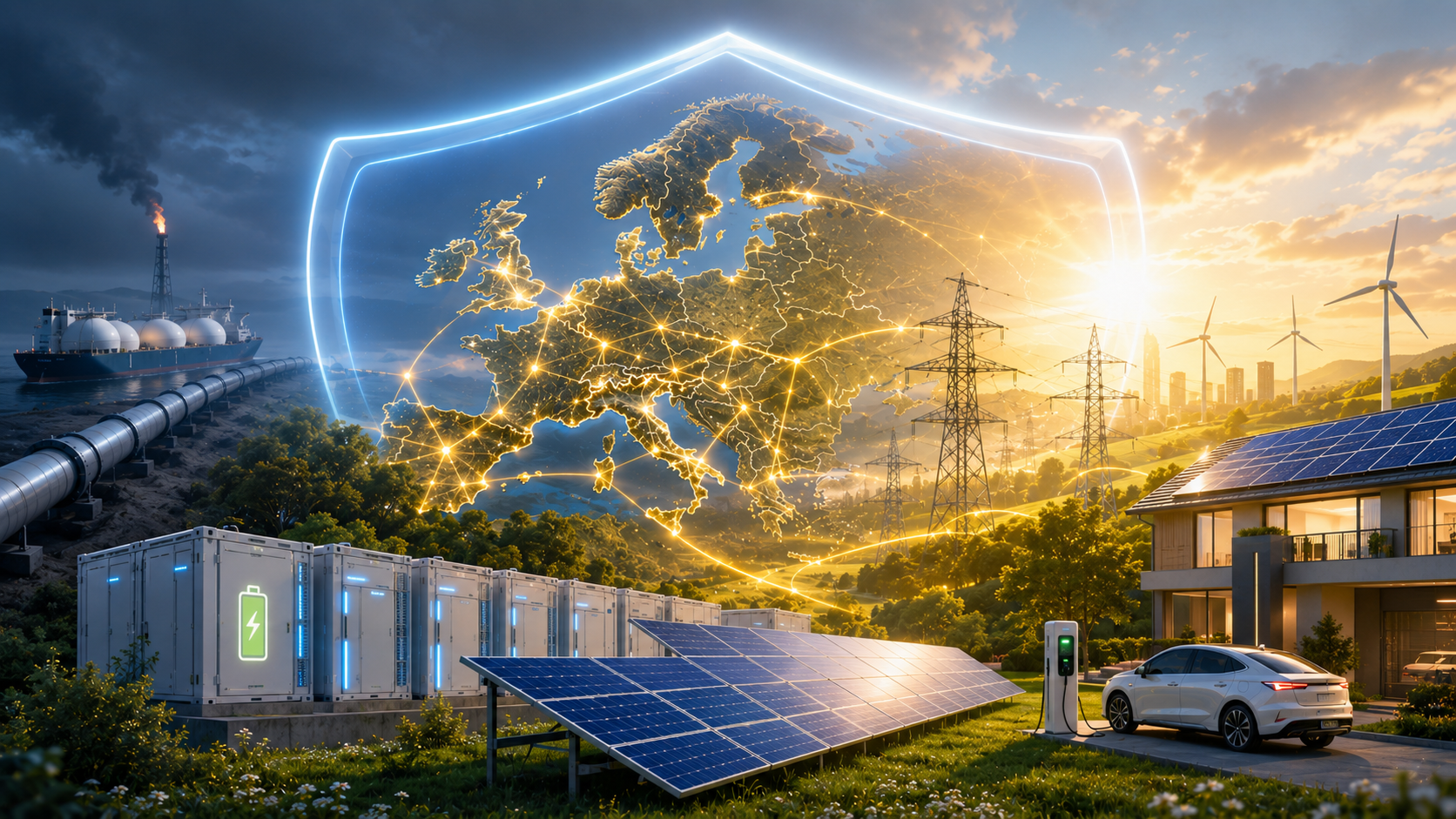
Europe’s solar market is entering a new phase. Growth is no longer only measured by how many solar panels are installed each year. Solar PV, solar battery systems, large-scale energy storage, electric vehicles, heat pumps and industrial electrification are becoming interconnected parts of Europe’s energy infrastructure.
That shift has major implications for professional solar installers, EPC contractors, developers, resellers, solar wholesalers and commercial energy buyers.
Between 1 March and 15 July 2026, solar generation helped the European Union avoid an estimated €20 billion in natural-gas imports, according to SolarPower Europe. Across the 137-day period, the estimated saving averaged approximately €146 million per day.
Solar also reached another important milestone in June 2026. EU solar generation climbed to approximately 52 TWh, supplying 25% of EU electricity during the month and becoming the bloc’s largest individual source of electricity, ahead of nuclear, gas, wind and hydro.
For the European solar industry, these figures demonstrate something increasingly important: solar PV is becoming strategic energy infrastructure rather than simply an additional renewable generation technology.
Solar PV Is Becoming Part of Europe’s Energy-Security Strategy
Europe’s dependence on imported fossil fuels remains an economic and energy-security challenge. Every additional megawatt-hour generated from domestic solar PV can reduce the amount of imported fuel potentially required elsewhere in the power system.
That gives solar panels, solar inverters and energy storage systems a wider strategic role.
SolarPower Europe estimates that the EU’s existing solar fleet avoided around €20 billion of additional gas imports between 1 March and 15 July 2026. The organisation has highlighted solar together with battery storage and other non-fossil flexibility technologies as important tools for reducing exposure to fossil-fuel price volatility.
But producing more solar electricity is only one side of the equation.
Europe is simultaneously preparing for a substantial increase in electricity consumption as transport, buildings and industry move away from direct fossil-fuel use.
EU Electrification Could Transform Electricity Demand Through 2040
On 17 July 2026, the European Commission published its Electrification Action Plan, designed to accelerate the use of electricity across industry, transport and buildings.
Electricity currently represents approximately 23% of final EU energy consumption. The Commission has established an indicative objective of 46% electrification by 2040, which is expected to be assessed as part of the post-2030 Energy Union package.
Reaching that level of electrification could fundamentally change electricity demand across Europe.
More energy would be required for:
- electric vehicles and commercial EV charging infrastructure;
- residential and commercial heat pumps;
- electric industrial heating and manufacturing processes;
- data-driven energy management and smart buildings;
- electrically powered logistics and commercial vehicle fleets;
- battery charging and behind-the-meter energy storage;
- additional industrial and commercial electrical loads.
The European Commission estimates that reaching 46% electrification could reduce EU gas imports by more than 70%, crude-oil imports by approximately 40%, and the EU’s fossil-fuel import bill by around €260 billion per year by 2040.
For the European solar market, this creates a significant long-term opportunity.
More electrification means more electricity demand. More electricity demand creates additional opportunities for solar PV generation, solar battery storage, commercial solar inverters, C&I energy storage and intelligent energy management systems.
Solar PV and Battery Storage Must Now Grow Together
Higher solar generation also creates a practical challenge.
Solar panels produce most of their electricity during daylight hours, but electricity demand does not always follow the same generation profile. Commercial facilities may experience demand peaks early in the morning or evening, while EV charging, industrial equipment and heating systems can create significant loads outside peak solar-production periods.
This is where solar battery and energy storage systems become increasingly important.
Battery energy storage can absorb surplus electricity when PV generation is high and make that energy available when site demand increases.
For residential, commercial and industrial systems, battery storage can support higher solar self-consumption, peak shaving, EV charging, backup strategies, load shifting and more efficient utilisation of available grid capacity.
The European Commission describes energy storage as an important source of the flexibility, stability and reliability required by an increasingly electrified European energy system.
The battery market is already responding.
Europe installed approximately 36 GWh of new battery storage during 2025, bringing total operational battery capacity above 100 GWh for the first time. SolarPower Europe reported that utility-scale systems represented more than half of new installations, signalling a major shift towards larger energy storage projects.
Within the EU specifically, approximately 27.1 GWh of new battery storage capacity was installed during 2025, another record year for deployment.
For installers and EPC companies, the direction is increasingly clear: solar PV system design is moving from standalone generation towards integrated solar-plus-storage architecture.
C&I Solar and Energy Storage Could Become a Major Growth Segment
Commercial and industrial electrification could become one of the most important opportunities in the European solar market.
Factories, production facilities, warehouses, logistics centres, supermarkets, offices, agricultural businesses and vehicle depots can combine substantial daytime electricity demand with large available roof or ground areas.
Electrification can increase those loads further.
A logistics site that replaces diesel vehicles with electric vans or trucks, for example, may add significant charging demand. A factory replacing a gas-fired process with electrically powered equipment may require substantially more electrical capacity. Commercial heat pumps can add another major load.
Simply requesting a larger grid connection is not always the fastest or most economical solution. The European Commission has acknowledged that insufficient grid capacity and long connection queues are significant challenges as renewable generation and electricity demand expand.
This creates a stronger business case for combining commercial solar PV with C&I battery energy storage systems.
A correctly engineered system can use solar panels to generate electricity on site, a commercial solar inverter to convert and manage generation, battery storage to shift energy between time periods and an energy management system to coordinate loads, charging and grid interaction.
The result is no longer simply a photovoltaic installation.
It becomes an integrated commercial energy system.
Solar Battery Storage Can Help Solve the Flexibility Gap
High solar penetration can produce periods of abundant electricity during the middle of the day while demand and electricity prices can rise rapidly after solar production falls.
This mismatch creates what is effectively a flexibility requirement.
Europe experienced this clearly during the summer of 2026. Ember reported that solar supplied around 25% of EU electricity in both June and July, while price increases were considerably stronger during early evening periods when solar generation declined. The analysis highlighted battery storage, demand response and greater interconnection as potential sources of additional flexibility.
For system designers, this increases the importance of sizing PV generation and energy storage together rather than treating the solar battery as an optional accessory added after the solar inverter has already been selected.
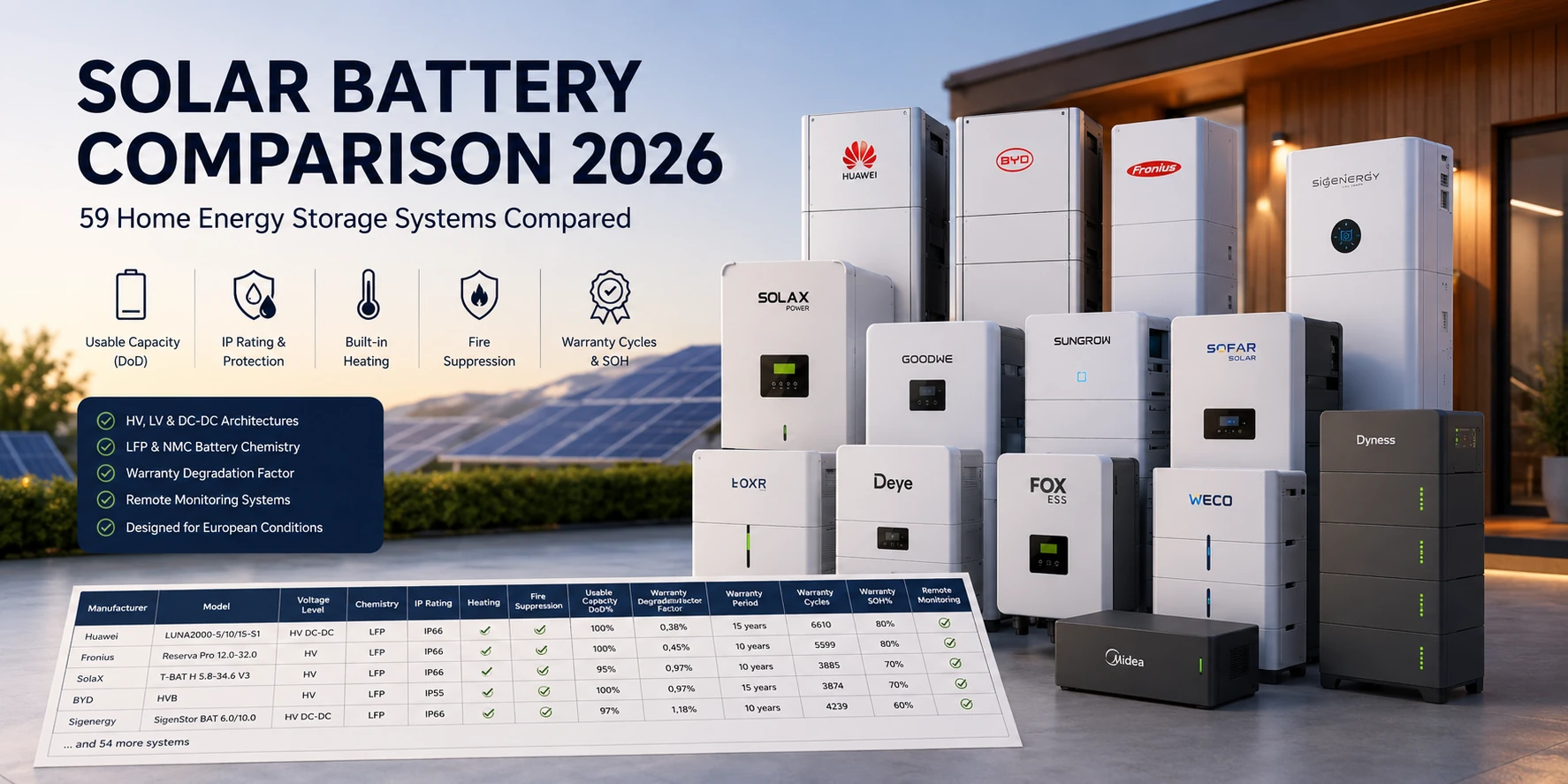
Battery capacity, charge and discharge power, inverter compatibility, usable depth of discharge, communication architecture, metering, backup requirements and energy-management functionality can all influence system performance.
That is particularly important for C&I energy storage, where the business case may depend on several operating strategies simultaneously.
EV Charging Changes the Design of Commercial Solar Systems
Electrification of transport adds another layer to solar PV system design.
One or two EV chargers may create a relatively manageable additional load. A commercial fleet containing dozens of vehicles can be very different.
If multiple vehicles begin charging simultaneously, peak power demand can increase sharply.
Combining solar PV, battery storage, EV charging and intelligent load management can allow businesses to use locally generated solar electricity more effectively while controlling demand from the grid.
The European Commission is also promoting faster deployment of electric-vehicle charging infrastructure and recognises smart and bidirectional charging as potential sources of energy-system flexibility.
For solar installers, this means EV charging increasingly needs to be considered during the initial PV and solar battery system design rather than as an unrelated electrical installation.
The Role of the Solar Inverter Is Also Expanding
The solar inverter is increasingly becoming the control point connecting PV generation with batteries, smart meters, energy management systems and controllable loads.
For conventional grid-connected solar PV, inverter selection was primarily determined by PV array size, string configuration, MPPT requirements, grid connection and AC output.
Solar-plus-storage projects introduce additional requirements.
Installers may need to evaluate battery voltage, charge and discharge power, backup functionality, battery-management-system communication, meter compatibility, operating modes, firmware versions and energy-management capabilities.
For larger C&I systems, additional considerations can include export limitation, dynamic power control, generator integration, transformer requirements and communication with external EMS or site-management platforms.
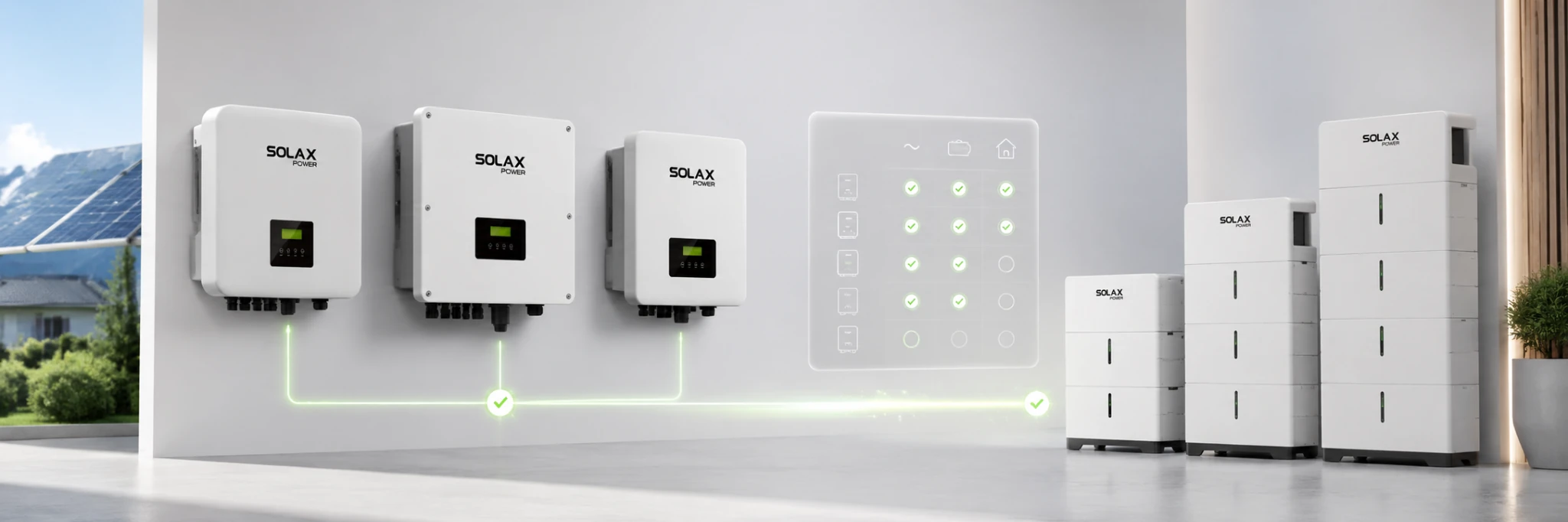
This makes solar inverter and solar battery compatibility one of the most important procurement considerations when designing modern solar-plus-storage systems.
Solar Wholesalers Must Move Beyond Individual Components
These market changes also affect every solar wholesaler, solar distributor and solar PV supplier serving professional installers in Europe.
The traditional distribution model focused heavily on individual components: solar panels, solar inverters, mounting equipment and electrical accessories.
Integrated energy systems require a broader approach.
Professional buyers increasingly need a supplier capable of supporting the complete system architecture — from solar panels and solar inverters to solar battery storage, smart meters, EV chargers, protection equipment and complete kits.
Availability alone is not enough.
For professional installers and EPC contractors, procurement increasingly depends on factors such as product compatibility, technical documentation, installation manuals, grid certificates, firmware requirements, warranty procedures, replacement availability and reliable European logistics.
A lower component price can quickly lose its value if the inverter and battery are incompatible, required accessories are missing or commissioning is delayed because the correct communication hardware was not ordered.
This is why the role of the modern solar PV supplier is moving closer to that of a system procurement partner.
Complete Solar Kits Can Reduce Procurement Complexity
The development of solar-plus-storage also strengthens the case for complete solar kits and pre-configured system combinations.
Rather than sourcing solar panels from one supplier, a solar inverter from another and the solar battery from a third, installers can reduce procurement complexity by sourcing compatible equipment within one supply chain.
For repeat residential and commercial installations, complete kits can also simplify purchasing, warehouse planning and installation preparation.
The same principle applies to larger systems.
A C&I project may require PV modules, commercial solar inverters, battery cabinets, PCS equipment, smart meters, EMS hardware, protection equipment, communications equipment and project-specific accessories.
The value of a professional solar wholesaler therefore increasingly depends on its ability to provide complete, compatible and project-ready energy solutions, rather than simply listing individual products.
What Professional Installers Should Evaluate Before Ordering Solar Plus Storage
Procurement decisions for modern solar PV and energy storage projects should consider the complete electrical architecture.
Installers and EPC companies should verify inverter-to-battery compatibility, supported BMS communication, usable battery capacity, continuous charge and discharge power, PV input limits, MPPT configuration, backup or EPS functionality where required, smart-meter compatibility, required communication accessories, grid-code certification, warranty conditions and available technical documentation before ordering.
For commercial and industrial projects, additional evaluation may include peak-shaving capability, export limitation, EMS integration, Modbus or API communication, transformer requirements, grid-connection limitations and future battery expansion.
This approach reduces commissioning risk and helps ensure the selected solar inverter, solar battery and balance-of-system components operate as one coordinated energy system.
Why Reliable European Stock Is Becoming More Important
The shift from standalone PV towards integrated systems also changes inventory requirements.
A delayed solar panel shipment can delay installation. A missing battery communication cable, meter or inverter accessory can prevent the entire energy storage system from being commissioned.
For professional installers, EPC contractors and resellers, reliable supply therefore involves more than headline stock numbers.
A professional solar distributor or solar wholesaler needs to support the complete bill of materials required to install and commission the system.
This is particularly important for multi-site projects and commercial installations where labour, lifting equipment, electricians, commissioning specialists and grid appointments may already be scheduled.
Reliable European logistics and accurate product availability can therefore have a direct impact on project profitability.
3Buy Solar: Solar PV, Solar Battery and Energy Storage Supply for European Professionals
At 3Buy Solar, our focus is on supporting professional solar installers, EPC companies, resellers and B2B energy buyers with the equipment required for modern European solar projects.
As the market moves towards solar-plus-storage and integrated electrification, procurement increasingly requires more than individual components.
Professional projects need compatible solar panels, solar inverters, solar battery systems, energy storage solutions and complete solar kits, supported by technical product information and efficient European supply.
Whether the project involves residential solar PV, hybrid solar systems, commercial rooftops, C&I energy storage or integrated solar and EV charging, selecting compatible equipment from the beginning can simplify procurement and reduce installation risk.
The next phase of Europe’s solar market will belong to suppliers and installers that can combine generation, storage and intelligent energy use into complete systems.
Europe Is Moving Beyond Standalone Solar PV
Europe’s energy transition is increasingly becoming an electrification transition.
The European Commission wants electricity to play a substantially larger role in transport, buildings and industry, while solar generation is already reaching record shares of the European electricity mix.
Solar PV can provide increasing quantities of domestically generated electricity.
Battery energy storage can make that electricity more flexible.
Smart charging and energy management can determine when and where electricity is consumed.
Together, these technologies create a more integrated energy system.
For solar installers, EPCs, distributors, resellers and commercial energy buyers, the opportunity is therefore no longer simply to install more solar panels.
The opportunity is to design and supply complete energy systems that generate, store, manage and intelligently use electricity.
And for every solar wholesaler and solar PV supplier operating in Europe, the competitive advantage will increasingly come from delivering the right solar panel, solar inverter, solar battery, energy storage system and associated equipment as one technically compatible solution.
Frequently Asked Questions About Solar PV, Battery Storage and EU Electrification
How much has solar saved the EU in gas imports in 2026?
SolarPower Europe estimates that solar generation helped the European Union avoid approximately €20 billion in natural-gas imports between 1 March and 15 July 2026. This corresponds to average estimated savings of around €146 million per day during the 137-day period.
How much EU electricity came from solar in June 2026?
Solar generated approximately 52 TWh of electricity in June 2026, providing around 25% of total EU electricity generation. Solar was the EU’s largest individual power source during the month, ahead of nuclear, gas, wind and hydro.
What is the EU’s 2040 electrification objective?
The European Commission’s Electrification Action Plan includes an indicative objective for electricity to reach 46% of final EU energy consumption by 2040. Electricity currently represents approximately 23% of final energy consumption. The 46% level is expected to be assessed under the post-2030 Energy Union framework.
Why is battery storage important for solar PV?
Solar panels produce electricity mainly during daylight hours, while consumption may occur at different times. A solar battery or larger battery energy storage system can store surplus electricity and make it available when PV generation is lower or site demand is higher. Energy storage can also provide flexibility and help integrate higher levels of renewable generation into the electricity system.
How large is Europe’s battery storage market?
Europe installed approximately 36 GWh of new battery storage capacity in 2025, taking operational battery capacity beyond 100 GWh. SolarPower Europe reported that utility-scale projects accounted for more than half of new installations for the first time.
Why are solar plus storage systems important for commercial businesses?
Commercial and industrial sites can have high or variable electricity demand. Combining solar PV with C&I energy storage can increase on-site utilisation of solar generation, shift electricity between time periods, support peak-load management, integrate EV charging and provide additional flexibility where grid connections are constrained.
How will electrification affect demand for solar panels and solar inverters?
More electric vehicles, heat pumps and electrically powered industrial processes will increase electricity consumption. This can create additional demand for on-site solar PV generation, hybrid and commercial solar inverters, solar batteries, C&I energy storage and energy-management systems.
Can electrification reduce Europe’s fossil-fuel imports?
According to the European Commission, reaching approximately 46% electrification could reduce EU gas imports by more than 70%, crude-oil imports by around 40% and the fossil-fuel import bill by approximately €260 billion annually by 2040.
What should installers look for when choosing a solar wholesaler?
Professional installers should consider more than product price. A capable solar wholesaler or solar distributor should provide compatible solar panels, solar inverters, solar battery systems, energy storage equipment and complete kits, together with the accessories, technical documentation and product information needed to complete the installation.
What is a complete solar plus storage system?
A complete solar-plus-storage system typically combines solar panels, a compatible solar or hybrid inverter, battery energy storage, monitoring or energy-management equipment, metering and the required electrical balance-of-system components. Commercial projects may additionally include C&I battery cabinets, power-conversion equipment, EV charging and external energy-management systems.
Why is inverter and battery compatibility important?
Solar batteries and hybrid inverters must be able to communicate correctly through the supported battery-management-system interface. Compatibility can affect charging, discharging, state-of-charge reporting, backup functionality, commissioning and warranty compliance. Installers should always confirm manufacturer-approved combinations and required firmware before procurement.
What does the EU Electrification Action Plan mean for solar installers?
The Electrification Action Plan is likely to expand opportunities around integrated electrical energy systems. Solar installers may increasingly work with projects combining solar PV, solar inverters, solar batteries, C&I energy storage, heat pumps, EV charging and intelligent energy management rather than standalone photovoltaic generation alone.