EV Accessories and Mounting


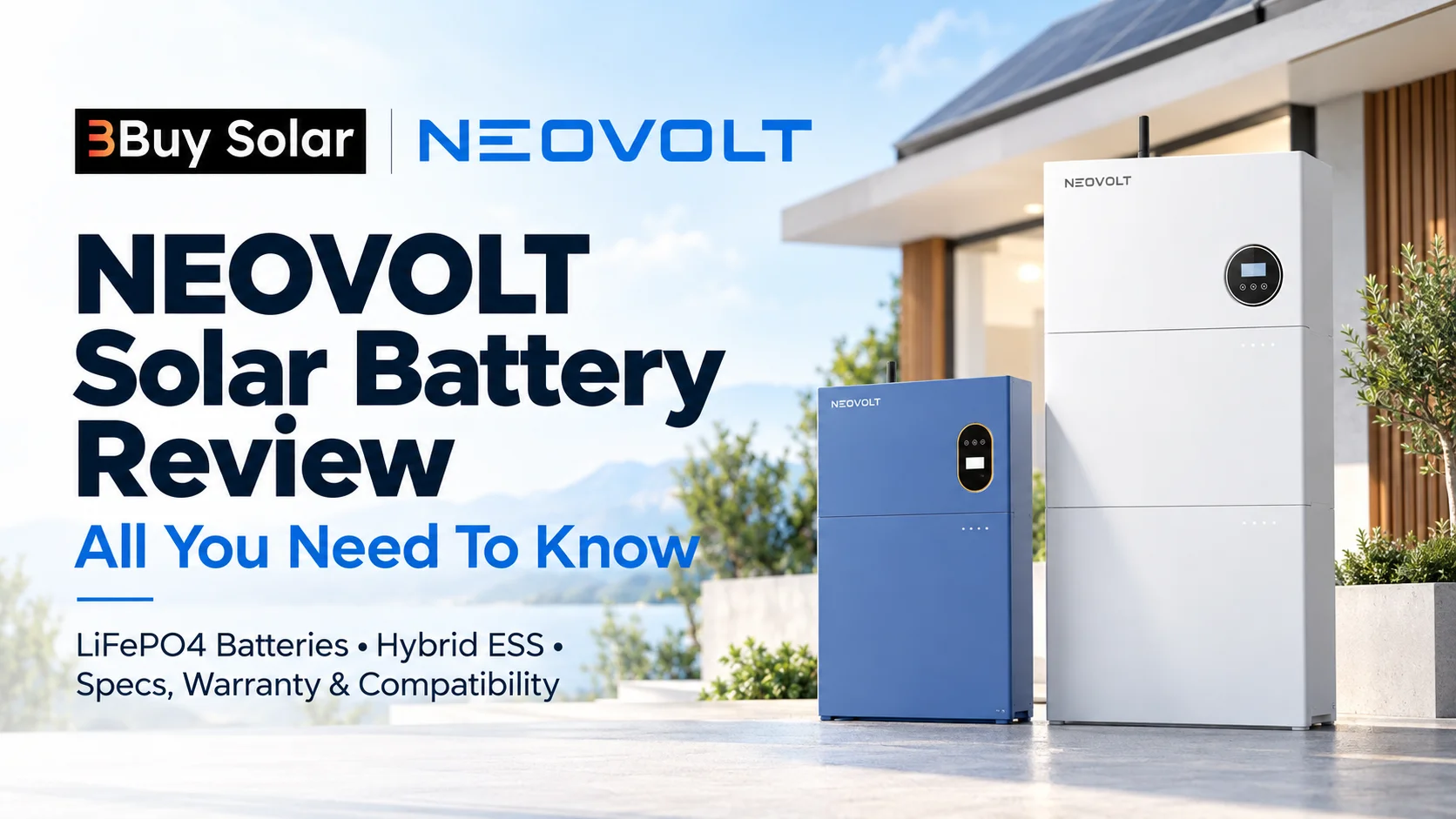

Is the NEOVOLT solar battery a good choice for residential and commercial energy storage? With LiFePO4 battery technology, expandable storage capacity, intelligent battery management and integrated hybrid inverter options, NEOVOLT is an interesting alternative for European homeowners, solar installers and businesses looking for practical solar energy storage solutions.
But how does NEOVOLT compare with established solar battery manufacturers? What is the difference between its 4.8 kWh, 9.6 kWh and 10.1 kWh battery systems? How long do the batteries last, what should installers know about compatibility, and are they worth the investment?
In this NEOVOLT solar battery review, we examine the manufacturer’s technical specifications, storage capacities, battery lifespan, efficiency, scalability, backup functionality, warranty conditions and installation requirements.
We also explain what European solar installers should verify before selecting NEOVOLT batteries for new photovoltaic installations or existing solar PV systems.
3Buy Solar is an official NEOVOLT distribution partner serving Europe, with its partnership independently listed in the manufacturer’s Global Partner directory.
This review evaluates the manufacturer’s published technical information and practical installation requirements. It does not claim results from independent laboratory testing or long-term field trials.
NEOVOLT Solar Battery Review: Our Assessment
NEOVOLT offers several features that make its battery systems worth considering for residential solar storage and selected light commercial projects.
Its main strengths are the combination of LiFePO4 battery chemistry, expandable storage configurations, monitoring functionality and compatibility with the manufacturer’s own hybrid inverter systems.
The published specifications include IP65-rated battery enclosures, model-dependent cycle-life ratings of 8,000–10,000 cycles and modular configurations suitable for different energy storage requirements.
However, NEOVOLT batteries should not be treated as universally compatible with all solar inverters. Their nominal operating voltage, approved inverter combinations, BMS communication requirements and expansion architecture need careful attention.
The warranty also varies by product and document version, making confirmation of the applicable European warranty essential before procurement.
Our assessment: NEOVOLT is a credible option to evaluate when designing a new solar-plus-storage installation around compatible equipment. It is less straightforward as a universal replacement battery for an existing hybrid inverter from another manufacturer.
What Is a NEOVOLT Solar Battery?
NEOVOLT is an energy storage brand developed by Bytewatt Technology Co., Ltd., a Chinese manufacturer specialising in integrated battery storage, hybrid inverter technology and intelligent energy management.
The NEOVOLT product range includes single-phase and three-phase hybrid energy storage systems, lithium iron phosphate batteries, monitoring devices, smart meters and installation accessories.
Unlike conventional photovoltaic installations that primarily generate electricity for immediate use or grid export, NEOVOLT battery systems allow surplus solar electricity to be stored for later consumption.
When connected to a compatible inverter and properly configured energy management system, a NEOVOLT solar battery can help:
- Increase solar electricity self-consumption.
- Reduce electricity purchased from the grid.
- Store surplus daytime photovoltaic production.
- Supply electricity during evening and night-time consumption.
- Support backup power where the complete system is designed for it.
- Improve control over household or business electricity demand.
NEOVOLT batteries are based on LiFePO4 (LFP) chemistry, which is widely used in modern stationary energy storage because of its thermal stability, cycle-life characteristics and suitability for repeated charging and discharging.
NEOVOLT Solar Battery Models and Technical Specifications
One of the most important considerations when evaluating NEOVOLT energy storage is that the manufacturer offers several battery models with different capacity and expansion arrangements.
The following comparison is based on published NEOVOLT battery datasheets.
| Specification | BW-BAT-4.8S | BW-BAT-9.6P | BW-BAT-10.1P |
|---|---|---|---|
| Battery chemistry | LiFePO4 | LiFePO4 | LiFePO4 |
| Nominal capacity | 4.8 kWh | 9.6 kWh | 10.1 kWh |
| Usable capacity | 4.6 kWh | Manufacturer clarification required* | 9.6 kWh |
| Nominal voltage | 96 V | 96 V | 96 V |
| Operating voltage | 90–108 V | 90–108 V | 90–108 V |
| Maximum charge current | 50 A | 50 A | 52.5 A |
| Maximum discharge current | 50 A | 50 A | 52.5 A |
| Published cycle rating | 8,000 | 10,000 | 8,000 |
| Protection class | IP65 | IP65 | IP65 |
| Maximum stated module count | 6 in series | 6 in parallel | 6 in parallel |
| Warranty indicated in datasheet | 5 / 10 years | 12 years | 5 / 10 years |
*The manufacturer’s February 2026 BW-BAT-9.6P datasheet contains inconsistent usable-capacity figures: an individual battery value of 9.6 kWh and an expansion table beginning at 9.1 kWh. The applicable usable-capacity figure should be confirmed against the latest approved product revision.
The warranty figures above are manufacturer datasheet statements, not a blanket guarantee of identical terms across every European country.
NEOVOLT BW-BAT-4.8S: Modular Battery Storage
The NEOVOLT BW-BAT-4.8S provides 4.8 kWh nominal capacity and approximately 4.6 kWh usable capacity.
It is intended for compatible modular battery configurations, with the manufacturer specifying up to six modules connected in series.
This enables nominal battery configurations of:
| Modules | Nominal capacity | Usable capacity |
|---|---|---|
| 1 | 4.8 kWh | 4.6 kWh |
| 2 | 9.6 kWh | 9.2 kWh |
| 3 | 14.4 kWh | 13.8 kWh |
| 4 | 19.2 kWh | 18.4 kWh |
| 5 | 24.0 kWh | 23.0 kWh |
| 6 | 28.8 kWh | 27.6 kWh |
The modular design offers flexibility when selecting battery capacity for different electricity consumption profiles.
Importantly, the 4.8S modules use a series expansion architecture. Installers must verify the complete battery stack’s operating voltage and compatibility with the selected inverter rather than assuming that all NEOVOLT modules can be connected interchangeably.
NEOVOLT BW-BAT-10.1P: The 10 kWh-Class Home Solar Battery
The NEOVOLT BW-BAT-10.1P is particularly relevant for residential energy storage installations requiring approximately 10 kWh of usable battery capacity.
Its key specifications include:
- 10.1 kWh nominal battery capacity.
- 9.6 kWh usable capacity.
- 95% depth of discharge.
- 96 V nominal operating voltage.
- Maximum charge and discharge current of 52.5 A.
- IP65 enclosure protection.
- Published cycle-life rating of 8,000 cycles.
- Support for up to six compatible battery units in parallel.
According to the manufacturer’s documentation, the system can expand to 60.6 kWh nominal capacity, or 57.6 kWh usable, with six battery units.
This makes the BW-BAT-10.1P suitable for consideration in larger residential systems and selected small commercial applications where compatible inverter capacity and installation conditions permit.
However, increasing battery capacity does not automatically increase the inverter’s AC output. A system with 20 kWh of battery storage and a 5 kW hybrid inverter remains subject to the inverter’s continuous output rating and the applicable battery power limits.
NEOVOLT BW-BAT-9.6P: Updated Battery Specifications
The NEOVOLT BW-BAT-9.6P is another 96 V LiFePO4 battery platform.
A manufacturer datasheet dated February 2026 specifies:
- 9.6 kWh nominal energy capacity.
- 96 V nominal voltage.
- Maximum charging and discharging current of 50 A.
- IP65 protection.
- Up to six batteries connected in parallel.
- A published cycle-life rating of 10,000 cycles.
- A stated 12-year warranty.
The published expansion table reaches 57.6 kWh nominal capacity for six units.
The same document contains a discrepancy concerning usable capacity. This should be resolved before the model is included in a contractual technical specification or compared with competing solar batteries on a price-per-usable-kWh basis.
Installer recommendation: Request the latest model-specific datasheet, battery firmware and applicable warranty document for the exact production version being supplied.
How Does the NEOVOLT Battery Work with Solar Panels?
A NEOVOLT solar battery forms part of a photovoltaic energy system that includes solar panels, a compatible inverter, battery management, energy metering and electrical protection.
During daylight hours, electricity generated by solar panels is used to supply the building’s electrical loads.
When photovoltaic production exceeds immediate consumption, the system can direct surplus electricity into the battery, subject to its charging limits and operating conditions.
As solar production decreases, the energy management system can discharge stored electricity to meet part of the building’s demand.
For example, a house with an appropriately sized PV array and a 10 kWh-class NEOVOLT battery may store surplus midday production for use during the evening.
The actual financial and energy benefits depend on the amount of solar surplus available, electricity tariffs, consumption patterns and system efficiency.
A solar battery cannot deliver meaningful daily savings if the photovoltaic installation rarely produces surplus electricity or if the stored energy cannot be used economically.
NEOVOLT Hybrid Inverter Compatibility: What Installers Must Know
Compatibility is one of the most important technical considerations when purchasing a NEOVOLT solar battery.
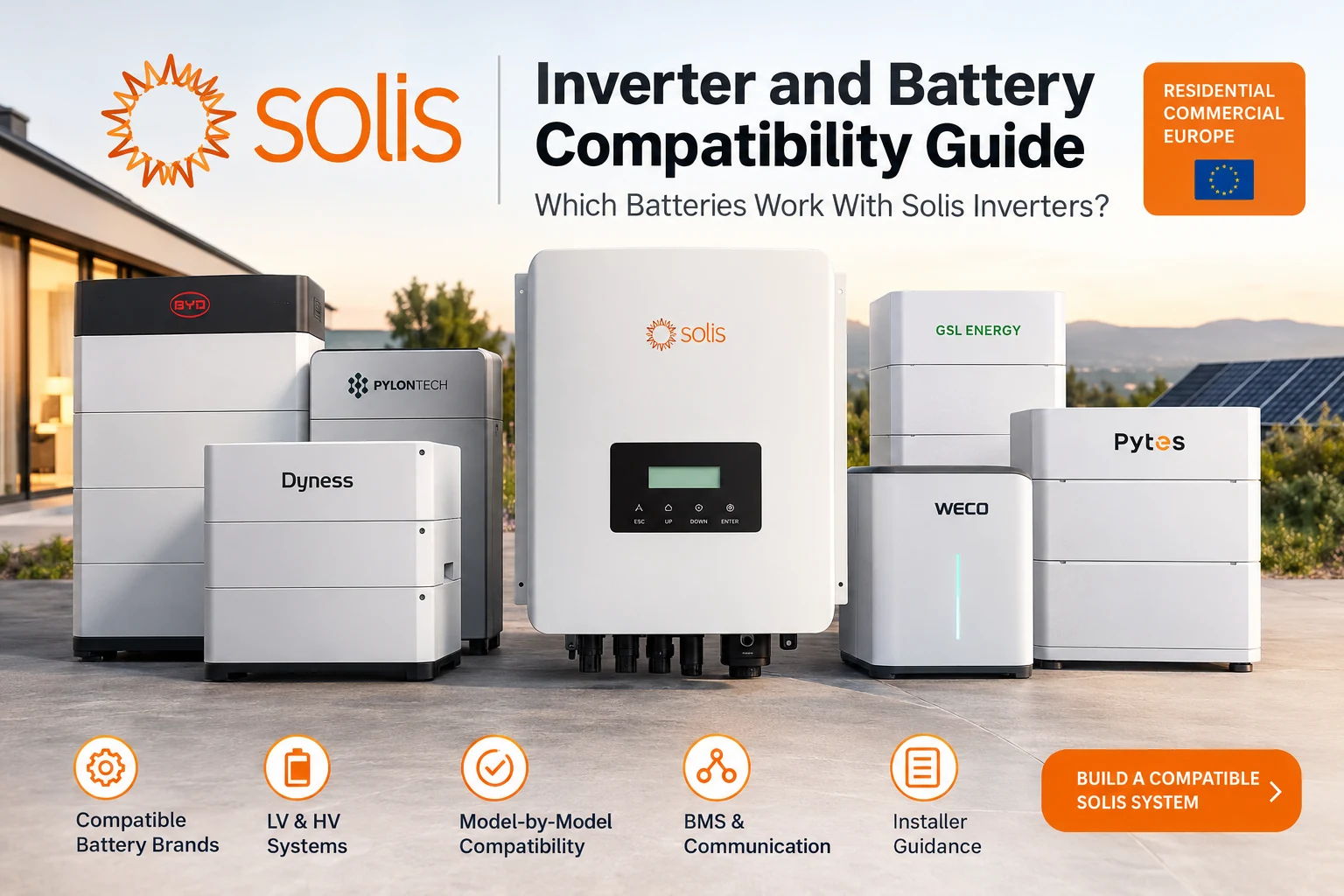
The manufacturer’s 4.8S, 9.6P and 10.1P platforms include 96 V nominal battery configurations. They are not automatically interchangeable with common 48 V or 51.2 V residential batteries.
Likewise, a matching DC voltage alone does not establish inverter compatibility.
A solar battery must communicate correctly with the inverter’s energy management and battery control systems. This can involve CAN communication, RS485 interfaces, approved battery profiles and specific firmware versions.
Before selecting a NEOVOLT battery for a project, installers should verify:
- Exact inverter and battery model numbers.
- Supported battery voltage range.
- Maximum charging and discharging current.
- Approved BMS communication protocol.
- Required CAN or RS485 configuration.
- Supported battery module quantity.
- Inverter and battery firmware requirements.
- Correct communication and power cables.
- Backup output and switching arrangements.
- Applicable European and national grid requirements.
NEOVOLT provides integrated hybrid inverter systems designed to operate with compatible NEOVOLT battery configurations.
This can reduce compatibility uncertainty compared with combining independently sourced equipment, provided the selected components are approved together.
For other projects, explore the Hybrid Inverters available at 3Buy Solar or compare the wider range of Solar Inverters for professional PV installations.
Important: A NEOVOLT battery should not be advertised as compatible with every inverter brand without specific manufacturer approval.
NEOVOLT Battery Efficiency and Performance
NEOVOLT publishes several performance figures for its integrated energy storage systems.
Selected single-phase BW-ESS configurations specify maximum inverter efficiency of 97.3% and maximum round-trip efficiency of approximately 90%.
These figures represent different measurements.
Inverter efficiency describes the efficiency of electrical conversion under specified operating conditions.
Battery system round-trip efficiency considers the energy recovered after a charging and discharging cycle.
For example, if a battery system achieved 90% round-trip efficiency under particular operating conditions, storing 10 kWh of electrical energy would theoretically return approximately 9 kWh.
Actual performance varies with charging power, discharging power, temperature, battery state of charge, inverter operation and system configuration.
When comparing NEOVOLT with other energy storage brands, round-trip efficiency, inverter efficiency and usable battery capacity should be evaluated separately.
A single headline efficiency percentage is not sufficient to calculate actual annual energy savings.
How Long Does a NEOVOLT Solar Battery Last?
NEOVOLT’s published battery cycle ratings vary by model, with 8,000 cycles stated for the BW-BAT-4.8S and BW-BAT-10.1P, and 10,000 cycles stated in a newer BW-BAT-9.6P datasheet.
These ratings are relevant when evaluating long-term energy storage performance, but they should not be interpreted as guaranteed operating lifetimes.
A battery’s actual service life depends on several factors:
- Depth of discharge and daily cycling frequency.
- Ambient and cell operating temperatures.
- Charging and discharging current.
- Battery management and protection settings.
- Calendar ageing.
- Manufacturer-prescribed operating limits.
Cycle life is also different from warranty duration.
For example, an advertised 8,000-cycle rating does not mean every battery is guaranteed to operate for 8,000 full cycles under any temperature or charging conditions.
Similarly, a 10-year warranty does not necessarily guarantee unchanged battery capacity throughout that period.
Professional buyers should always evaluate the manufacturer’s capacity-retention terms, permitted energy throughput, warranty exclusions and registration requirements.
Does the NEOVOLT Battery Provide Backup Power?
NEOVOLT’s supported hybrid inverter systems include backup functionality designed for applications where electricity supply continuity is important.
Selected single-phase configurations specify transfer times below 10 milliseconds, according to the applicable inverter datasheet.
However, this is an inverter and system characteristic, not a universal feature of every NEOVOLT battery.
Backup capability depends on the inverter model, battery discharge power, backup wiring, switching equipment and connected electrical loads.
For example, a battery with sufficient stored energy may still be unable to operate a high-power appliance if the inverter’s backup output is too small.
Installers should also account for motor starting currents, three-phase load requirements, circuit separation and country-specific electrical installation rules.
NEOVOLT’s support for generator integration and grid-forming functionality on selected systems offers additional design possibilities, particularly in projects requiring greater resilience.
These functions must be confirmed for the exact equipment combination.
NEOVOLT Battery Advantages and Limitations
Main Advantages
1. LiFePO4 battery chemistry
LFP technology offers favourable thermal stability and cycle-life characteristics for stationary energy storage applications.
2. Flexible energy storage capacity
Depending on the product family, NEOVOLT supports modular battery configurations suitable for smaller residential installations and higher-capacity systems.
3. Integrated hybrid inverter options
Compatible NEOVOLT inverter and battery systems can simplify equipment selection and support coordinated energy management.
4. Remote monitoring and diagnostics
Supported systems provide online monitoring, system diagnostics and remote maintenance functionality.
5. IP65-rated battery enclosures
The published IP65 rating provides protection against dust ingress and water jets under the relevant test conditions, supporting suitable installation environments when manufacturer instructions are followed.
6. Model-dependent scalability
Selected NEOVOLT systems support parallel battery expansion and compatible inverter configurations, providing additional capacity options for larger projects.
Points to Consider Before Buying
1. Not universally compatible
NEOVOLT batteries require compatible inverter voltage architecture, approved BMS communication and suitable firmware.
2. Warranty conditions vary
Different published datasheets specify different warranty durations. The applicable European terms must be verified.
3. Battery configurations are not interchangeable
Some NEOVOLT modules use series expansion, while other products use parallel connections. Mixing models or expansion methods without approval can create serious technical problems.
4. Brand-specific monitoring and service requirements
Installers should confirm monitoring access, commissioning permissions, service procedures and the availability of technical documentation before deployment.
5. Careful specification comparison is necessary
The manufacturer’s newer BW-BAT-9.6P document contains conflicting usable-capacity values, demonstrating why exact model documentation matters.
NEOVOLT Battery Installation in Europe
Professional installation is essential for safe operation, regulatory compliance and warranty protection.
For European installers, NEOVOLT battery installation involves more than mounting the enclosure and connecting DC cables.
The complete system must meet the requirements of the local electricity network operator and applicable electrical regulations.
Depending on the destination market and installation type, the documentation package may need to include:
- EU Declaration of Conformity for the applicable equipment.
- Relevant electrical safety and EMC documentation.
- Inverter grid-compliance certificates.
- Battery safety and transport documentation.
- Manufacturer installation and commissioning manuals.
- Approved inverter-battery compatibility confirmation.
- Warranty and service documentation.
For example, grid-connected installations in Germany may require compliance with VDE-AR-N 4105, while installations in the United Kingdom are subject to the applicable G98 or G99 connection requirements.
The correct documents depend on the exact inverter model and destination country.
Temperature and Installation Environment
The reviewed NEOVOLT battery datasheets generally specify charging above 0°C and below 50°C, with discharging permitted at lower temperatures subject to model limits.
This is particularly relevant for outdoor European installations.
An IP65 enclosure does not mean the battery can be charged under all winter conditions without thermal management or protective installation measures.
Installers must check the manufacturer’s mounting, ventilation, environmental and temperature requirements for the selected system.
NEOVOLT Solar Battery Price in Europe
How much does a NEOVOLT battery cost?
The purchase price depends on the battery model, inverter configuration, storage capacity, required accessories, installation country and commercial order quantity.
A professional comparison should consider the complete energy storage installation rather than the price of an individual battery module.
Relevant cost components include the battery modules, compatible inverter, battery management components, mounting equipment, communication accessories, energy meter, electrical protection and installation labour.
For larger projects, logistics, commissioning and support arrangements can also influence overall procurement costs.
How to Compare NEOVOLT Battery Prices
The most useful purchasing indicator is generally the total system cost per usable kWh, provided the compared systems also meet the required charge and discharge power.
The calculation is:
Battery system cost per usable kWh = Total battery system cost ÷ Usable battery capacity
For instance, when evaluating a NEOVOLT BW-BAT-10.1P, the published usable capacity is 9.6 kWh rather than its 10.1 kWh nominal rating.
Using nominal capacity instead of usable capacity can make a battery appear less expensive per kWh than it actually is for energy storage purposes.
The same comparison should include any additional BMS, cabling, protection or mounting components required to deliver a complete operational system.
Professional buyers can enquire about NEOVOLT products through 3Buy Solar for project-specific pricing and commercial availability.
NEOVOLT vs Other Solar Battery Brands
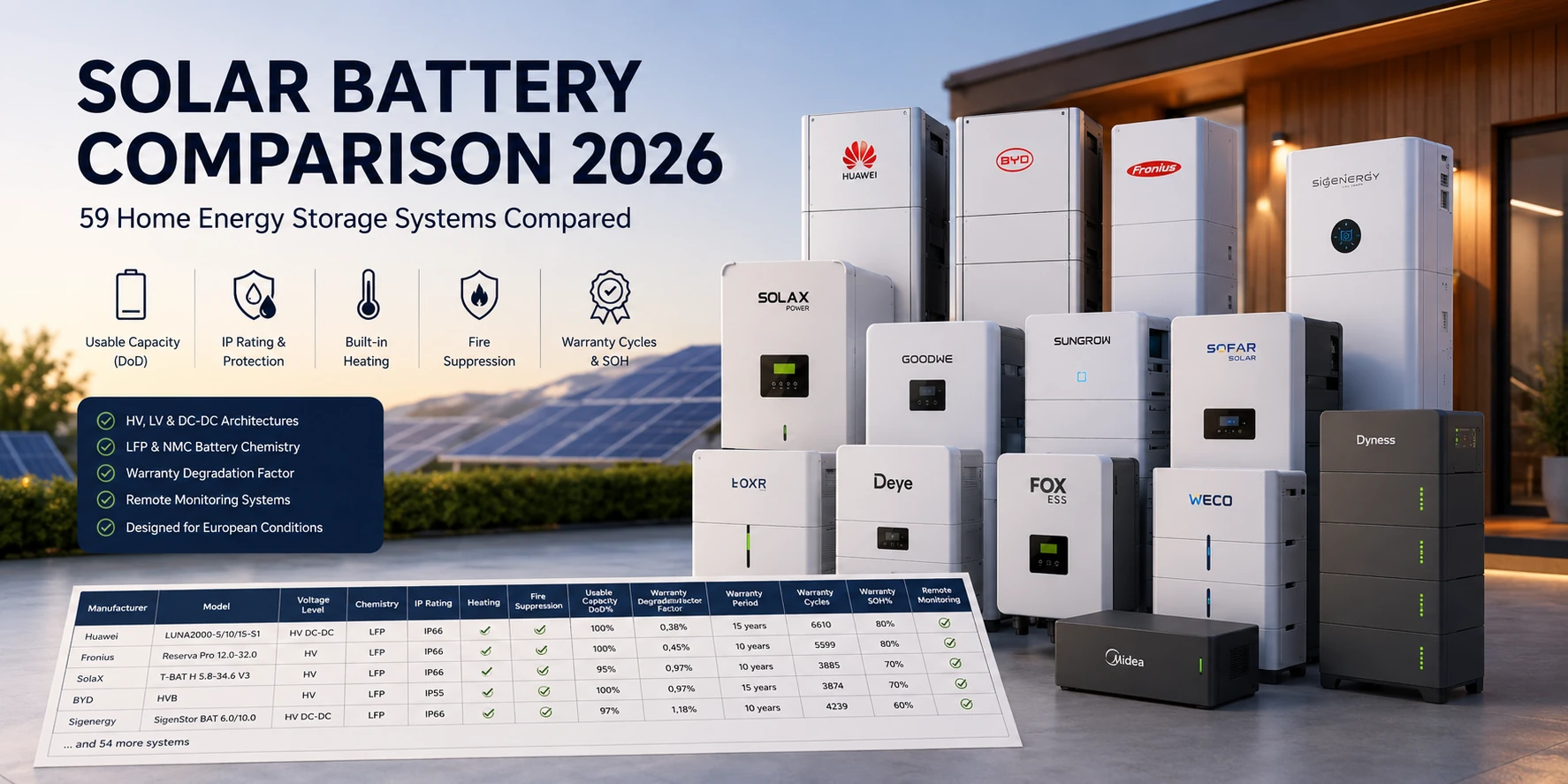
European installers comparing NEOVOLT with established energy storage brands such as BYD, Huawei, SolaX, Growatt, Dyness and Sigenergy should evaluate the complete system architecture rather than relying on brand reputation or headline battery capacity alone.
| Comparison factor | What installers should evaluate |
|---|---|
| Battery architecture | Operating voltage, module arrangement and compatibility |
| Usable capacity | Actual deliverable energy in kWh |
| Charge/discharge performance | Battery and inverter power limits |
| Expansion | Maximum approved modules and permitted connections |
| Backup power | Inverter output, switching arrangement and supported loads |
| Energy monitoring | Remote access, diagnostics and communication features |
| Warranty | Applicable European terms, capacity retention and throughput |
| Installation | Weight, dimensions, mounting, temperature and protection |
| Procurement | Complete installed cost and availability of required accessories |
NEOVOLT’s principal attraction is its integrated battery and hybrid inverter approach, particularly for projects where the system is being designed from the beginning around compatible equipment.
Established alternatives may be preferable where an installer already operates a standardised inverter ecosystem or requires a particular third-party compatibility approval.
The best choice depends on the project’s technical requirements, commercial conditions and available manufacturer support.
Is a NEOVOLT Solar Battery Worth Buying?
A NEOVOLT battery deserves consideration when the installation requires a compatible residential energy storage system, flexible battery capacity and monitoring functionality.
For new photovoltaic installations, using a coordinated NEOVOLT hybrid inverter and battery configuration may simplify product selection compared with assembling a system from unrelated components.
For larger homes and selected light commercial projects, compatible expansion configurations can offer additional flexibility.
However, the battery should not be chosen based on capacity or price alone.
Inverter compatibility, usable energy, output power, warranty conditions, technical approval and long-term servicing requirements remain critical.
Our conclusion: NEOVOLT offers a technically interesting LiFePO4 energy storage portfolio with features that suit modern solar self-consumption and backup-ready installations. Its suitability for a specific project must be established through model-level technical verification rather than general brand claims.
Frequently Asked Questions About NEOVOLT Solar Batteries
Who makes NEOVOLT solar batteries?
NEOVOLT is an energy storage brand associated with Bytewatt Technology Co., Ltd., which develops hybrid inverter technology, battery energy storage systems and related energy management equipment. Its official manufacturer website is neovoltess.com.
Is NEOVOLT a good solar battery brand?
NEOVOLT publishes competitive technical specifications for its LiFePO4 battery range, including expandable configurations, IP65 protection and high stated cycle-life ratings. Whether it is a good choice depends on the exact battery model, inverter compatibility, warranty conditions, project requirements and installed price.
How much storage capacity does a NEOVOLT battery have?
NEOVOLT offers multiple battery configurations. The BW-BAT-4.8S provides 4.8 kWh nominal capacity, the BW-BAT-9.6P provides 9.6 kWh nominal capacity and the BW-BAT-10.1P provides 10.1 kWh nominal capacity. Compatible expansion arrangements can increase total system capacity.
What is the usable capacity of the NEOVOLT 10.1 kWh battery?
The BW-BAT-10.1P is specified at 10.1 kWh nominal capacity and 9.6 kWh usable capacity, based on the manufacturer’s published 95% depth-of-discharge figure.
How many NEOVOLT batteries can be connected together?
The manufacturer’s published configurations include up to six units for certain battery models. The BW-BAT-10.1P and BW-BAT-9.6P use parallel expansion, while BW-BAT-4.8S modules are specified for series configurations. The actual permitted arrangement depends on the selected inverter and battery system.
How long does a NEOVOLT battery last?
Published cycle-life ratings range from 8,000 to 10,000 cycles across the reviewed models. Actual service life depends on temperature, depth of discharge, operating conditions and calendar ageing. These ratings should not be confused with the warranty period.
Does NEOVOLT offer a 10-year battery warranty?
Some published NEOVOLT battery datasheets specify 5-year or 10-year warranty options, while a newer BW-BAT-9.6P datasheet indicates 12 years. Buyers should obtain the warranty terms applicable to their exact product and European destination market before ordering.
Can NEOVOLT batteries work with existing solar panels?
Yes, a compatible NEOVOLT inverter system can be integrated with appropriately specified photovoltaic modules. Solar panel compatibility is primarily determined by inverter input specifications and string design. Battery-to-inverter compatibility must be verified separately.
Can a NEOVOLT battery work with any hybrid inverter?
No. NEOVOLT batteries must be matched to an inverter supporting their voltage range, communication protocol, charging limits and approved battery configuration. A physical CAN or RS485 connection alone does not guarantee compatibility.
Does NEOVOLT provide backup electricity during power outages?
Selected NEOVOLT hybrid inverter systems support backup operation. The battery alone does not guarantee backup electricity. The complete installation must include the appropriate inverter functionality, protection equipment, switching arrangement and approved backup circuits.
Can NEOVOLT batteries be installed outdoors?
The reviewed NEOVOLT battery models have IP65-rated enclosures, but outdoor installation must follow the manufacturer’s requirements for temperature, mounting, exposure and electrical protection. Charging limitations at low temperatures are especially important in European climates.
Where can I buy NEOVOLT batteries in Europe?
3Buy Solar is an official NEOVOLT distribution partner serving Europe, supplying professional solar installers, EPC contractors, electricians and renewable energy resellers. The relationship can be verified through the manufacturer’s official Global Partner directory.
Visit the NEOVOLT brand page at 3Buy Solar for product information and procurement enquiries.
Final Verdict: NEOVOLT Solar Battery Review
The NEOVOLT battery range offers several attractive characteristics for modern residential solar PV and energy storage installations.
Its LiFePO4 technology, expandable battery configurations, remote monitoring capabilities and integrated hybrid inverter ecosystem make it a worthwhile option to evaluate for new solar-plus-storage projects.
For professional installers, the strongest reasons to consider NEOVOLT are coordinated system design, model-dependent scalability and the availability of complete energy storage configurations.
The most important purchasing considerations remain the exact inverter-battery pairing, electrical architecture, documented usable capacity, applicable European warranty and total installed cost.
NEOVOLT should therefore be evaluated as a complete energy storage system, not simply as an interchangeable battery module.
Source NEOVOLT Solar Batteries Through 3Buy Solar
As an official NEOVOLT distributor in Europe, 3Buy Solar supports professional buyers sourcing compatible hybrid inverters, LiFePO4 batteries and energy storage solutions.
European solar installers, EPC contractors, system integrators and renewable energy resellers can enquire about product specifications, compatible configurations and project-based commercial quotations.
Explore the NEOVOLT product range at 3Buy Solar or browse our professional Energy Storage Systems for residential, commercial and off-grid applications.
For project quotations, contact sales@3buy.solar with the required inverter power, battery capacity, quantity and installation country.
Official Manufacturer Technical Documentation
The technical details in this review are based on the following NEOVOLT manufacturer publications:
- NEOVOLT BW-BAT-4.8S Battery Datasheet
- NEOVOLT BW-BAT-9.6P Battery Datasheet – 2026 Version
- NEOVOLT BW-BAT-10.1P Battery Datasheet
- NEOVOLT Single-Phase Hybrid ESS Datasheet
- THREE Phase 4~6kW ESS DATASHEET
- THREE Phase 8~12kW ESS DATASHEET
- THREE Phase 4~15kW HYBRID Inverter Datasheet
- NEOVOLT Official Global Partner Directory
Product specifications, approved system configurations and warranty conditions may change. Always verify the latest manufacturer documentation before ordering or installation.
3Buy Solar – Pro-ready. Simple for all. Always 3Buy.