EV Accessories and Mounting


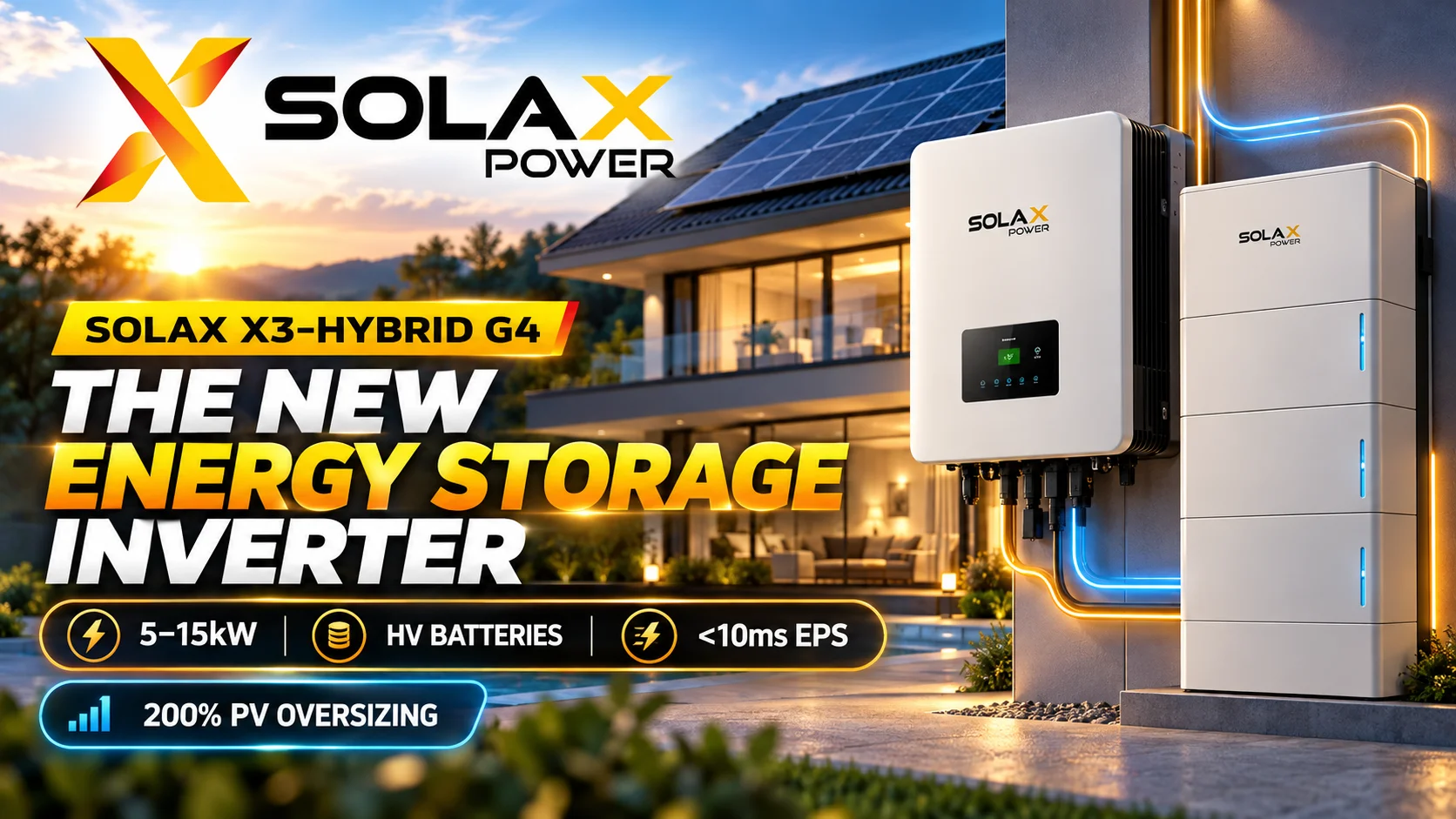

SolaX X3-Hybrid G4 Review: 5–15kW Specifications, Battery Compatibility & EPS Backup
Three-phase hybrid solar inverter | High-voltage battery storage | 200% PV oversizing | Sub-10ms EPS backup
3Buy Solar Technical & Installer Buying Guide | Updated October 2026
The SolaX X3-Hybrid G4 is a three-phase energy storage inverter available in 5, 6, 8, 10, 12 and 15kW versions. It combines solar PV conversion, high-voltage battery charging, intelligent energy management and emergency backup power within one inverter platform.
With up to 200% recommended PV oversizing, 98% maximum conversion efficiency, two MPPT trackers, three-phase unbalanced output and backup switchover in less than 10ms, the X3-Hybrid G4 offers a versatile solution for residential and selected light-commercial photovoltaic installations.
But choosing the correct model involves more than comparing AC power ratings.
Which SolaX batteries are compatible? How many battery modules can be connected? Does the inverter provide whole-home backup? And when is the newer X3-HYB-G4 PRO or X3-ULTRA a better option?
This technical guide answers those questions and explains how professional installers can select the correct inverter, solar batteries, monitoring accessories and complete energy storage system.
For related equipment and available product configurations, explore the SolaX Power inverter and energy storage range at 3Buy Solar.
SolaX X3-Hybrid G4 at a Glance
| Specification | SolaX X3-Hybrid G4 |
|---|---|
| Inverter category | Three-phase hybrid solar inverter |
| Available rated output | 5–15kW |
| Maximum recommended PV array | 200% of rated inverter power |
| Independent MPPT trackers | 2 |
| Maximum PV voltage | 1,000V DC |
| MPPT operating range | 180–950V |
| Battery voltage range | 120–800V DC, subject to compatible configuration |
| Maximum battery charge/discharge current | 30A |
| Maximum inverter efficiency | 98.0% |
| European efficiency | 97.7% |
| EPS switching time | Less than 10ms |
| Peak EPS capability | Model-dependent, up to 22.5kVA for 10 seconds |
| Three-phase unbalanced output | Supported within model-specific limits |
| Enclosure protection | IP65 |
| Monitoring | SolaXCloud with compatible communications equipment |
| Parallel operation | Up to 150kW in approved configurations |
The inverter is designed for high-voltage battery systems and should not be confused with SolaX’s single-phase X1-Hybrid series or its larger commercial X3-ULTRA platform.
1. SolaX X3-Hybrid G4 Models: 5kW, 6kW, 8kW, 10kW, 12kW and 15kW
SolaX offers six rated power classes within the standard X3-Hybrid G4 family.
| Inverter model | Rated AC output | Recommended maximum PV array | Maximum AC apparent output | EPS peak, 10 seconds |
|---|---|---|---|---|
| X3-HYBRID-5.0-D | 5kW | 10kWp | 5.5kVA | 12kVA |
| X3-HYBRID-6.0-D | 6kW | 12kWp | 6.6kVA | 12kVA |
| X3-HYBRID-8.0-D | 8kW | 16kWp | 8.8kVA | 18kVA |
| X3-HYBRID-10.0-D | 10kW | 20kWp | 11kVA | 18kVA |
| X3-HYBRID-12.0-D | 12kW | 24kWp | 13.2kVA | 22.5kVA |
| X3-HYBRID-15.0-D | 15kW | 30kWp | 15kVA | 22.5kVA |
The most suitable inverter depends on the grid connection, phase-level consumption, photovoltaic array design, battery charging requirements and expected electrical demand.
A 10kW inverter may suit a substantial residential system, while the 12kW and 15kW models provide higher output capacity for larger properties or selected small commercial applications.
Installers comparing different inverter platforms can also browse three-phase hybrid solar inverters and three-phase solar inverter solutions for professional PV projects.
2. Up to 200% PV Oversizing: What Does It Actually Mean?
One of the defining features of the SolaX X3-Hybrid G4 is its ability to accommodate a recommended solar PV array of up to 200% of rated inverter AC output.
For example, a 10kW X3-Hybrid G4 supports a recommended PV array of up to 20kWp, while the 15kW model supports up to 30kWp.
This can improve energy harvesting during lower-irradiance periods, particularly where the PV array is distributed across different roof orientations.
A larger PV array may also provide more opportunities to charge a connected solar battery while supplying building loads.
However, 200% PV oversizing does not mean 200% continuous AC output.
The inverter remains subject to its rated conversion power, maximum AC output, battery charging limits and operating conditions. Excess available photovoltaic generation can be curtailed.
PV Input and MPPT Configuration
The standard X3-Hybrid G4 uses two independent MPPT trackers.
The 5kW and 6kW models support one string per MPPT, with maximum input current of 16A on each tracker.
The 8–15kW models support two strings on MPPT1 and one string on MPPT2. Their maximum input currents are 28A and 16A respectively.
These ratings matter when specifying modern high-current solar panels, including TOPCon and other large-format photovoltaic modules.
Before selecting modules from the 3Buy Solar wholesale solar panel range, installers should check module operating current, short-circuit current, string voltage at minimum design temperature and MPPT grouping.
For dual-string MPPT configurations, connected strings should be electrically compatible and designed in accordance with the SolaX installation documentation.
3. SolaX X3-Hybrid G4 Battery Compatibility: Which Solar Batteries Work?
Battery compatibility is one of the most important factors when specifying an X3-Hybrid G4 energy storage system.
The inverter uses a high-voltage battery architecture with a manufacturer-specified interface range of 120–800V DC.
A battery cannot be assumed compatible simply because it is marketed as a 10kWh, 15kWh or 20kWh solar battery.
The exact battery family, module quantity, BMS generation, communication protocol and firmware all matter.
SolaX Battery Compatibility Overview
| SolaX battery family | Standard X3-Hybrid G4 configuration |
|---|---|
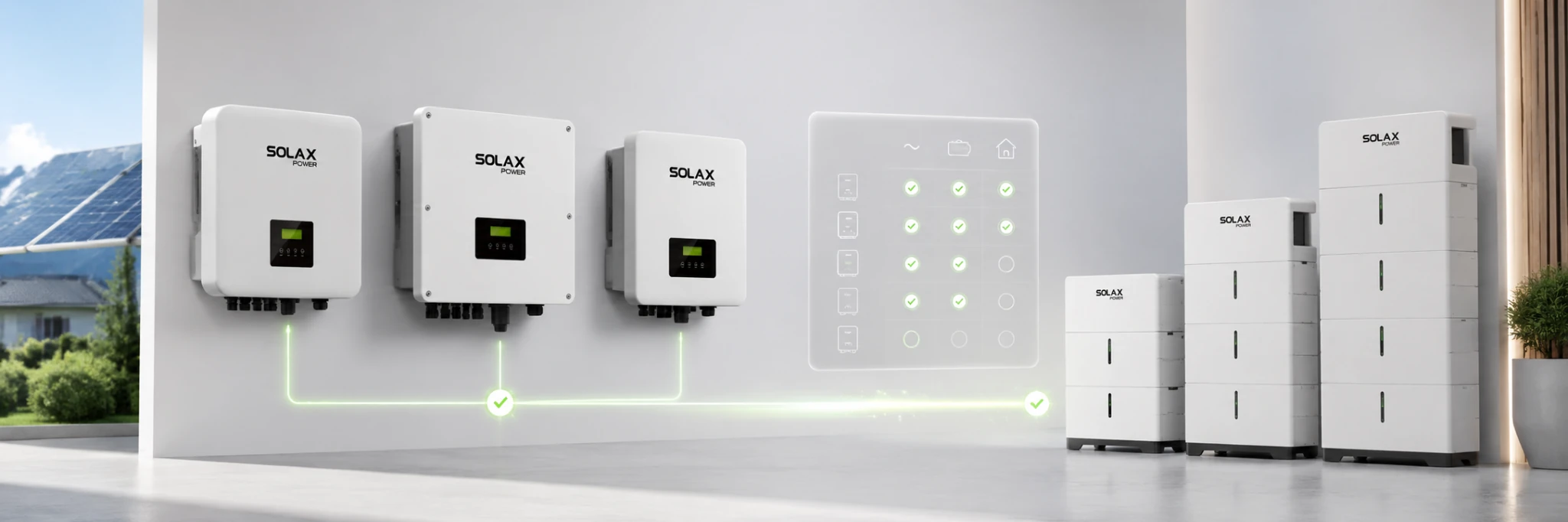
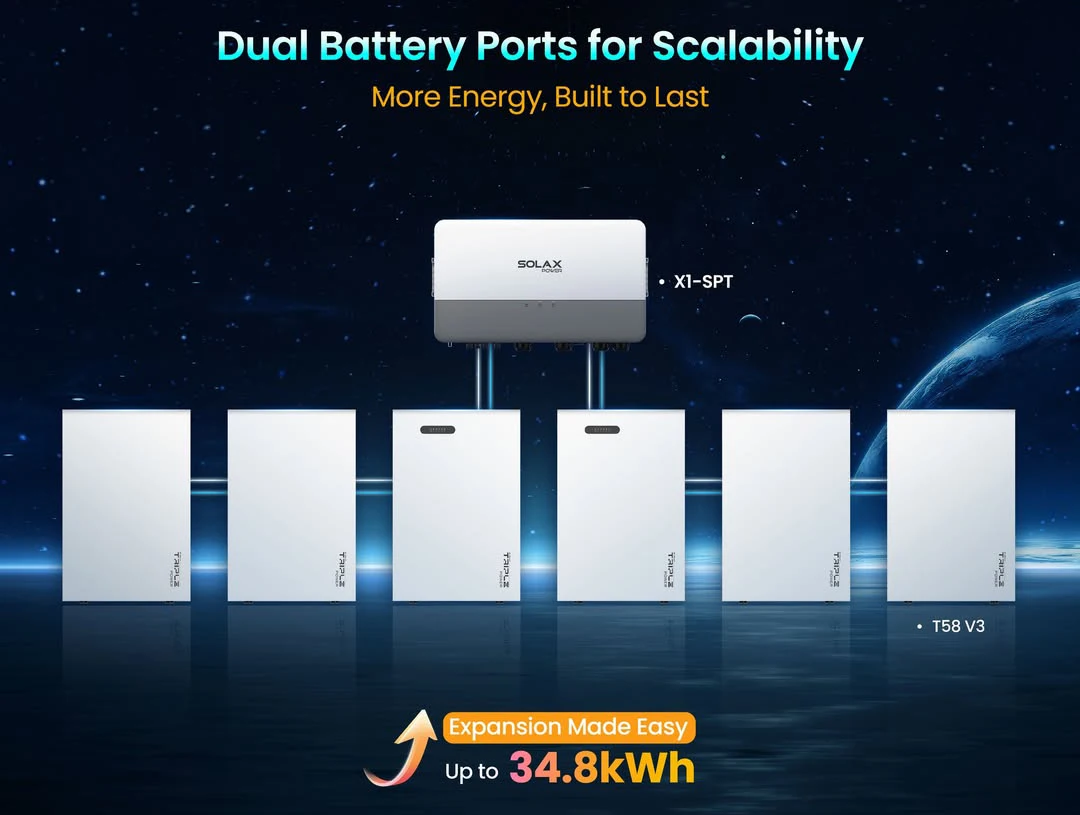
| T-BAT H 5.8 / T58 | 2–4 modules |
| T-BAT H 3.0 / T30 | 2–4 modules |
| T-BAT S2.5 / HS25 | 3–13 modules |
| T-BAT S3.6 / HS36 | 3–13 modules |
| HS51 / HS51-O | 3–13 modules, subject to specific approval and firmware |
These are compatibility configurations rather than universal purchasing recommendations.
For example, two T58 battery modules offer a different total storage capacity and electrical operating profile from two T30 modules.
Certain battery families also support expansion through approved SolaX BMS parallel equipment, but the number of permitted modules and battery strings depends on the exact configuration.
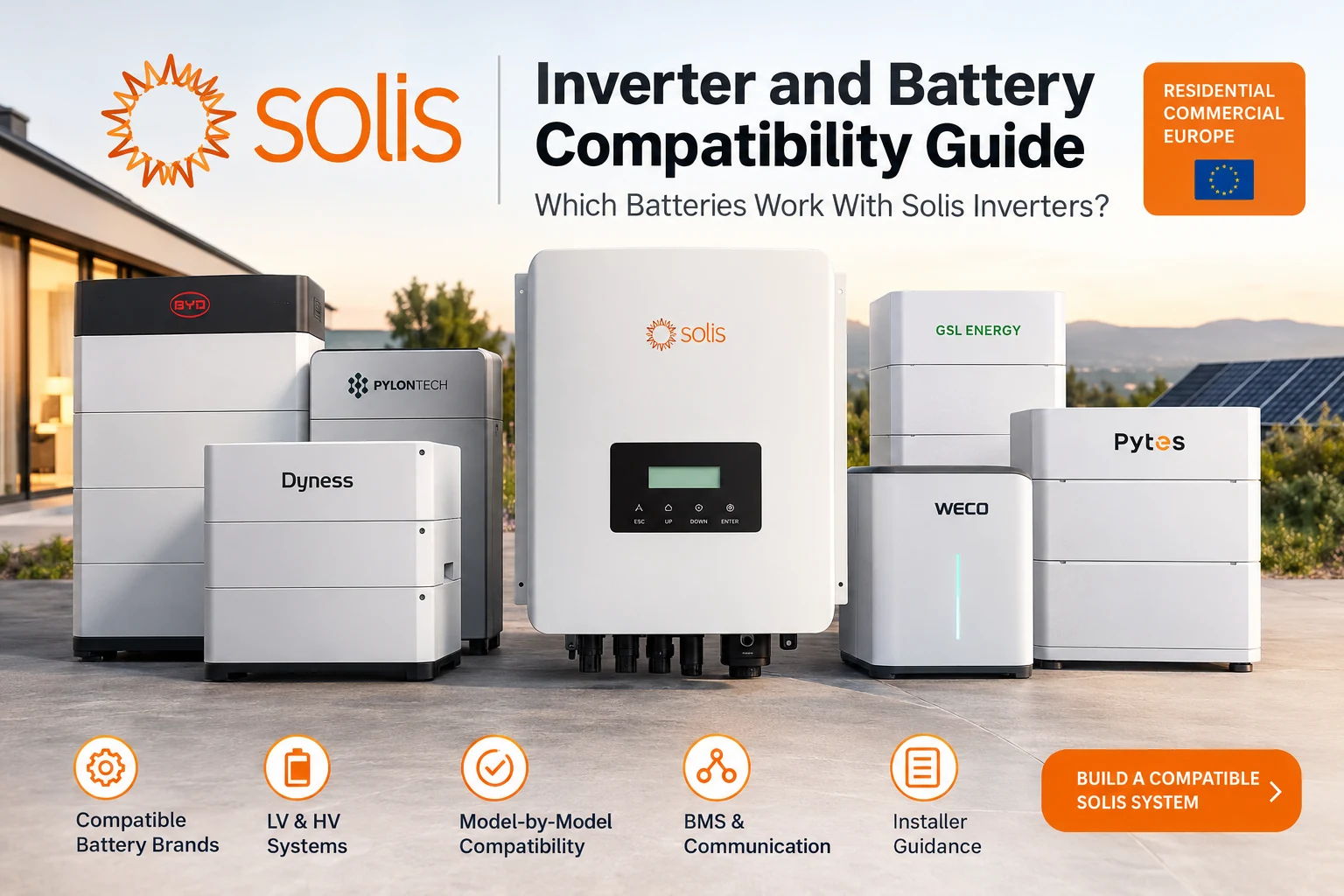
Before ordering a complete SolaX battery system, consult our dedicated SolaX inverter and battery compatibility guide.
That guide covers T58, T30, S2.5, S3.6, HS51 and newer SolaX inverter platforms, including battery module counts, BMS parallel boxes and expansion requirements.
Is a Bigger Battery Always Better?
Not necessarily.
An oversized solar battery may remain underutilised if the building has relatively low nighttime electricity demand or insufficient surplus solar production.
A battery that is too small, however, may limit evening self-consumption or provide insufficient backup autonomy.
Correct battery sizing requires an analysis of hourly electricity consumption, photovoltaic production, intended backup loads and usable battery capacity.
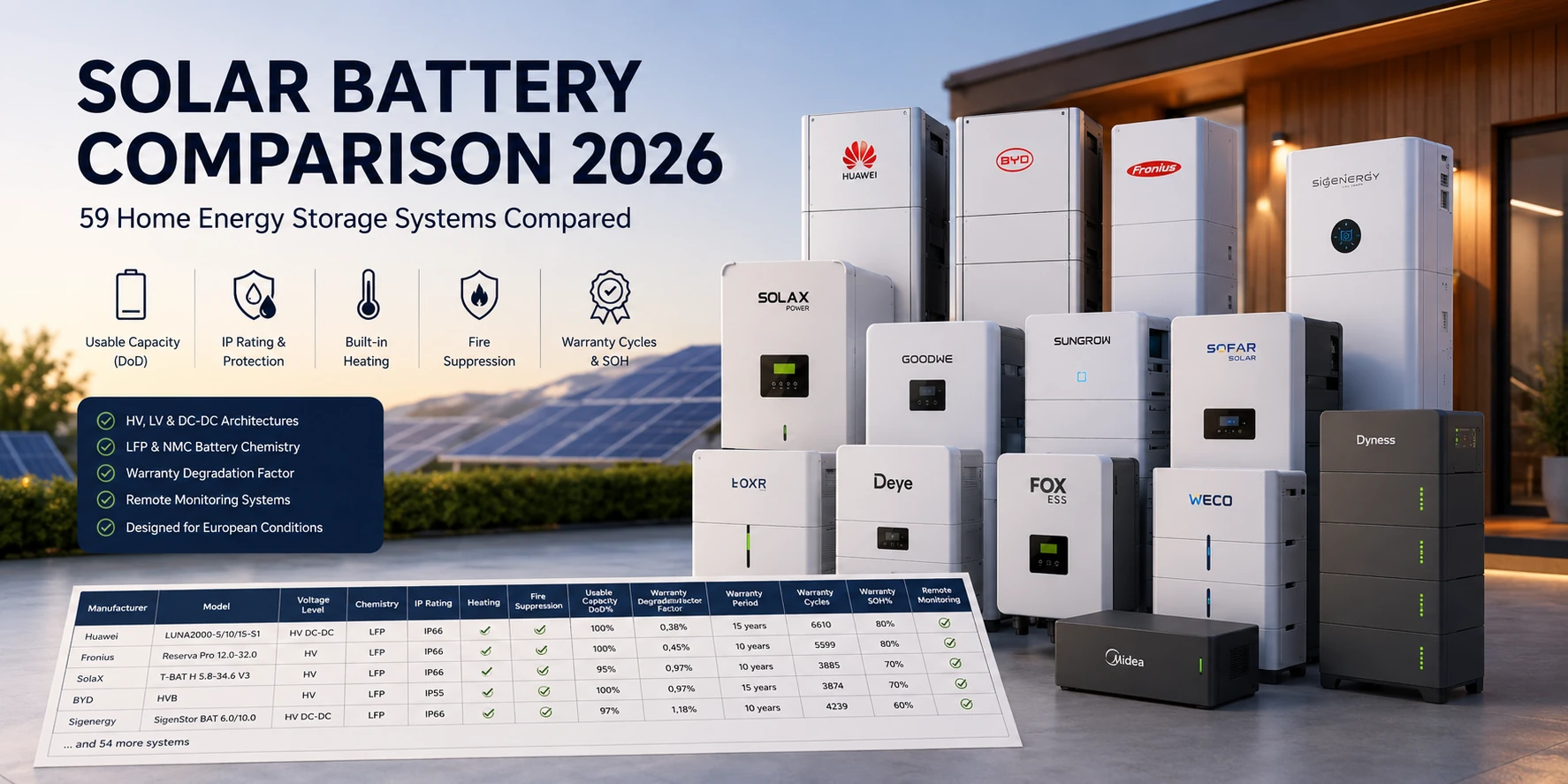
For additional guidance, read our comparison of 59 residential solar battery systems, which evaluates important differences in battery architecture, operating conditions, energy capacity and warranty-related characteristics.
Professional buyers can also explore solar batteries and energy storage systems available through the 3Buy Solar installer webshop.
4. Less Than 10ms EPS Backup: How Does the X3-Hybrid G4 Perform During a Power Cut?
The SolaX X3-Hybrid G4 includes an emergency power supply (EPS) function designed to provide backup electricity when the grid becomes unavailable.
The manufacturer specifies switching from grid-connected operation to EPS in less than 10ms under the relevant operating conditions.
With a compatible and adequately charged battery, the inverter can supply designated backup loads when the grid fails.
Does It Provide Whole-Home Backup?
Not automatically.
EPS functionality requires a correctly designed electrical installation, compatible battery equipment and appropriate separation from the public grid.
Some projects use a dedicated essential-load distribution board. Others require approved external switching arrangements for broader backup coverage.
The inverter’s short-duration EPS peak rating must not be confused with its continuous backup output.
For example, the 10kW model has 10kVA rated EPS output and a specified 18kVA peak capability for 10 seconds.
Installers must check phase-level loads, motor starting requirements, battery discharge power, circuit protection and earthing arrangements.
Three-Phase Unbalanced Output
The X3-Hybrid G4 also supports three-phase unbalanced output within its specified limits.
This is valuable in buildings where electrical consumption differs substantially across the three phases.
SolaX advertises up to 5kW output on an individual phase, subject to total inverter capability and operating constraints.
The relevant operating mode and metering configuration must be commissioned correctly. Unbalanced output should not be assumed to be enabled by default.
5. Intelligent Energy Management, Time-of-Use Tariffs and Solar EV Charging
Modern solar energy storage systems must do more than charge a battery during the day.
They also need to respond to electricity prices, building consumption and other controllable electrical loads.
The X3-Hybrid G4 supports intelligent time-of-use operation, enabling compatible installations to schedule battery charging and discharging according to configured periods.
This may be useful where electricity tariffs vary throughout the day.
For example, a building could reserve stored solar electricity for high-cost evening periods or use permitted grid charging during cheaper tariff windows.
Any financial benefit depends on actual tariffs, cycling losses, battery degradation and system operating constraints.
Integrating Smart EV Charging
SolaX also offers EV charging equipment designed to work within compatible solar energy management architectures.
For residential three-phase charging, installers can examine the SolaX Smart EV Charger G2 X3-HAC-11 — 11kW three-phase charger available through 3Buy Solar.
With the required meter, communications and control configuration, supported systems can coordinate charging with building demand and available solar generation.
However, a compatible EV charger does not automatically guarantee full dynamic load balancing or operation with every X3-Hybrid G4 firmware version.
Virtual Power Plant Readiness
The X3-Hybrid G4 is also described by SolaX as VPP-ready.
This indicates potential integration into supported distributed energy management and aggregation systems.
Participation in actual flexibility markets or virtual power plants depends on local regulations, communications support, approved aggregation platforms and the relevant firmware and control system.
6. Can Multiple SolaX X3-Hybrid G4 Inverters Operate in Parallel?
Yes. The X3-Hybrid G4 supports manufacturer-approved parallel installations.
SolaX advertises a combined inverter capacity of up to 150kW, corresponding to an approved arrangement of ten 15kW units.
This can be relevant for larger residential properties, agricultural facilities and selected commercial applications.
However, parallel inverter design requires additional engineering.
The configuration must account for compatible inverter models, batteries, metering, communications and backup switching.
SolaX documents different arrangements for smaller parallel groups and larger installations using approved external EPS switching equipment.
The maximum parallel power rating should not be interpreted as permission to combine arbitrary inverter models or battery systems.
7. SolaX X3-Hybrid G4 vs X3-HYB-G4 PRO vs X3-ULTRA
Although the product names are similar, these SolaX inverter families have different design objectives.
X3-Hybrid G4: Established Three-Phase Residential Platform
The standard X3-Hybrid G4 offers 5–15kW rated output, two MPPT trackers, approved HV battery integration, smart energy management and EPS backup.
It is suitable where the photovoltaic layout, battery design and electrical demand fall within its defined operating limits.
X3-HYB-G4 PRO: Additional PV and Battery Flexibility
The X3-HYB-G4 PRO is a separate upgraded inverter family.
Depending on the model, it offers up to three MPPT trackers and an expanded battery connection architecture.
It can be particularly relevant where the PV array has three different orientations or where the project requires battery configurations that are not supported by the standard G4.
Installers must compare the specific datasheets rather than assuming the PRO is electrically identical to the standard G4.
X3-ULTRA: Larger Residential and Commercial Energy Storage
For projects requiring higher inverter power and more demanding commercial energy storage functionality, SolaX provides the X3-ULTRA family.
For example, the SolaX X3-ULTRA 15kW three-phase hybrid inverter with AFCI is an alternative available in the 3Buy Solar product catalogue.
This is a different inverter platform, with separate battery compatibility and installation requirements.
What About Single-Phase Installations?
The X3-Hybrid G4 is a three-phase inverter. It should not be selected for a conventional single-phase grid connection without a suitable system-level design and approval.
For single-phase residential systems, an alternative is the SolaX X1-Hybrid G4 5kW single-phase inverter.
The choice between X1 and X3 should follow the actual supply configuration, grid requirements and expected electrical loads.
8. What Equipment Is Needed for a Complete SolaX X3-Hybrid G4 Energy Storage System?
An inverter alone is not a complete solar battery installation.
Professional installers should prepare a project-specific bill of materials covering the required generation, storage, control, backup and protection equipment.
A typical project may require:
- SolaX X3-Hybrid G4 inverter in the correct power class.
- Approved high-voltage solar battery modules and BMS.
- Battery base, cables and connection accessories.
- Smart meter or compatible CT arrangement.
- Communications hardware for monitoring and energy management.
- EPS switching equipment and backup distribution arrangements where required.
- Solar panels and compliant PV string cabling.
- Suitable AC and DC protection equipment.
- Required mounting, earthing and installation accessories.
Depending on the project, installers may prefer to source a pre-matched energy storage kit with hybrid inverter rather than purchasing each component independently.
The main advantage of a properly specified kit is not simply convenience. It is the ability to verify inverter–battery compatibility, required accessories and installation completeness before procurement.
For projects that also require photovoltaic modules and installation components, browse complete solar PV kits and confirm the exact included equipment.
9. SolaX X3-Hybrid G4: Installer Procurement Checklist
Before placing an order, verify the following.
- Exact inverter model: Confirm whether the project requires 5, 6, 8, 10, 12 or 15kW AC output.
- PV string configuration: Check voltage, current, MPPT grouping and module compatibility.
- Battery generation: Identify the exact approved SolaX battery family and module quantity.
- BMS and firmware: Confirm communications and expansion compatibility.
- EPS requirements: Establish whether essential-load or wider building backup is required.
- Metering and export settings: Check local distribution-network requirements and control accessories.
- Grid certification: Request the appropriate country-specific conformity documentation.
- Installation accessories: Confirm which battery, meter, communication and backup components are included.
- Warranty and commissioning: Verify the applicable manufacturer terms and installation requirements.
- Project procurement: Confirm current equipment availability, lead time and the complete bill of materials.
For professional solar installers and EPC contractors, these checks help prevent incompatible battery combinations, missing accessories and avoidable commissioning delays.
Frequently Asked Questions About the SolaX X3-Hybrid G4
Is the SolaX X3-Hybrid G4 a three-phase inverter?
Yes. The X3-Hybrid G4 is a three-phase hybrid inverter available in 5–15kW rated output classes. It supports solar PV generation, approved high-voltage battery storage and EPS operation.
Which batteries are compatible with the SolaX X3-Hybrid G4?
Approved configurations include selected SolaX T58, T30, S2.5, S3.6 and HS51 high-voltage battery families. Compatibility depends on the battery module quantity, voltage, BMS and firmware.
Can the SolaX X3-Hybrid G4 work with a 48V battery?
The standard X3-Hybrid G4 uses a high-voltage battery interface and is not a conventional 48V low-voltage hybrid inverter. A 48V battery should not be connected directly unless an explicitly manufacturer-approved interface and system architecture exists.
How many MPPT trackers does the X3-Hybrid G4 have?
It has two independent MPPT trackers. The larger power classes support two PV strings on MPPT1 and one on MPPT2, subject to current and voltage limits.
Does the X3-Hybrid G4 work during a power cut?
It supports EPS backup using an approved battery system and correctly installed backup circuits. SolaX specifies a switching time below 10ms under defined conditions.
Can I connect a 20kWp solar PV array to the 10kW G4?
Yes. The manufacturer lists 20kWp as the maximum recommended PV array power for the 10kW model. However, the string design, current and voltage limits, expected clipping and local requirements must still be checked.
Does the SolaX X3-Hybrid G4 support EV charging?
It supports smart energy management functions that can be integrated with compatible SolaX EV charging equipment. The required communications and metering arrangements depend on the charger and system configuration.
Is the SolaX X3-Hybrid G4 the same as the G4 PRO?
No. They are separate product families. The PRO platform has a different PV input and battery architecture, so the two should not be treated as identical or automatically interchangeable.
Final Assessment: Is the SolaX X3-Hybrid G4 a Good Choice?
The SolaX X3-Hybrid G4 remains a capable three-phase hybrid inverter for solar PV systems requiring high-voltage battery integration, backup power and energy management.
Its principal strengths are its 5–15kW power range, 200% recommended PV oversizing, dual MPPT architecture, compatible modular battery systems, fast EPS switching and supported three-phase unbalanced operation.
For professional solar installers, it offers an established platform that can be specified for a broad range of residential and selected light-commercial storage projects.
However, the most important decision remains system compatibility.
Selecting the correct battery family, inverter power class, protection equipment, EPS arrangement and communications hardware is essential to creating a reliable installation.
Newer SolaX platforms may offer additional flexibility for more complex PV arrays or battery configurations, but the appropriate solution should always be determined by the project’s technical requirements rather than product generation alone.
Buy SolaX Hybrid Inverters and Solar Battery Systems from 3Buy Solar
3Buy™ Solar supplies photovoltaic equipment and energy storage components for professional installers, electricians, EPC contractors, resellers and commercial project buyers across Europe.
Browse the SolaX Power product catalogue for hybrid solar inverters, energy storage products, EV charging equipment and related system components.
For a complete project quotation, provide the installation country, required inverter power, solar PV capacity, selected battery technology, desired storage capacity and EPS requirements.
Our procurement team can use those specifications to assess relevant inverter, battery and accessory options for an installer-ready system.
Explore SolaX Products at 3Buy Solar
Technical References
- SolaX X3-Hybrid G4 Manufacturer Product Page
- SolaX X3-Hybrid G4 Official Technical Datasheet
- 3Buy Solar SolaX Inverter–Battery Compatibility Guide
- SolaX X3-Hybrid G4 Installation and User Manual
Technical note: This article is based on published manufacturer specifications and product documentation, not an independent hands-on performance test. Always confirm the exact inverter and battery hardware revision, firmware, local grid requirements and current manufacturer approvals before installation.